
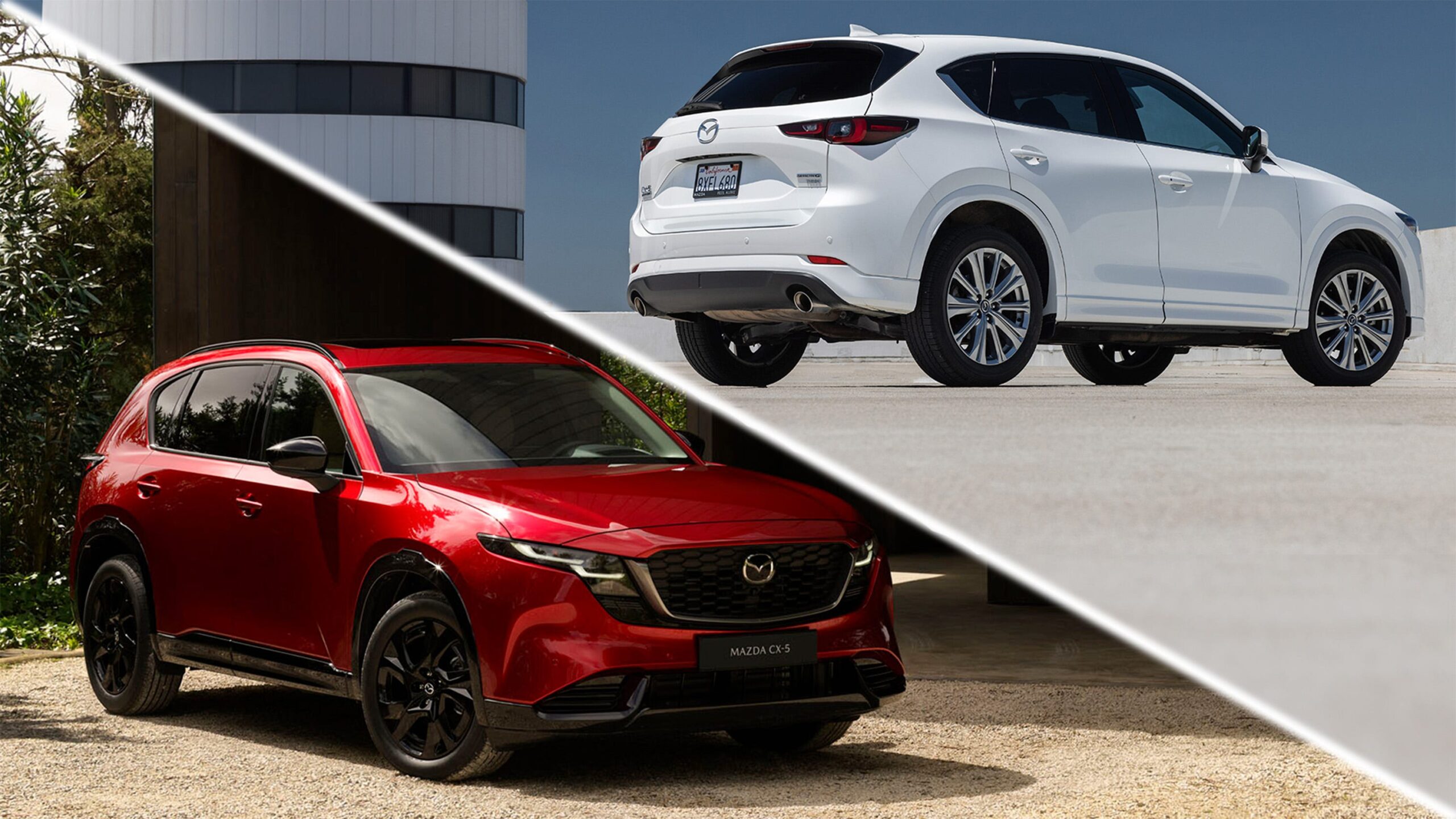


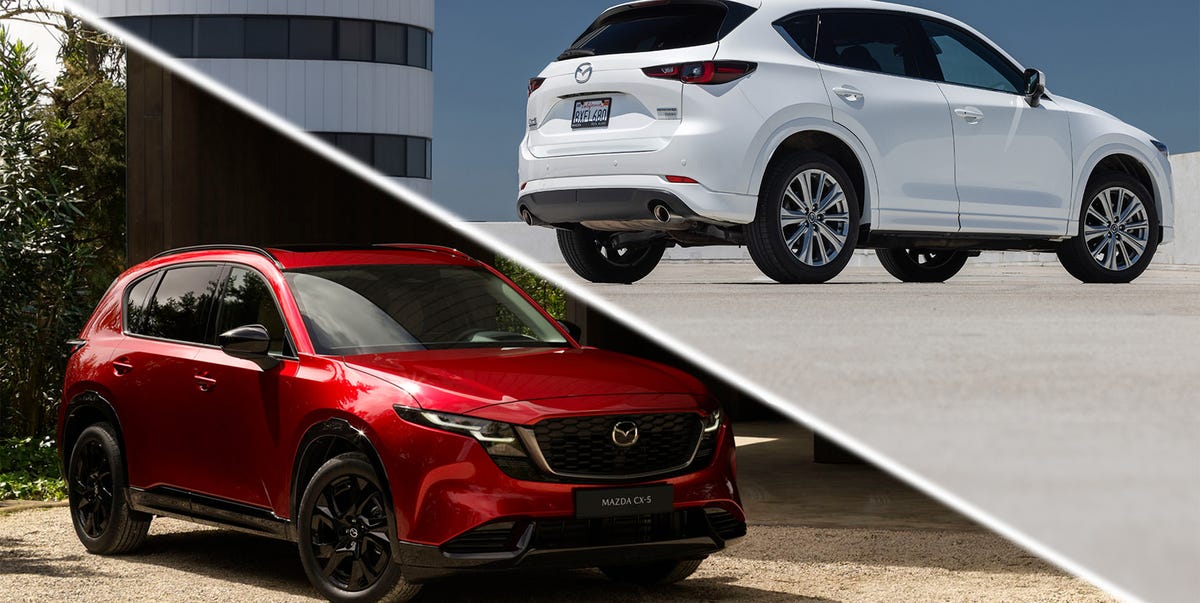
Mazda finally did what everyone begged it to do. The 2026 CX-5 is bigger, roomier, and packed with a modern infotainment system that doesn’t make you want to hurl the old rotary knob into a lake. But in fixing its biggest weaknesses, Mazda also killed the turbocharged engine that made the CX-5 genuinely exciting.
The numbers tell the growth story clearly. The new CX-5 rides on a wheelbase stretched 4.5 inches, with overall length up by the same amount and width increasing by half an inch. That translates to a backseat that’s no longer an apology.
There’s 2.3 inches more knee clearance in the rear, and cargo volume jumps from roughly 30 cubic feet to nearly 34 with the seats up, and from 59 to 67 cubic feet with them folded. Larger rear doors make getting in and out less of a contortion act.
For years, reviewers have written the same CX-5 review: fun to drive, nice materials, cramped in back. Mazda clearly got tired of reading that script.
The interior overhaul goes beyond just adding space. Gone is Mazda’s stubborn rotary-knob infotainment controller, replaced by a Google-based touchscreen system. Base trims get a 12.9-inch display, while the top Premium Plus trim sports a 15.6-inch screen that dominates the dashboard.
It behaves like every other modern Google-based system — quick, intuitive, with access to the Play Store and seamless integration with your Google account. It’s a massive leap that instantly makes the CX-5 competitive with anything Honda, Hyundai, or Toyota puts on a dashboard.
There’s one irritating omission, though: no volume knob. You’re stuck using an on-screen slider or steering wheel buttons. It sounds minor until you’re fumbling to kill the audio while navigating a parking garage.
Now for the painful part. The 256-horsepower turbocharged 2.5-liter four-cylinder is gone. The only engine is the naturally aspirated 2.5-liter making 187 horsepower and 186 pound-feet of torque, mated to the same six-speed automatic that’s been kicking around Mazda’s lineup for what feels like a geological epoch. If you want the turbo in a Mazda crossover, the CX-50 still offers it — for now.
That said, first-drive reviewers found the powertrain more lively than the spec sheet suggests. Switch to Sport mode and the transmission holds gears longer, the engine makes a raspy, satisfying noise at higher revs, and the whole SUV wakes up. Mazda’s chassis engineers used powertrain-based weight-transfer tricks to sharpen handling feedback, delivering what one reviewer called “a livestream of road-surface data directly to your butt cheeks.”
The steering, however, remains heavy and muted — the one dynamic weak spot in an otherwise engaging package.
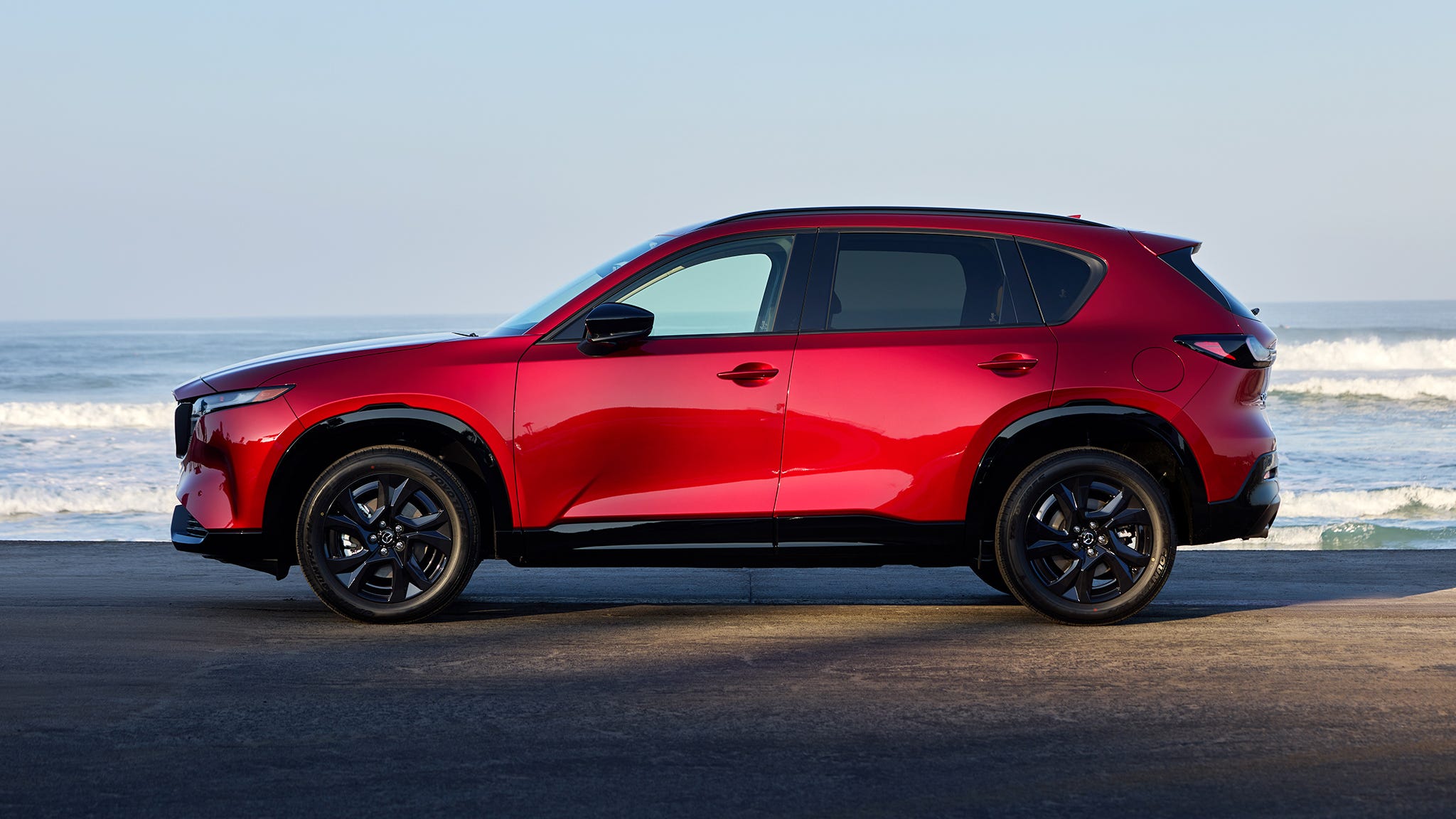
Fuel economy lands at 24 city, 30 highway, 26 combined — middling for the class and well behind the Honda CR-V and Subaru Forester. The six-speed automatic is the main culprit. Most competitors have moved to eight-speed or CVT transmissions.
A hybrid powertrain is coming for 2027, using Mazda’s own in-house system rather than Toyota’s borrowed tech, but details remain scarce.
Pricing starts at $31,485 for the base 2.5 S and tops out at $40,485 for the Premium Plus. That’s about $940 to $3,310 more than comparable 2025 trims, though standard all-wheel drive and additional equipment soften the blow. Even fully loaded, the CX-5 stays well under the national average transaction price of nearly $50,000.
The 2026 CX-5 is the most complete version Mazda has ever built. It addresses every complaint shoppers had about space and technology without abandoning the driving character that made people fall for the nameplate in the first place. But the missing turbo leaves a hole in the lineup that 187 naturally aspirated horsepower simply cannot fill.
Mazda listened to its customers. It just didn’t listen to all of them.

Share this Story