
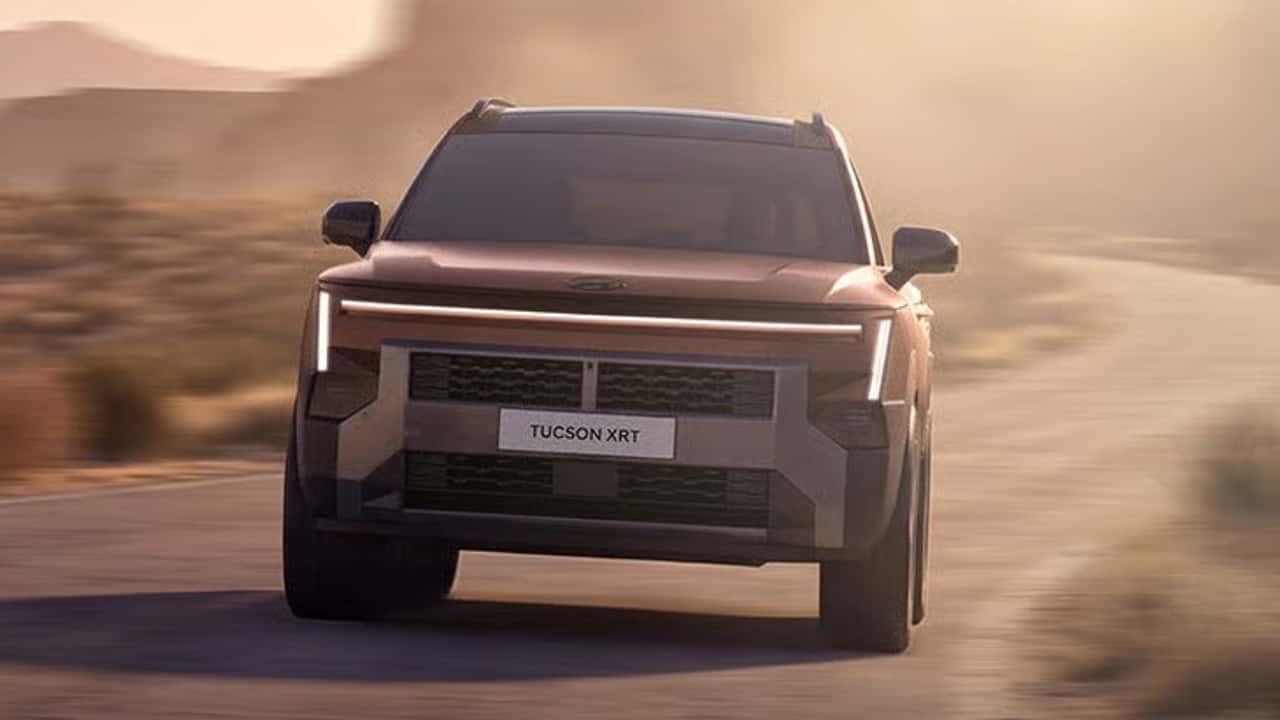


Hyundai buried the first real specs of its next-generation Tucson inside a 101-page investor presentation this week, and the numbers tell a familiar story: modest gains in power, questionable gains in efficiency.
The 2027 Tucson Hybrid uses the same turbocharged 1.6-liter four-cylinder as the outgoing model but now makes 242 horsepower and 280 pound-feet of torque. That is an increase of exactly 11 hp and 9 lb-ft. Hyundai says the sprint to 62 mph takes 8.5 seconds, three-tenths quicker than before. Nobody is going to feel that difference in a school pickup lane.
The real tension here is size versus efficiency. Hyundai has confirmed the sixth-generation Tucson is larger in every dimension than the model it replaces. Larger almost always means heavier, and heavier almost always eats into fuel economy improvements, no matter how clever the hybrid calibration.
Hyundai claims 17.4 kilometers per liter for the hybrid, roughly 41 mpg on the Korean test cycle. That number will shrink under EPA methodology. The current Tucson Hybrid manages up to 38 mpg combined on the EPA scale.
Whether this bigger, heavier successor can meaningfully improve on that figure remains an open question. Hyundai conveniently did not address it in its investor deck.
A non-hybrid version of the 1.6-liter turbo will also be offered, and the drop-off is steep. Hyundai says the conventional engine makes 27 percent less horsepower and 43 percent less torque than the hybrid, which pencils out to roughly 177 hp and 160 lb-ft. It needs 9.5 seconds to hit 62 mph, and fuel economy takes a 43 percent hit compared to the hybrid. That is a brutal penalty for skipping the electric motor.
The math gets interesting when you factor in purchase price. In markets where the hybrid commands a hefty premium over the base turbo, buyers who drive fewer miles annually may never recoup the difference at the pump. Hyundai has not released pricing, but the current Tucson Hybrid starts around $4,000 above the base model in the U.S.
If that gap holds or widens, the conventional engine remains a rational choice for low-mileage drivers, even with its thirst.
Hyundai has not confirmed a plug-in hybrid for this generation, though one would be a logical addition. A diesel may survive in select markets, but that engine is increasingly irrelevant in North America.
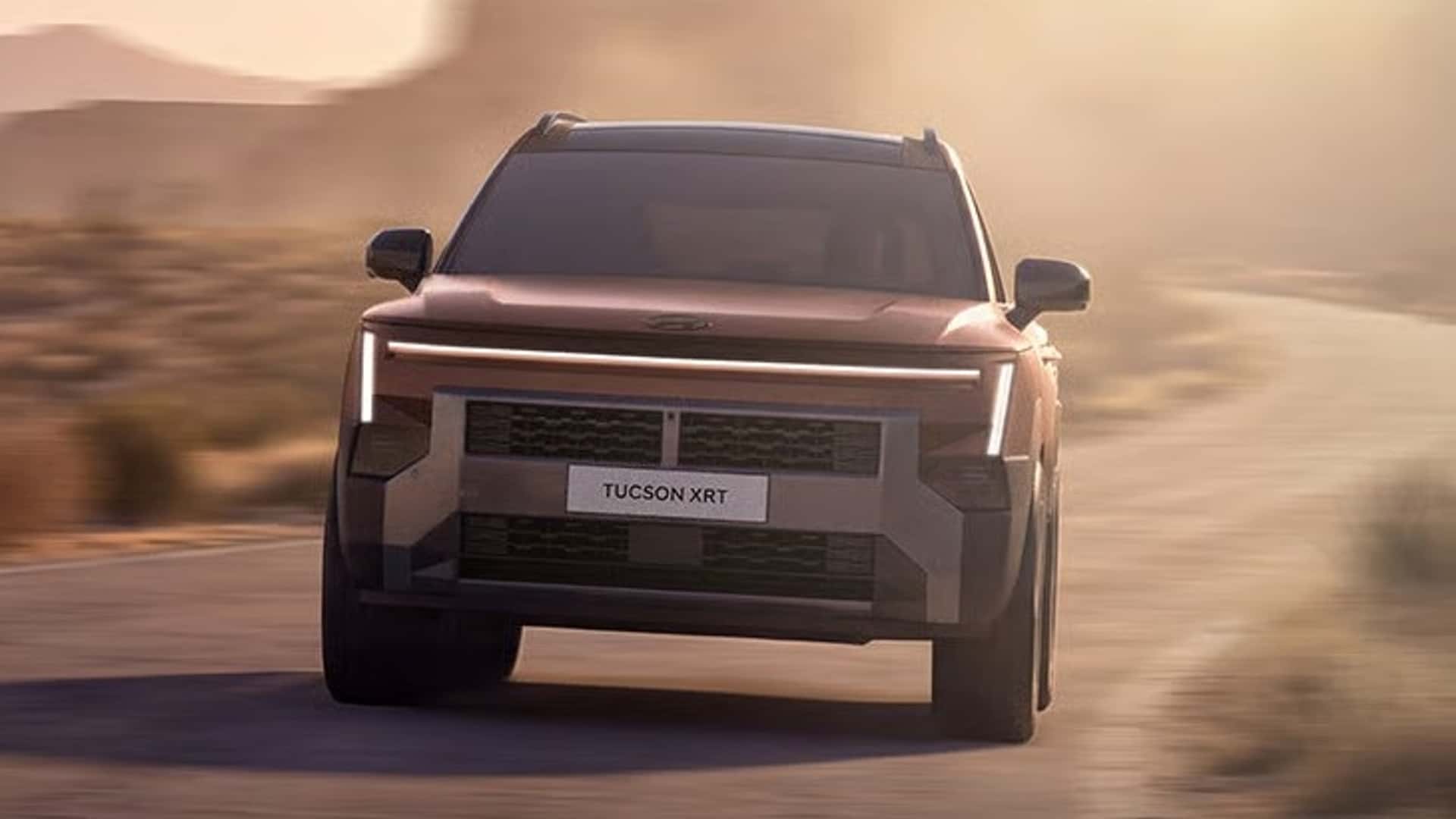
The redesign itself is dramatic. Hyundai has thrown out the polarizing parametric grille of the current car in favor of something cleaner and wider. Early spy shots and official images suggest a more conventional, upscale look that borrows cues from the Santa Fe.
Whether that wins over buyers who liked the outgoing car’s aggression is a matter of taste. What matters more on the balance sheet is whether Hyundai can hold its ground in a compact crossover segment that now includes a refreshed RAV4, a redesigned CR-V, and a CX-50 that keeps quietly stealing consideration.
The Tucson goes on sale in Korea during the fourth quarter of 2026. Global markets, including the United States, follow in 2027. By then, Hyundai will need EPA numbers that justify the hybrid premium, because 11 extra horsepower and a body that grew in every direction are working against each other.
Share this Story