
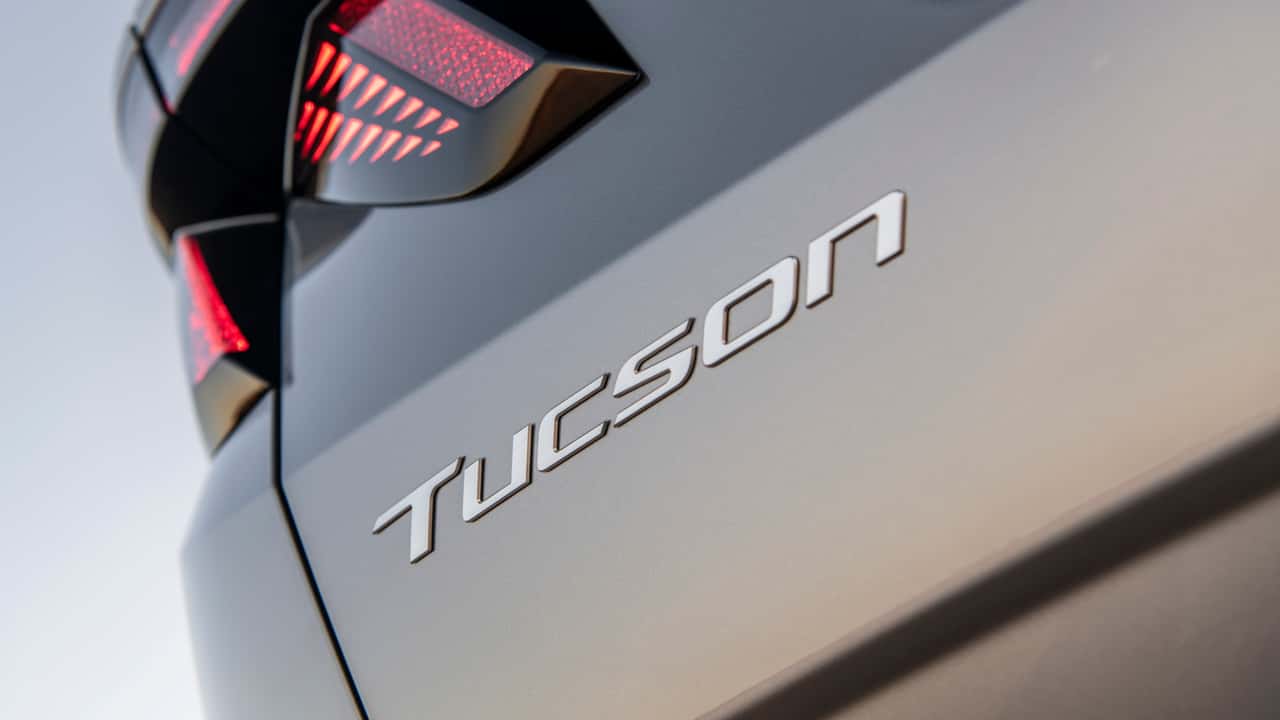


The next Hyundai Tucson has been caught testing on public roads in heavy camouflage, and what’s underneath the wraps looks like a complete departure from the swoopy, creased crossover that debuted in 2020. The prototype shows a flatter hood, a more upright front end, and boxier proportions that owe more to the current Santa Fe than to any previous Tucson.
That styling pivot alone would be news. But the bigger story is what Hyundai plans to kill off under the hood.
Every powertrain in the 2027 Tucson lineup will be electrified. No more pure internal combustion options, no diesel either. The compact SUV that has been one of Hyundai’s highest-volume global sellers will offer only full-hybrid and plug-in hybrid configurations when it hits showrooms, likely as a 2027 model following a 2026 reveal.
The full-hybrid will reportedly stick with the familiar turbocharged 1.6-liter four-cylinder paired with an electric motor, producing around 231 horsepower. The plug-in hybrid gets more interesting. Hyundai is developing a new iteration of its TMED-II hybrid architecture that could push all-electric range to roughly 62 miles, with total system output climbing past the existing 288 hp.
Sixty-two miles of EV range from a plug-in hybrid would put the Tucson near the top of its class, comfortably ahead of most competitors and close to what some buyers actually need for daily driving without ever touching gasoline. It is a quiet but aggressive play in a segment where Toyota’s RAV4 Prime has proven that PHEV demand is real and durable.
Inside, the cabin gets a thorough rethink built around Hyundai’s new Pleos operating system. Based on Android Automotive, the centerpiece will be a large touchscreen, reportedly between 12.9 and 14.6 inches, possibly paired with a second 12.3-inch display in a single curved panel. A new virtual assistant called Gleo will handle natural language commands for navigation, climate, and vehicle settings.
Hyundai is also keeping physical buttons for the most-used functions. This is not a small detail. Mercedes just admitted publicly that it went “too far” stripping buttons from its interiors, and Hyundai appears to have learned from watching that backlash unfold in real time rather than repeating the mistake.
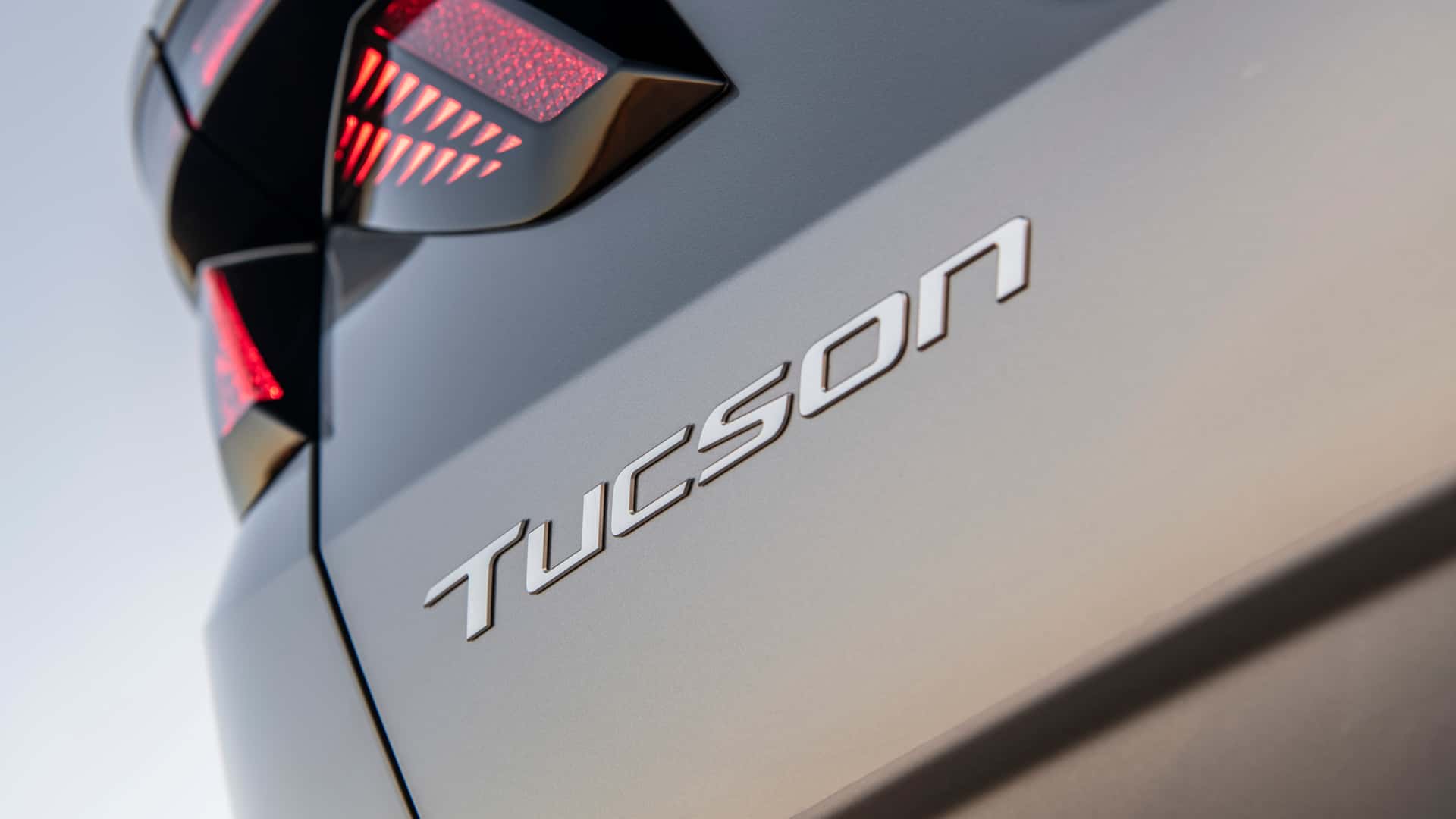
The exterior redesign trades the current Tucson’s polarizing “parametric” surface treatment for something cleaner and more angular. The rear gets vertical taillight units connected by a thin horizontal light bar, with the license plate relocated from the tailgate down to the bumper. The overall effect, even under camouflage, reads as more truck-like and more assertive than any Tucson before it.
Hyundai’s timing is deliberate. The compact crossover segment remains the single most competitive space in the industry, with the RAV4, CR-V, Rogue, and Sportage all fighting for the same buyers. Hyundai’s hybrid sales have been surging, and building a Tucson with no pure-combustion option is a bet that the hybrid transition in this segment is no longer a trend but a permanent condition.
Diesel’s disappearance from the lineup, while expected, marks the end of an era for European and Korean markets where oil-burners once dominated Tucson sales sheets. The math simply does not work anymore when a PHEV can deliver 62 miles of electric range and governments keep tightening emissions regulations.
Whether Hyundai can deliver on that range figure, and at what price, will determine if the next Tucson holds its position or cedes ground to a RAV4 Prime that already has a waiting list.
Share this Story