
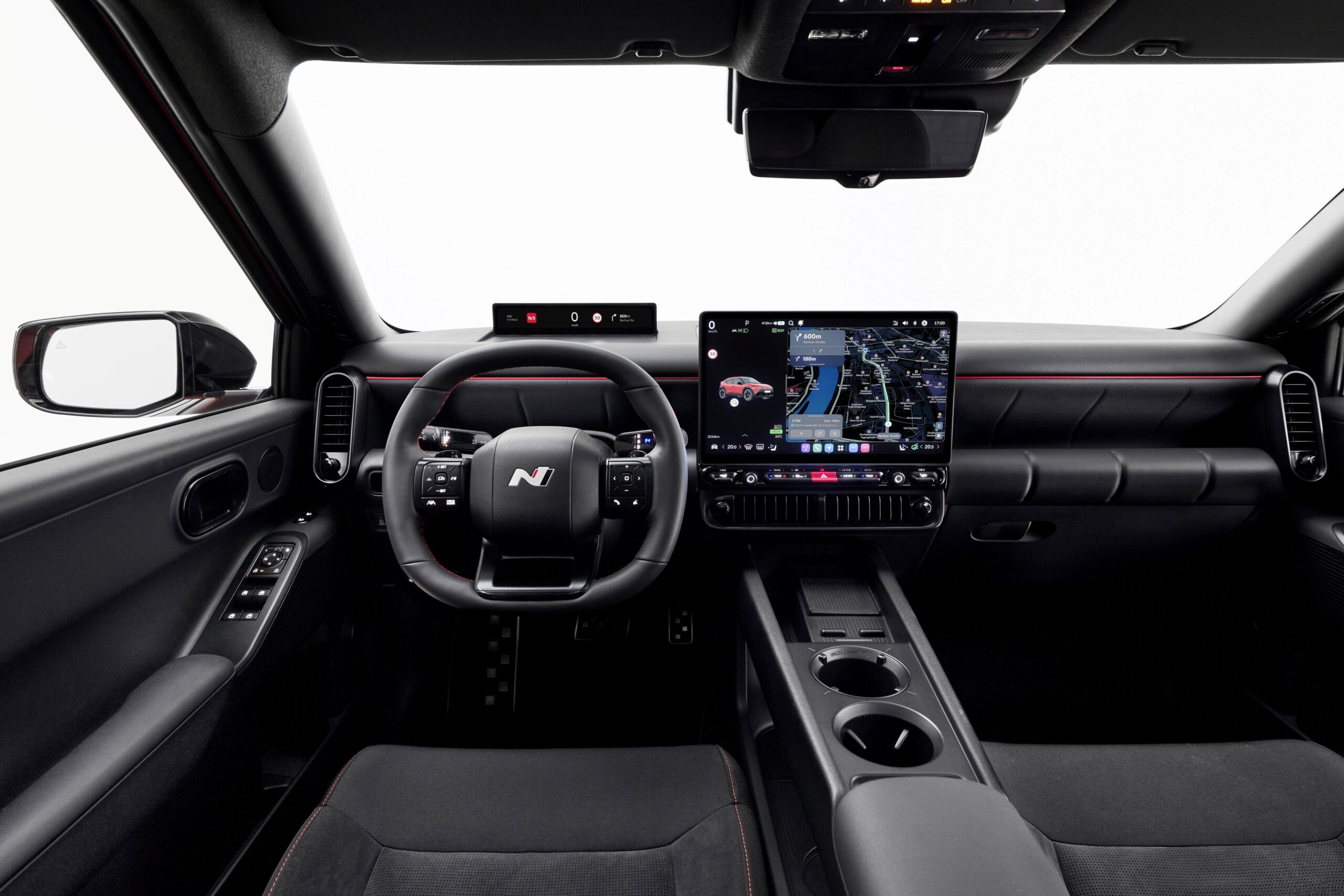


A 9.9-inch driver’s display, the kind of screen that shows your speed right in front of your eyes, now costs $255 extra on the base Hyundai Avante in Korea. On the Ioniq 3, the base trim doesn’t even offer it as an option. You have to spend $5,000 more to jump to the next trim if you want to see your speed without glancing sideways.
This is not a premium feature package with massaging seats and a heads-up display. This is the instrument cluster. The thing that has sat behind the steering wheel in every car since the automobile was invented.
Hyundai’s new Pleos Connect infotainment system pairs a central touchscreen with a slim 9.9-inch display mounted above the dash. The architecture supports both screens, but the accountants decided the driver-facing one could be stripped from entry-level trims. Speed and warning messages default to the center screen if you don’t pay up.
The strategy has a familiar smell. Apple stopped including headphones and chargers in 2020, and the rest of the consumer electronics industry followed within months. Tesla deleted the stalks and bet everything on a single center screen years ago. Hyundai is now borrowing from both playbooks at once, cutting physical components from the base product while keeping the architecture intact so customers can pay to add them back.
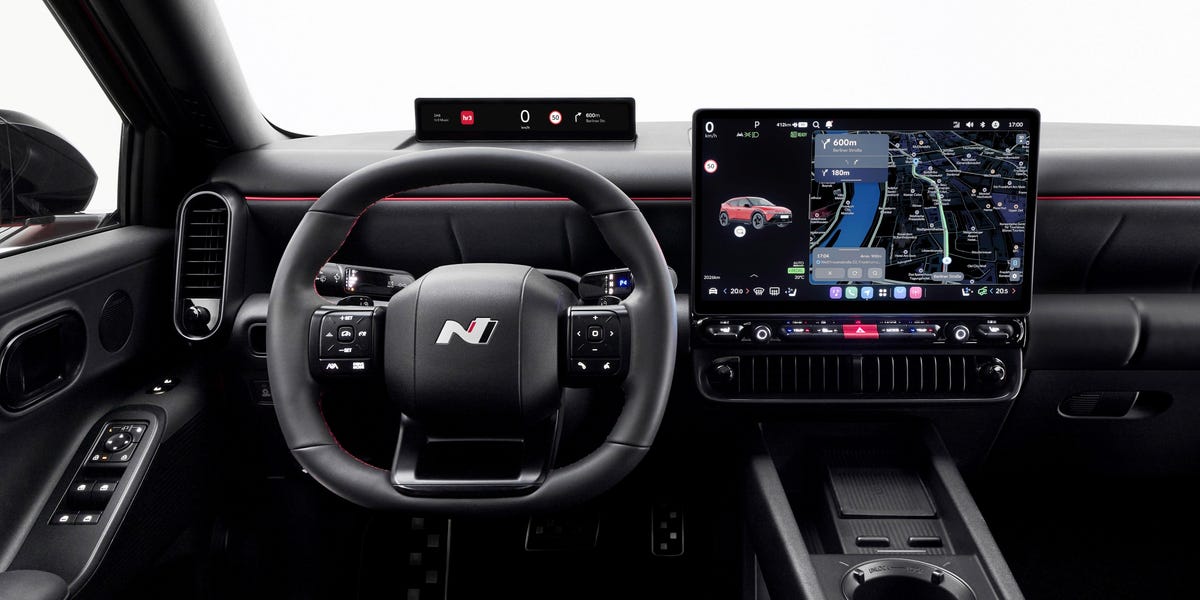
The Pleos Connect system debuted on the Grandeur sedan, where every trim includes the instrument cluster. That car starts at a higher price point, so the screen was easy to bundle. On the Avante and Ioniq 3, Hyundai clearly sees the cluster as margin opportunity rather than baseline equipment.
No Hyundai, Kia, or Genesis model currently sold in the United States uses Pleos Connect. But that buffer is temporary. Hyundai has publicly stated its goal of equipping the system in 20 million vehicles globally by the end of the decade. The math says it is coming to American showrooms, and when it does, U.S. buyers will face the same choice Korean customers face today.
The $255 ask on the Avante is almost insulting in its modesty. It is small enough that most buyers will check the box and move on, which is precisely the point. Multiplied across hundreds of thousands of units, a quarter-thousand-dollar option on a part that costs far less to include adds up fast.
On the Ioniq 3, where the only path to the cluster is a $5,000 trim jump, the calculus is less subtle. You are paying for a bundle of upgrades just to get a screen that should arguably be in the car already.
Automakers have been playing this game with heated seats, remote start, and advanced driver-assist features for years. BMW tested a subscription for heated seats in 2022 and backed off after public backlash. But removing a driver’s display from the base configuration is a different category. It is not a comfort feature or a tech upgrade. It is the primary way drivers have monitored vehicle speed and warnings for over a century.
Hyundai will frame this as giving customers choice, letting them configure only the features they want. The counterargument writes itself. No one walks into a dealership hoping to save $255 by losing the ability to see how fast they are going without turning their head.
Korean buyers are the test market. If the take rate on the option is high and the complaints stay low, expect the same structure when Pleos Connect reaches American shores. The question is whether U.S. regulators, or U.S. customers, will be as quiet about it.





Share this Story