
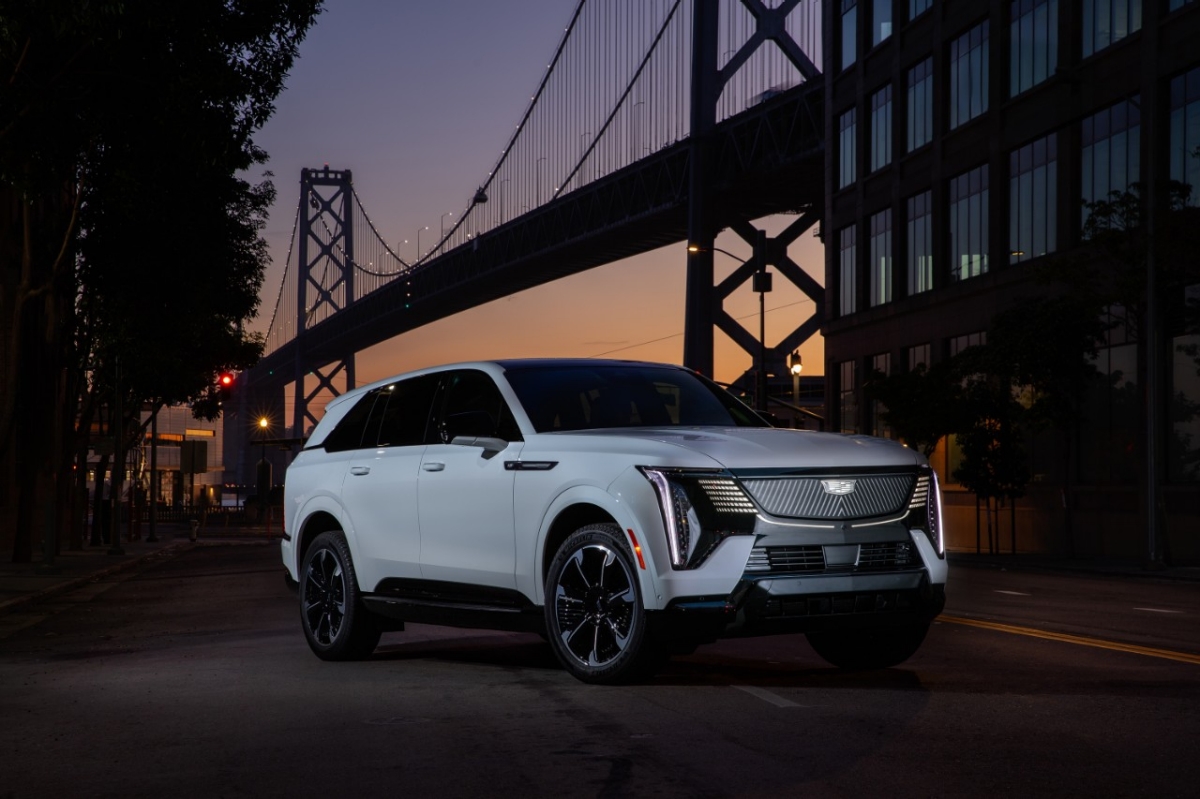


GM is touting internal research that says the all-electric Cadillac Escalade IQ delivers “a significantly more appealing customer experience” than its segment rivals. The automaker did not name those rivals, did not share sample sizes, and did not explain the methodology. What it did share is a philosophy: let buyer feedback dictate what technology makes the cut.
That sounds obvious. It isn’t, at least not in the luxury EV space, where brands routinely pile on features nobody asked for while fumbling the basics. Cadillac says it went the other direction.
“When you’re engineering a product as iconic as an Escalade, the pressure’s high to wow a discerning customer group,” said Mandi Damman, executive chief engineer for the Escalade IQ. “Every piece of tech, from the pillar-to-pillar screen to each camera, has to be beautifully integrated.”
The specific callouts are telling. Turn-signal side cameras for blind-spot confidence. A dedicated HVAC screen that sits outside the infotainment system so owners stop hunting through submenus to change the temperature.
Profile-based personalization means a household sharing the truck doesn’t have to reset everything each time someone grabs the keys. None of that is exotic. All of it addresses friction points that plague nearly every large luxury vehicle on sale today, electric or otherwise.
Julia Hedrick of GM’s Global Customer Research group said the team has “insights on the tech, experiences, and messages that resonate most with customer segments and brands.” Those insights fed into the development of the Rear Camera Mirror, power-closing doors, and Super Cruise, GM’s hands-free highway driving system.
Each feature targets a real complaint. Rear visibility in a vehicle this large. Doors that are too heavy for smaller passengers to pull shut. Driver fatigue on long interstate hauls.
The pitch is that nothing in the Escalade IQ exists as a spec-sheet trophy. That is a direct shot at competitors who have loaded their cabins with screens, haptic controls, and gesture recognition that owners learn to ignore within a month.
Tesla’s yoke experiment. BMW’s subscription-gated heated seats, since reversed. Cadillac is positioning itself as the brand that listened instead of lectured.
The press release also drops the phrase “software-defined technologies,” a signal that GM sees the Escalade IQ as a rolling platform for over-the-air updates. The implication is that this truck will keep changing after it leaves the dealership, and customer data will shape what those updates look like.
Whether GM can actually deliver on that promise is the question the company keeps dodging. Its Ultifi software platform has been slower to mature than executives projected, and early Escalade IQ owners reported some infotainment quirks that needed patches. The company’s track record on connected services is mixed at best.
Still, the framing matters. In a segment where the electric Escalade competes with the Rivian R1S, the upcoming Navigator EV from Lincoln, and eventually a battery-powered Range Rover, Cadillac is betting that practical, well-executed tech beats bleeding-edge novelty.
The $130,000-plus Escalade IQ needs that bet to pay off. Sales of the electric model have been modest relative to the gas-powered Escalade, which remains one of GM’s most profitable nameplates. Convincing traditional Escalade buyers that the electric version is not a downgrade in daily usability is the real engineering challenge here.
GM says customer feedback will keep shaping the next generation of vehicles. The first test is whether enough customers show up to this generation.

Share this Story