
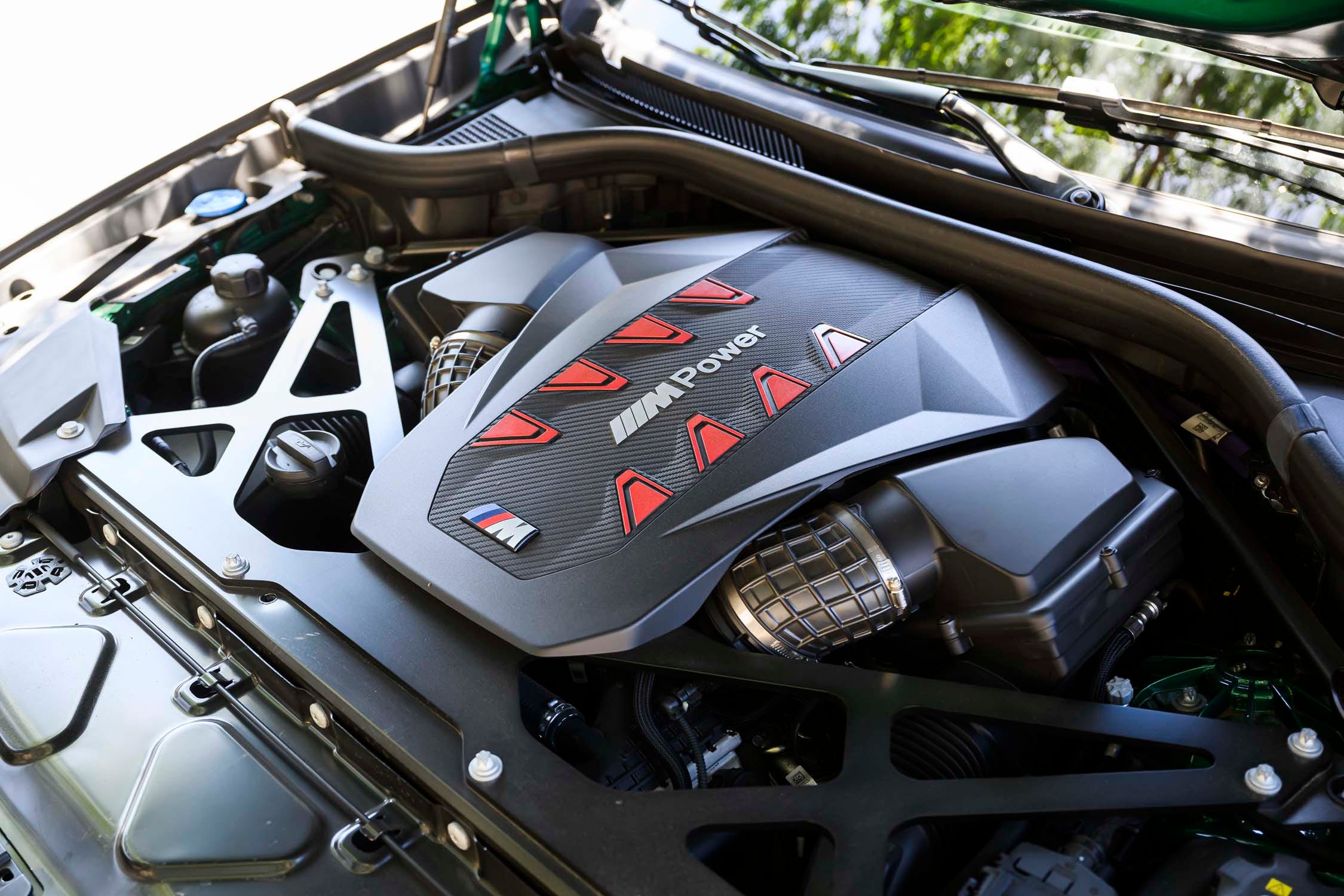


BMW dropped the curtain on its fifth-generation X5 at the company’s Greenville, South Carolina facility today, and buried in the announcement was the detail enthusiasts have been sweating for two years: the next X5 M will have a V-8 engine. Not an electric motor. Not a quad-motor setup dressed in M badges. A V-8.
The confirmation matters because BMW’s Neue Klasse platform was designed from the ground up for electric powertrains. Every rendering, every press conference, every engineering deep-dive since Munich unveiled the architecture has centered on battery-electric vehicles. The platform can handle combustion and hybrid setups too, but the emphasis has always leaned hard toward electrons. So the question lingered — would BMW’s flagship performance SUV go silent?
Now we have the answer, and it lands at a moment when nearly every legacy automaker is recalibrating just how fast the EV transition should move.
The current X5 M Competition packs a twin-turbocharged 4.4-liter V-8 making 617 horsepower and 553 pound-feet of torque, paired with all-wheel drive and a mild 48-volt hybrid system that contributes a negligible 12 horses. It’s a blunt instrument — heavy, fast, unapologetically excessive. The kind of vehicle that exists because BMW’s customer base will pay north of $120,000 for the privilege of a sub-four-second sprint to 60 mph in something that can also haul the family to Vail.
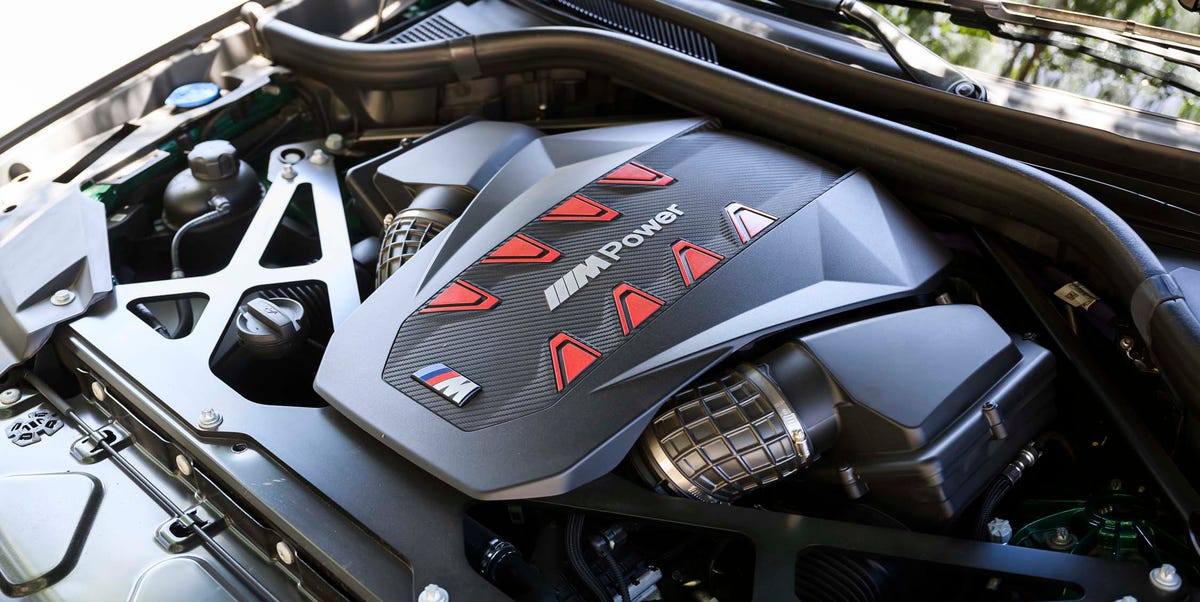
BMW hasn’t said exactly what form the next V-8 will take. A purely combustion setup seems unlikely given tightening emissions regulations in Europe and the U.S. The more probable path borrows from the plug-in hybrid XM, which mates a twin-turbo V-8 to an electric motor for a combined 738 horsepower. That powertrain, or an evolution of it, could slot neatly into the new X5 M and give BMW both the regulatory cover and the performance ceiling it needs.
Timing is still fuzzy. The redesigned X5 M may skip the 2027 model year entirely and arrive as a 2028 model, meaning a reveal in late 2027 at the earliest. Meanwhile, the slope-backed X6 M will get a 2027 run, though BMW has been conspicuously quiet about whether the X6 line — the vehicle that started the entire coupe-SUV category back in 2008 — will survive into the Neue Klasse era at all.
There’s also the question of an electric M variant. BMW hasn’t confirmed an iX5 M, but the platform clearly supports one. The company could easily offer both — a V-8 M for the traditionalists and an electric M for the early adopters. It would be the hedging strategy BMW has quietly perfected across its entire lineup, offering gas, plug-in hybrid, and full EV versions of the same nameplate and letting the market sort itself out.
That strategy has looked increasingly shrewd as EV adoption rates plateau in key markets. Mercedes-AMG is still chasing electric performance credibility. Audi has committed the RS e-tron GT to pure electric but hasn’t abandoned combustion across its broader RS lineup. BMW, by keeping the V-8 alive in its most visible performance SUV, is placing the safest possible bet — giving customers what they’re actually buying today while keeping the electric door wide open.
The V-8 isn’t dying at BMW. It’s just getting a longer leash than anyone expected.

Share this Story