


Mercedes-Benz claims its all-new electric C-Class slashes lifecycle carbon emissions by two-thirds compared to the outgoing combustion-powered model. That’s a big number. And the company is backing it with an independently audited 360° Environmental Check, a practice it has maintained since 2005.
The car itself is built from scratch as a battery-electric vehicle, not a conversion of an existing platform. It rolls out of the Kecskemet plant in Hungary, where a 42.3 MWp solar installation covers roughly a quarter of annual energy demand. A new paint shop there cuts energy use by 20 percent and carbon emissions by about 80 percent versus the old facility.
Strip away the sustainability language and the numbers underneath are genuinely competitive. Up to 762 kilometers of WLTP range. Combined energy consumption between 14.1 and 18.5 kWh per 100 km, with an 800-volt architecture enabling 325 kilometers of range added in just ten minutes of DC fast charging.
Those efficiency figures put the electric C-Class near the top of its segment, a space where Hyundai’s Ioniq 6 and Tesla’s Model 3 have set brutal benchmarks. Mercedes is clearly trying to answer them not just on range and charging speed but on the full environmental ledger.
The supply chain is where things get interesting. Mercedes says it sources roughly two-thirds of the car’s aluminum from electrolysis plants running on renewable energy or using higher recycled content. About 99 pounds of steel come from electric arc furnaces powered by renewables.
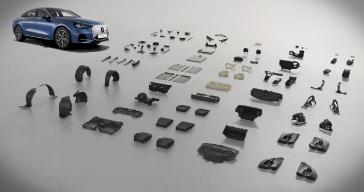
Thermoplastic recycled content has quadrupled compared to the current C-Class, totaling around 108 pounds of recycled plastic spread across components from bumper carriers to seat cover yarn.
Some of the details are oddly specific in the best way. Jack mounts made from 100 percent recycled bumpers stripped off scrap vehicles. Wheel arch liners at 93 percent recycled content. A frunk tub with 50 percent post-consumer material.
These aren’t token gestures buried in a footnote. They represent an engineering team that had to redesign component sourcing from the ground up.
The braking system deserves attention too. A new One-Box unit handles up to 99 percent of all braking events through recuperation alone, with recovery capacity reaching 300 kW. That’s aggressive regen, and it means the friction brakes barely touch the rotors in normal driving.
It also means brake dust, a growing concern among European regulators, drops to almost nothing.
Mercedes is also offering a vegan interior certified by The Vegan Society, making this just the second vehicle in the world after the electric GLC to carry that organization’s trademark. Every soft-touch surface material was audited. Any component containing animal-based content was reformulated with suppliers.
The Renewable Charging piece is more nuanced than it sounds. Where actual renewable electricity isn’t available at a charging station, Mercedes uses Energy Attribute Certificates to ensure an equivalent amount of green energy enters the grid. It’s a bookkeeping solution, not a physics solution, but it’s the standard approach across the industry right now.
Binding CO2 reduction targets are now woven into sourcing contracts for steel, aluminum, plastics, and battery cells. Suppliers must accept Mercedes’ Responsible Sourcing Standards, covering human rights, environmental protection, and compliance. The company says it aims to complete risk assessments on all high-risk raw materials by 2028.
What Mercedes is building here is a paper trail. Every claim audited, every number documented, every supplier contractually bound. In a regulatory environment where greenwashing allegations carry real legal risk, that paper trail may prove as valuable as the car itself.
Production timing and U.S. pricing remain unannounced.
Share this Story