
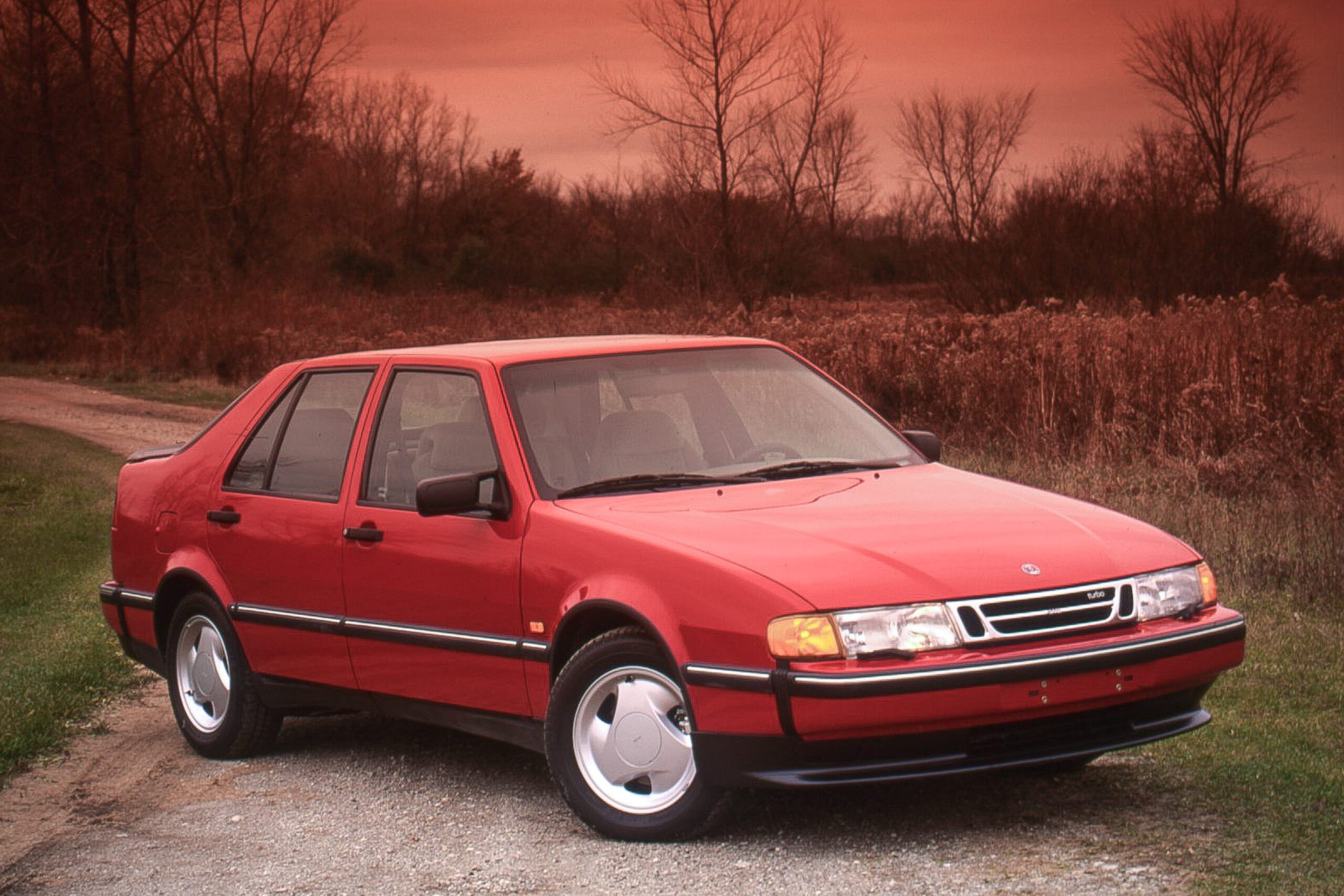


Thirty grand flat. That was the pitch Saab made in February 1993 — a 9000CS Turbo with 200 horsepower, traction control, a theft alarm, and automatic climate control for $30,176. No leather, no sunroof, no power seats. And somehow, a better car than the $37,000 version it replaced.
The trick was simple. Saab didn’t gut the 9000. It just stopped forcing buyers to pay for things they didn’t want.
The old options bundling had priced the 9000 Turbo into a knife fight with V-6 and V-8 sedans from Lexus, BMW, and Acura — a fight a four-cylinder Swede was never going to win on the showroom floor. By slashing seven grand off the sticker, Saab changed the argument entirely.
What stayed was the good stuff. The 2.3-liter turbocharged four got Saab’s new Trionic engine management, a system clever enough to use spark-plug electrodes as ionization sensors between ignition pulses, reading combustion quality so precisely that conventional knock sensors became unnecessary. Ignition, injection, and wastegate control lived inside a single 32-bit processor.
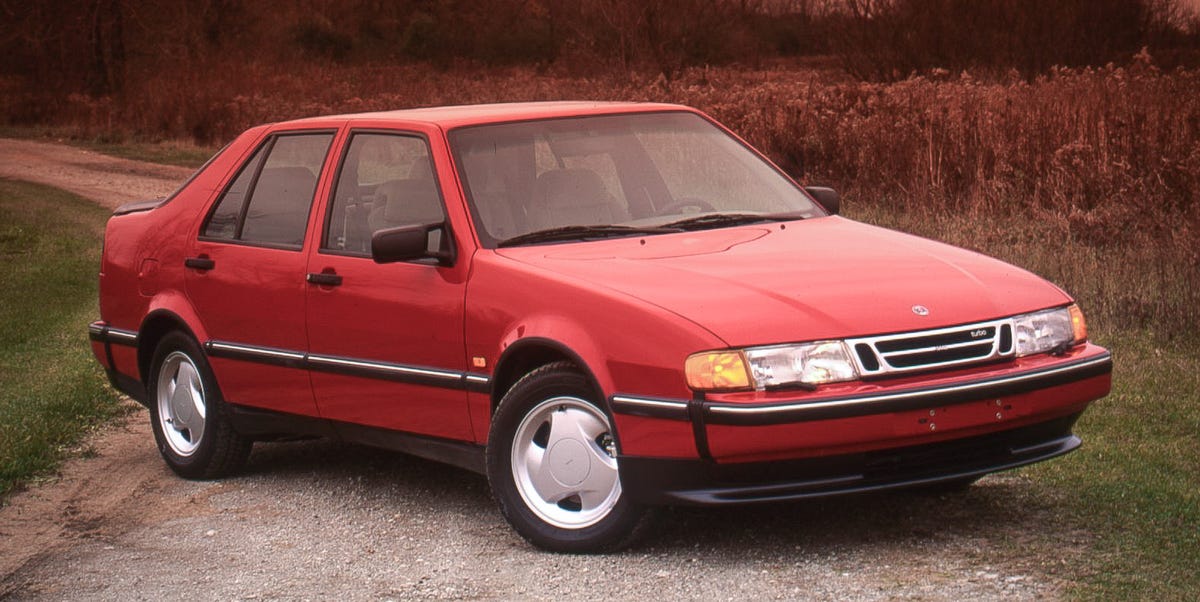
The result was also, paradoxically, a slightly slower car. Zero to 60 took 6.8 seconds versus 6.4 for the previous year’s model, a gap attributable to a taller final-drive ratio rather than any power deficit. But that taller gearing paid dividends in the midrange — the CS Turbo reached 100 mph almost a full second quicker than its predecessor. On the road, the difference between 6.4 and 6.8 seconds was invisible. The difference between $37,000 and $30,176 was not.
Big boost arrived as low as 2,000 rpm, with no theatrical whistle to announce it. Just a surge. And where previous 9000 Turbos punished aggressive throttle inputs with torque steer and wheelspin, the CS Turbo came standard with traction control and a redesigned front differential.
The system was calibrated with a light touch — it braked the spinning wheel gently rather than chopping power like a kill switch. You could still light up a tire leaving a parking lot. Saab understood that traction control should be a safety net, not a nanny.
Torsional rigidity jumped 25 percent. A redesigned rear end eliminated the quarter-light window and added a rollover protection hoop for rear passengers, along with beefed-up side intrusion bracing in the sills, floor, and seats. Car and Driver’s testers noted the cabin approached Lexus-grade isolation — no small compliment for a front-drive hatchback riding on struts.
The interior remained generous. Power windows, locks, and mirrors survived the cost-cutting exercise. Seats were supportive without leather.
The automatic climate control stayed, though it had a mind of its own, cheerfully ignoring manual overrides whenever it disagreed with the driver’s judgment. Cargo space hit 57 cubic feet with the rear seats folded — a reminder that America’s irrational hatred of hatchbacks was Saab’s loss and every practical buyer’s gain.
The elephant in the showroom was the engine block itself. Four cylinders in a $30,000 sedan felt, to some buyers, like showing up to a black-tie dinner in clean jeans. It didn’t matter that the Saab’s turbo four was smoother than anything GM built domestically, including every iteration of the Quad 4. It didn’t matter that 200 horsepower and 244 pound-feet of torque at 2,000 rpm outmuscled most of the segment’s sixes.
Saab’s solution was to stop competing on prestige and start competing on value. A turbocharged, traction-controlled, structurally reinforced European sport sedan for thirty grand was a genuinely rare thing in 1993. The company gave buyers less of what they didn’t need and more of what they did. It was the kind of clear thinking that should have saved Saab. It didn’t.

Share this Story