
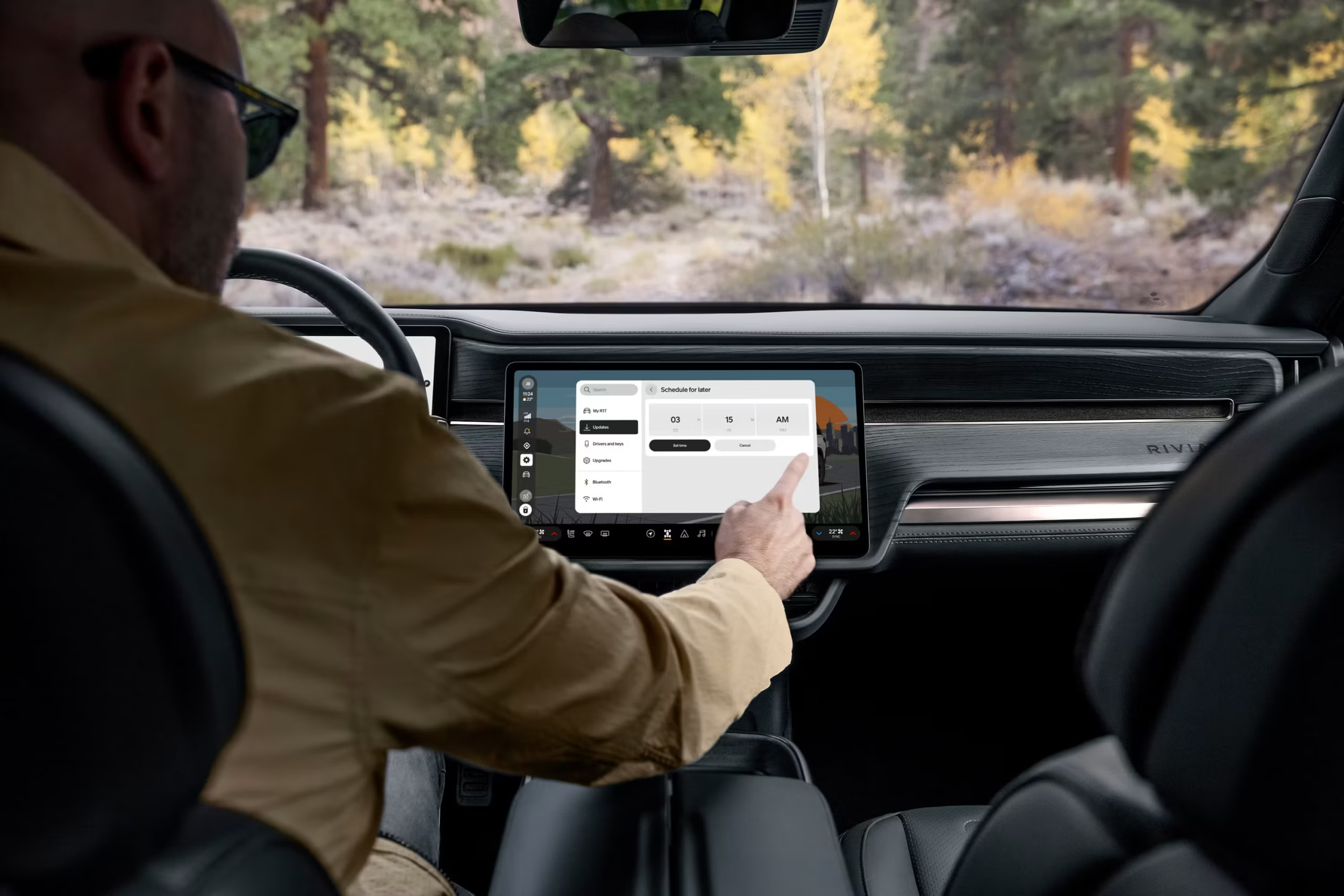


Rivian is pushing RivianOS 2 to every R1S and R1T on the road, delivering the same interface built for the newer, smaller R2 through over-the-air update 2026.31. It is the kind of move that keeps existing owners from feeling abandoned. It also quietly highlights just how far apart the hardware is across Rivian’s growing lineup.
The update brings dynamic controls that surface based on context, a redesigned settings menu with search, real-time Google Maps route alerts including crowd-sourced warnings for speed cameras and police, and improved AI voice assistance. Connect+ subscribers get a weather app and live trip management through the Rivian mobile app.
On the surface, every Rivian now speaks the same visual language. The layout, the design philosophy, the way menus are organized. It all looks consistent across three generations of hardware in two model lines.
But consistency is not equality.
The R2 and second-generation R1 run Unreal Engine 5, producing full 3-D vehicle renderings on their displays. Original R1 models are stuck on Unreal Engine 4 because their older display hardware cannot keep up with the newer graphics engine without turning the system into a laggy mess. Rivian made the pragmatic call to keep things responsive rather than pretty.
The AI story splits along the same hardware fault line. First-gen R1 vehicles get cloud-based voice assistance. Second-gen R1 and R2 models can run a hybrid of connected and offline AI, thanks to beefier onboard computers.
Rivian has confirmed the R2’s integrated chip can handle the assistant entirely without a data connection. That is a meaningful advantage for anyone who drives where cell service disappears.
Physical controls diverge too. R1 owners use traditional thumbwheels and buttons on the steering wheel. The R2 introduced Haptic Halo wheels, a pair of multifunction scroll wheels with haptic feedback that can be pulled, pushed, or tilted. More capability in theory, more muscle memory to develop in practice.
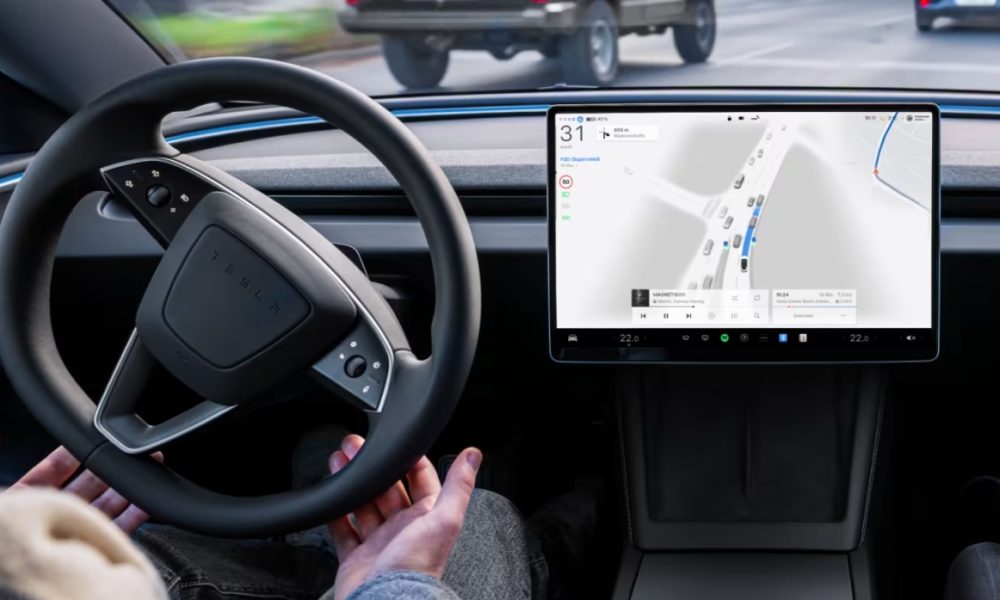
Rivian now has three distinct hardware tiers sharing one software platform. That is a familiar challenge. Tesla has wrestled with it for years, and Apple faces it every iOS cycle. The question is always the same: how long before the oldest hardware becomes a bottleneck for the newest software?
Bringing the R2’s interface to the R1 also serves a strategic purpose. It ties the lineup together so tightly that future OS improvements flow across all models at once. For Rivian’s engineering team, that means one codebase to maintain instead of divergent branches. For owners, it means the R1 should keep getting better for a while yet.
The timing is not accidental. The R2 is reaching customers now, and Rivian needs households that already own an R1 to see the R2 as a companion, not a replacement. Giving the R1 the same interface greases that path. It also reduces the sting for anyone who bought an R1 in the last year and watched the R2 launch with a slicker cockpit.
There is a ceiling, though. No software update can swap out a display processor or add haptic steering-wheel controls. First-gen R1 owners get the new OS but live with visual compromises and a cloud-dependent assistant.
Rivian is betting that a shared interface across aging and current hardware will hold the fleet together. Whether the oldest R1s can keep up two or three OS generations from now is a question this update does not answer.
Share this Story