
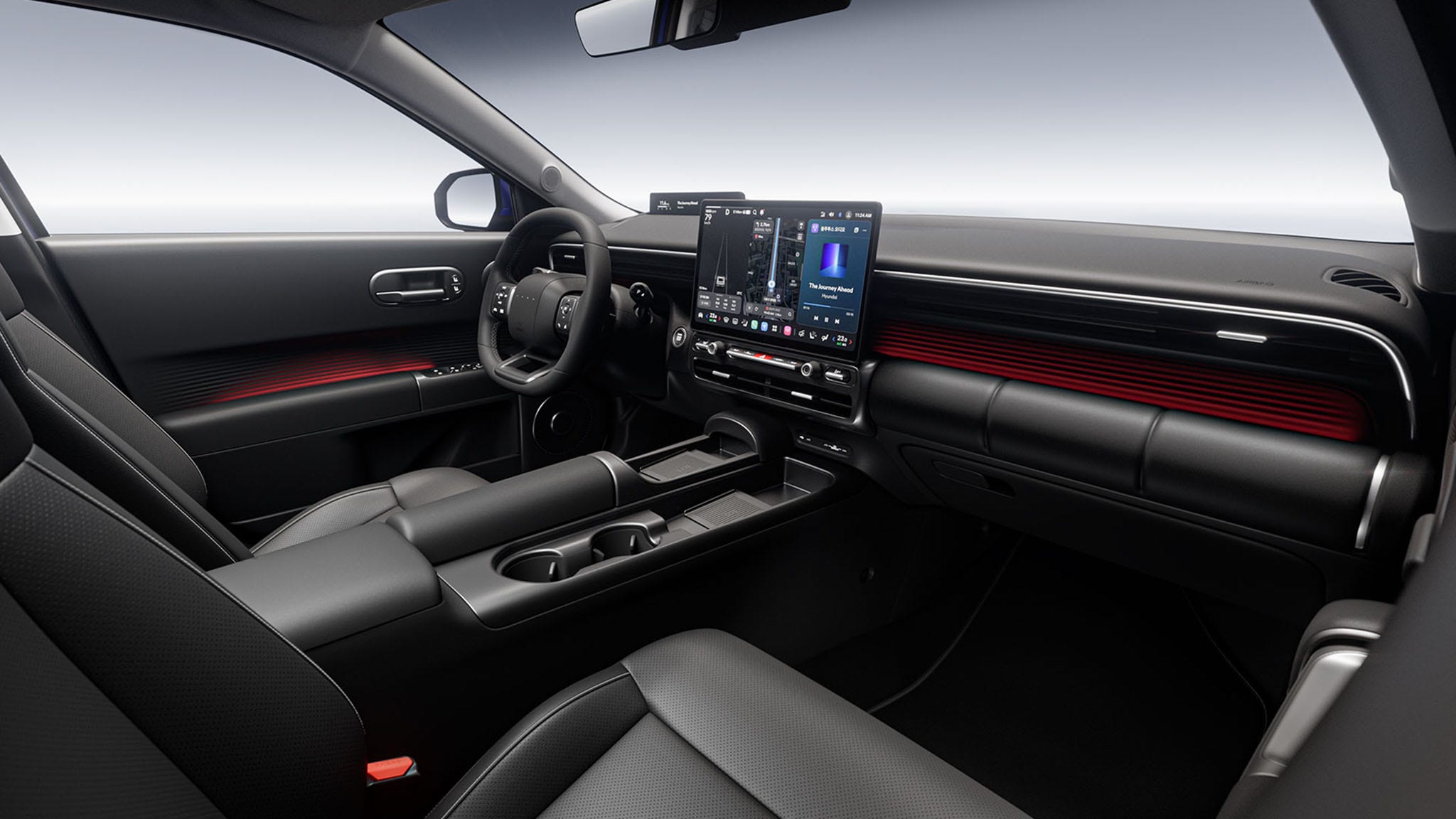


Forget tapping through nested menus or shouting overly specific commands at your dashboard. Hyundai has filed a U.S. patent application describing a system that pairs voice commands with hand gestures, letting occupants simply point at something in the cabin and tell the car what to do with it.
Patent application 2026/0260654 A1, titled “Method and Apparatus for Performing Voice Command Based on Gesture Recognition,” lays out a cabin equipped with cameras and sensors that track where your hand is aimed while you speak. Point at a window and say “open.” The system fills in the blanks your words leave out.
The twist that separates this from BMW’s ill-fated gesture control experiments is the fusion of two inputs. BMW tried hand-waving alone. Volkswagen tried it too. Neither stuck because drivers found the gestures ambiguous and unreliable.
Hyundai’s approach uses the voice command as the verb and the pointed finger as the noun, which is closer to how humans actually communicate. It sounds simple, but that simplicity is exactly why it might work where others failed.
Cabin cameras would identify which seat the voice originated from and then track that specific occupant’s gestures, filtering out overlapping hand movements from other passengers. The patent also describes additional microphones and sensors for rear-row occupants, plus push-to-talk buttons at each seating position for a more deliberate input method.
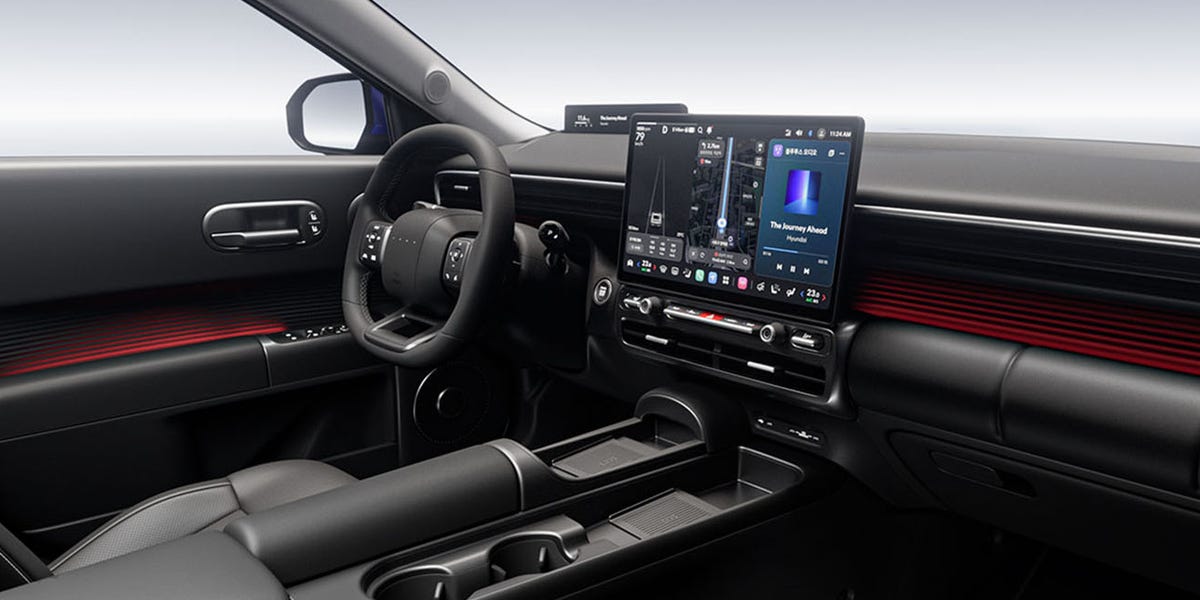
One intriguing detail buried in the filing: the system wouldn’t just control things. It could teach you about your own car. Touch an unfamiliar button, ask what it does, and the system responds with an explanation. That alone could save owners from cracking open a 400-page manual to figure out what “Auto Hold” means.
The patent notes that a corresponding application was submitted to South Korea’s intellectual property office last year, suggesting Hyundai has been developing this concept across multiple markets for some time. Hyundai and Kia would both potentially benefit, given their shared technology platforms.
A patent filing is not a product announcement, of course. Automakers register speculative technology constantly, and plenty of clever ideas die in the filing cabinet. But the logic here is sound.
Voice assistants in cars still stumble when commands are vague. “Roll down the window” requires the system to guess which one. Pointing eliminates that guesswork entirely.
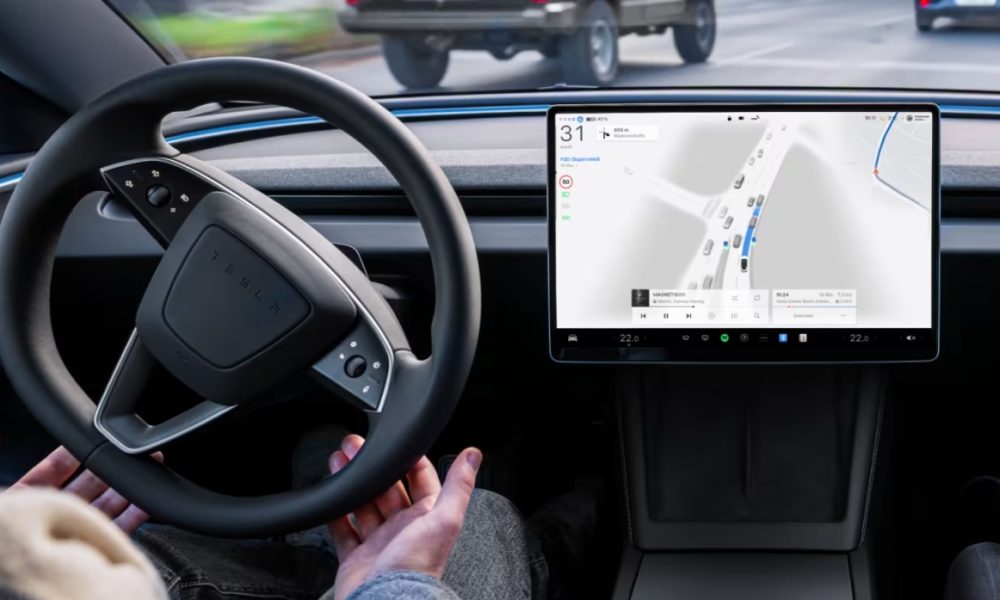
The auto industry has spent two decades trying to solve the interaction problem created by touchscreens, capacitive controls, and software-defined cabins. Physical buttons are disappearing. The alternatives keep multiplying, from eye tracking to head gestures to AI copilots that try to anticipate your needs before you express them.
Hyundai’s patent sits at a pragmatic intersection. It doesn’t ask drivers to learn a new gesture vocabulary or memorize specific hand signals. It just asks them to do what they already do instinctively when talking to another person: point at the thing and say what you want.
Whether this reaches a production Hyundai or Kia remains an open question. The deep-learning models referenced in the filing would need to handle varied hand positions, different lighting conditions, and the chaos of a family car with four people gesturing at once. Getting that right in a lab is one thing. Getting it right on a bumpy road with a toddler flailing in the back seat is another problem entirely.
Share this Story