
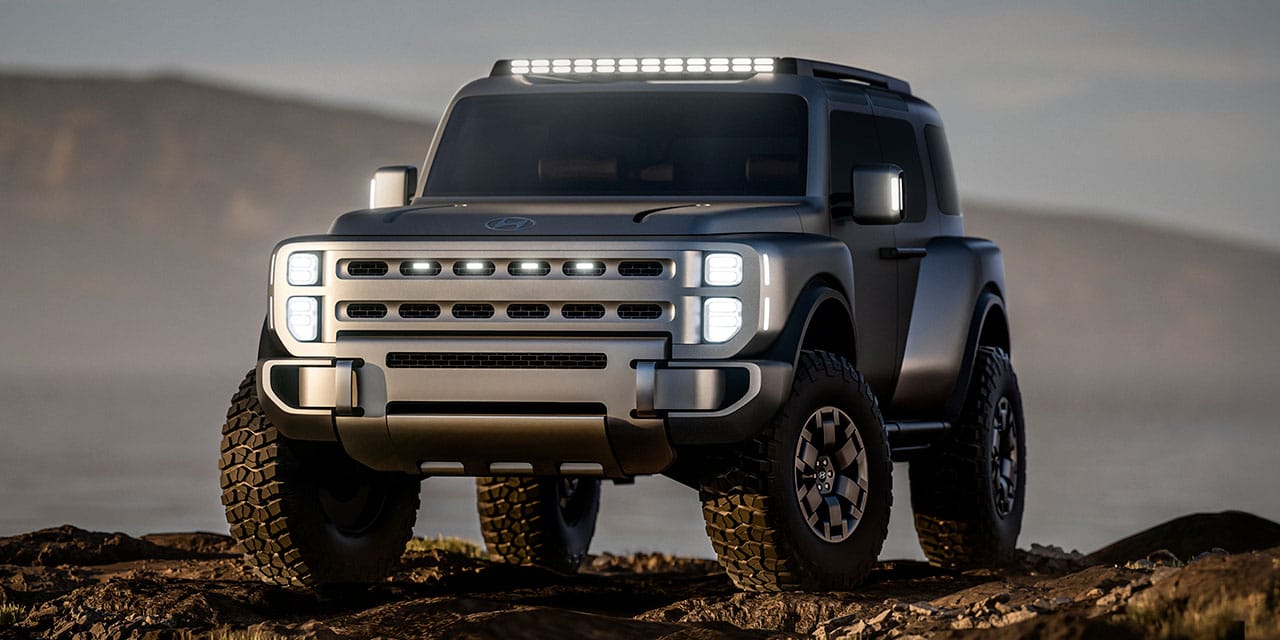


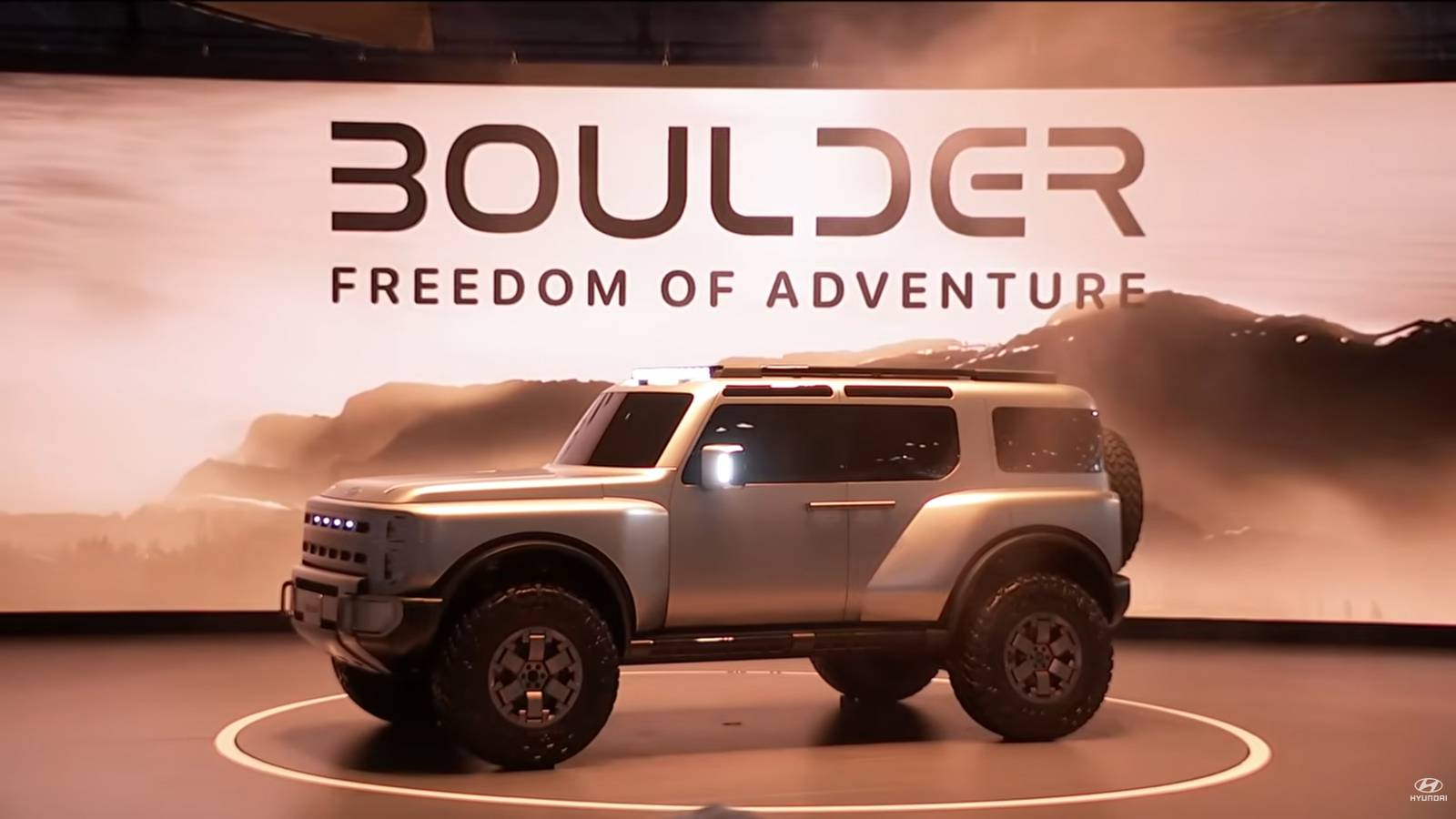
Hyundai just walked into the New York International Auto Show and dropped a body-on-frame SUV concept on the floor like a gauntlet. The Boulder Concept, unveiled April 1 with zero prior teasing, is a design preview of the Korean automaker’s first-ever U.S. body-on-frame pickup truck. It’s a midsize rig confirmed for production by 2030.
That’s not a typo. Hyundai — the company that built its American reputation on affordable sedans and crossovers — is going after Ford, Toyota, and Chevrolet on their home turf, with their preferred architecture, built with American steel.
The Boulder is an SUV in concept form, but the message underneath it is purely truck. It rides on a fully boxed ladder frame, the kind of construction that Tacoma and Ranger buyers have demanded for decades. Hyundai CEO José Muñoz didn’t mince words: “Body-on-frame vehicles are the backbone of American work and adventure, and we intend to compete in the midsize pickup segment with everything we have.”
Designed by Hyundai’s Southern California studio, the Boulder wears what the company calls its “Art of Steel” design language — a nod to Hyundai Steel’s materials technology and an unsubtle reminder that the company makes its own alloys. The proportions are upright and blocky, with a tall greenhouse, coach-style doors, fixed safari windows up top, and 37-inch mud-terrain tires delivering serious ground clearance. A double-hinged rear tailgate opens from either side, a full-size spare hangs off the back, and reflective material on the tow hooks and door handles lights up the vehicle’s silhouette at night.
None of this is accidental. Every detail screams off-road credibility, the exact currency Hyundai has never held in the American market.
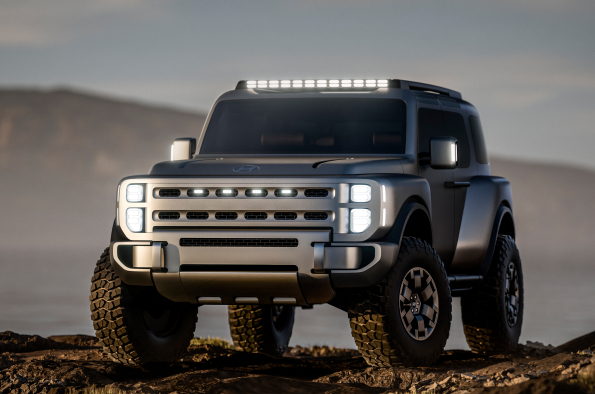
The interior leans into the same theme — robust materials at every touchpoint, grab bars in high-wear areas, and a software-driven real-time off-road guidance system that Hyundai describes as a “digital spotter.” The concept is finished in a color called Liquid Titanium, which photographs like brushed metal and reinforces the steel-as-design-statement branding.
Muñoz framed the Boulder as one of 36 new Hyundai vehicles headed to North America by 2030. The body-on-frame truck will be designed in America, developed for American customers, and built domestically. That phrasing isn’t just patriotic marketing — it’s tariff armor.
With trade policy shifting unpredictably and import costs rising, a fully American-made truck insulates Hyundai from the kind of political exposure that has hammered other foreign automakers.
SangYup Lee, head of Hyundai and Genesis global design, called the Boulder “a four-wheeled love letter to the dynamic, off-road way of life.” That’s press-release poetry, but the strategy behind it is hard-nosed. Hyundai’s U.S. sales have surged on the strength of Tucson, Santa Fe, and the IONIQ electric lineup.
The one segment they’ve never touched is the one that prints money: trucks. The midsize pickup market alone moves hundreds of thousands of units annually, and loyalty runs deep. Breaking in requires more than a good product — it requires conviction.
Hyundai is betting it has both. The Boulder is not a production vehicle, and four years is a long runway. Plenty can change.
But the company has a track record of moving from concept to showroom faster and more faithfully than most, and the IONIQ 5 proved they can generate genuine desire in a segment they’d never played in. The truck establishment should pay attention. Hyundai isn’t knocking on the door anymore — they just kicked it open.
Share this Story