
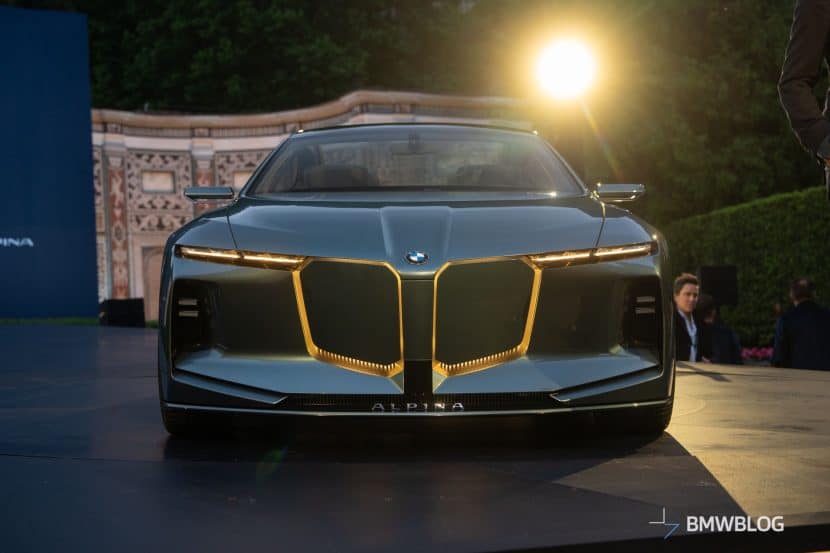


BMW’s resurrection of the shark nose has drawn predictable hand-wringing about whether a design born in the 1970s can survive in an era of strict pedestrian impact regulations. Turns out, that’s not the problem at all.
The real headache is stuffing a modern car’s worth of radar, cameras, and laser scanners into a pointy front end without making it look like a surveillance drone on wheels.
Maximilian Missoni, BMW’s Head of Design for Upper Mid-Size, Luxury Class, and ALPINA, laid it out plainly. “The shark nose is fine from a safety regulation perspective. As it turns out, the biggest challenge is all the driver-assist sensor systems, all the cameras, radars, and laser scanners. Integrating all these components is, I would say, from an exterior point of view, the biggest challenge of our days.”
That admission arrived alongside the Vision BMW ALPINA coupe, a one-off design study that parked next to an original E24 6 Series to make the lineage unmistakable. The concept’s closed-off kidney grilles and aggressive forward lean channel the spirit of a car designed when engineers worried about aerodynamics, not lidar placement.
BMW has been building toward this moment methodically. The 2024 Skytop, the 2025 Speedtop, and now the Vision coupe all ride on the 8 Series platform and all wear variations of the shark nose. The first two have already crossed from concept to limited production, 50 and 70 units respectively, proving the design can survive contact with real-world homologation requirements.
The Speedtop, a targa-topped machine, managed to retain its looks even after engineers crammed in every sensor the law demands. A shooting brake variant has been spotted testing at the Nürburgring, suggesting the shark nose family is growing, not shrinking.
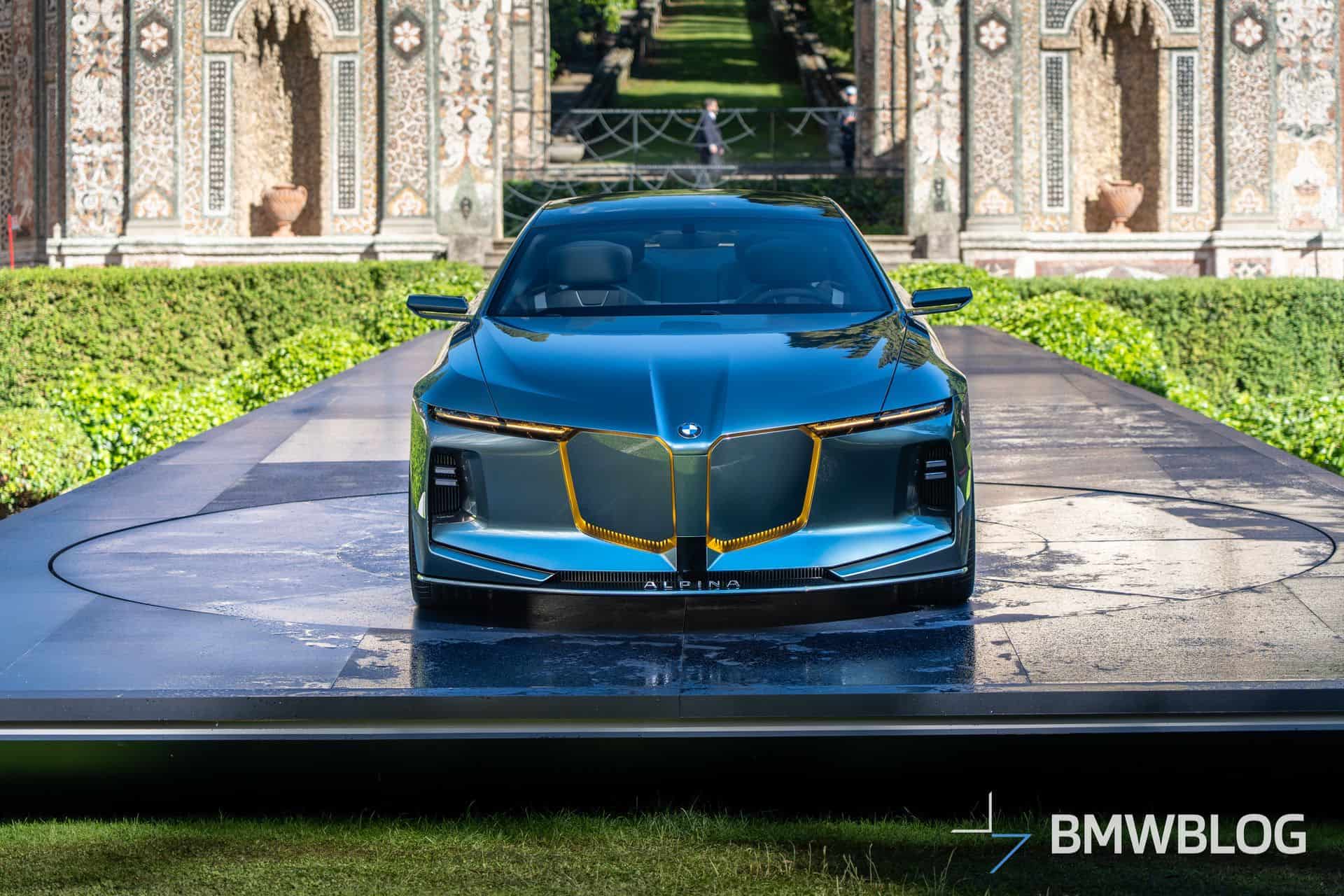
Here’s the tension BMW doesn’t talk about as openly. Every new generation of advanced driver-assistance systems adds more hardware to the nose. More radar modules, more camera housings, more ultrasonic sensors.
The front fascia of a modern luxury car is less a design surface than a circuit board wrapped in paint. Sculpting a clean, aggressive profile over that kind of infrastructure is a packaging nightmare, and it only gets worse as autonomy ambitions escalate.
The Vision coupe sidesteps this entirely because it’s a concept with no obligation to carry production-grade ADAS. Any future production version won’t have that luxury. Missoni’s team will have to solve the puzzle the hard way, hiding technology behind a design language that predates the microprocessor.
BMW ALPINA hasn’t committed to building the coupe. But the brand has confirmed a V8-powered ALPINA 7 Series for 2027 and is expected to give the second-generation X7 similar treatment. Electric ALPINAs are also on the horizon, which would at least eliminate the need for open grilles, one fewer constraint for designers fighting to keep the nose clean.
The shark nose revival tells a larger story about where car design stands right now. Safety regulations, the traditional villain in every automotive styling conversation, have become manageable. The new constraint is the invisible one: the thicket of sensors that autonomous and semi-autonomous driving demands.
Designers aren’t fighting crash-test dummies anymore. They’re fighting millimeter-wave radar modules and their placement engineers.
BMW’s willingness to tackle this head-on, putting the shark nose on multiple production-adjacent cars rather than just a motor show trophy, suggests confidence that the packaging problem is solvable. Whether the solution remains elegant at scale, beyond hand-built runs of 50 or 70 cars, is the question Missoni’s team hasn’t had to answer yet.
Share this Story