
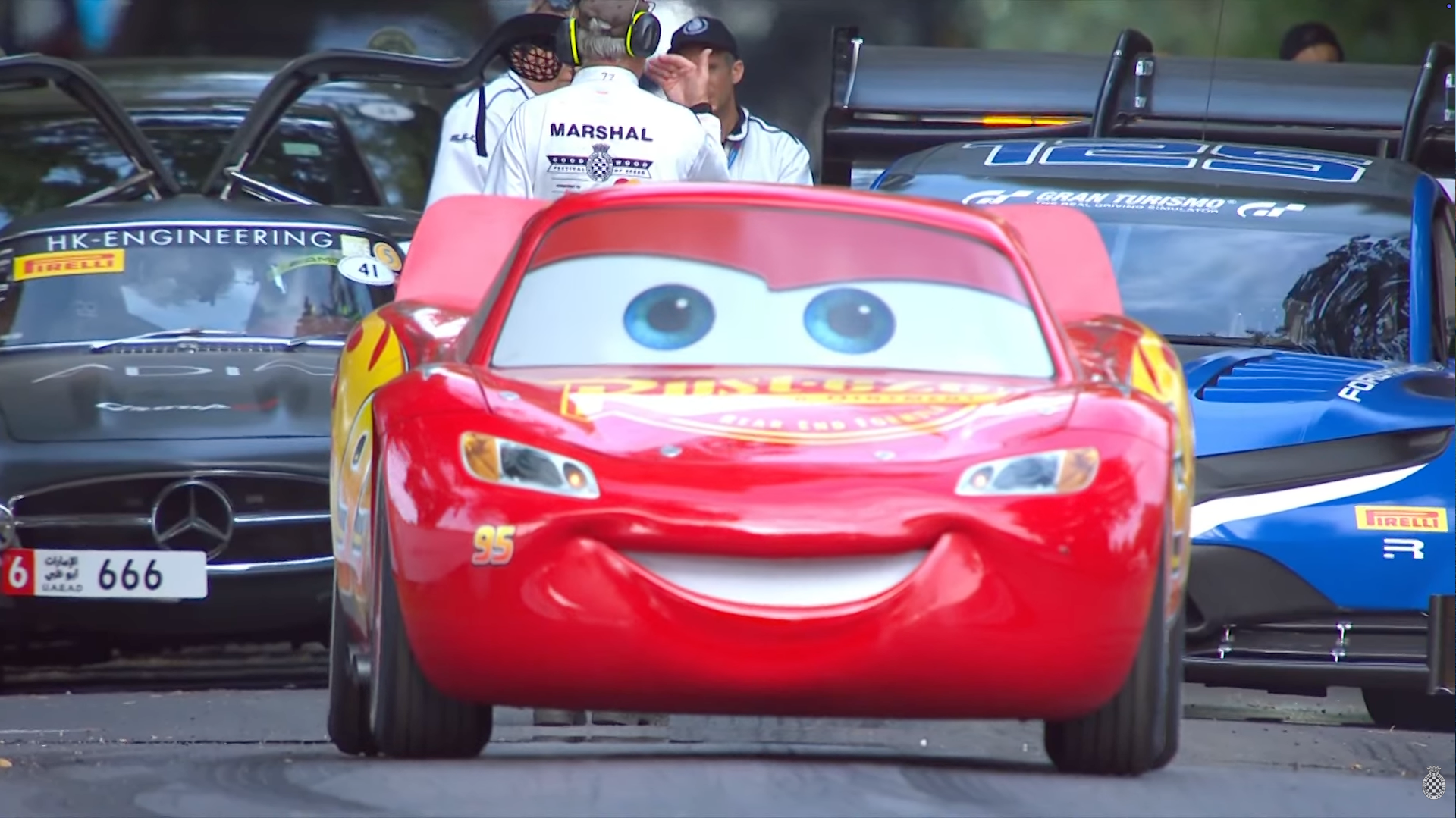


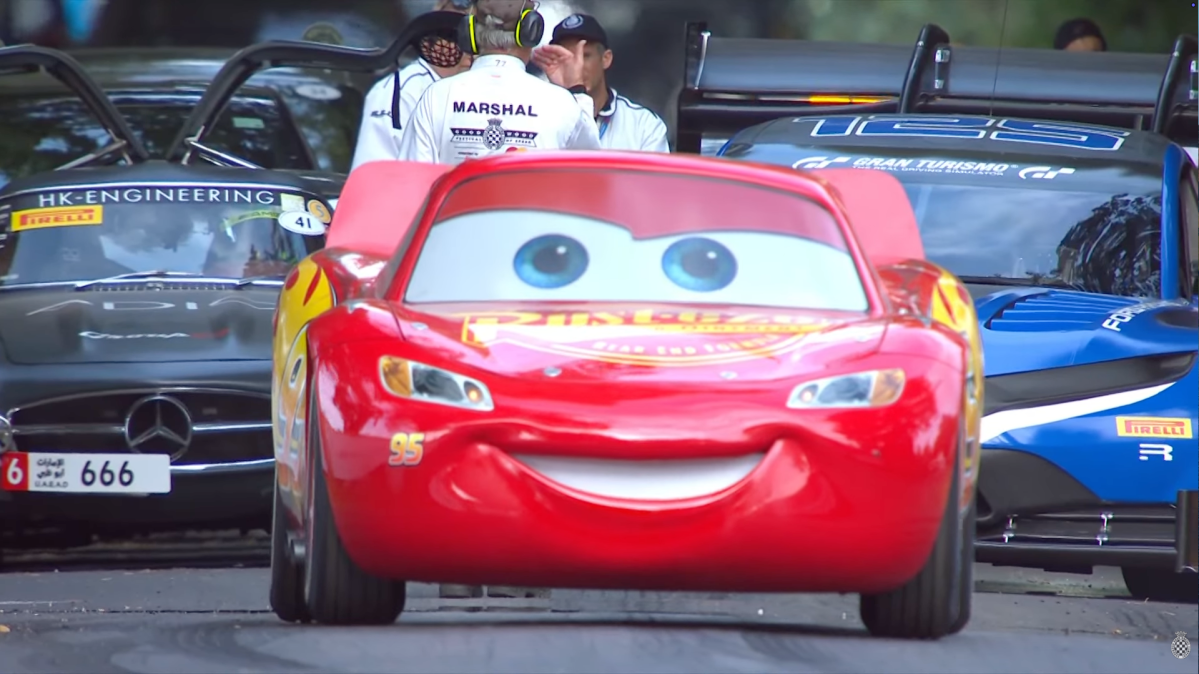
A life-size Lightning McQueen just rolled up the most famous driveway in motorsport. Not as a sideshow in some parking lot activation, but lined up at the Goodwood Festival of Speed starting line alongside actual race cars that cost more than most houses.
The 2026 Festival of Speed has officially peaked in absurdity, and it’s glorious.
Pixar’s fictional No. 95 Piston Cup champion made a full run up the 1.16-mile hillclimb course at the Duke of Richmond’s estate in West Sussex, England. No competitive time was posted. This was pure spectacle, the kind of thing Goodwood has increasingly embraced alongside its deadly serious displays of automotive history and engineering.
The timing feels deliberate. When the original Cars hit theaters in the summer of 2006, it became a gateway drug for an entire generation of kids who are now in their mid-twenties and buying their first performance cars. Pixar nailed the references — from the Hudson Hornet’s dirt-track heritage to a cameo by Michael Schumacher voicing a Ferrari. That movie did more for car culture recruitment than a thousand enthusiast magazines.
Now one of those fictional characters is sharing tarmac with machines driven by the likes of Kimi Antonelli in a Mercedes. The juxtaposition is either perfect or sacrilegious, depending on how tightly wound you are.
Goodwood has always walked this line. Lord March built the Festival of Speed into the world’s premier automotive gathering by refusing to treat cars as museum pieces. The event’s DNA is equal parts reverence and irreverence — a place where a 1930s Napier-Railton can share a paddock with a hypercar prototype and nobody bats an eye. Dropping a cartoon stock car into the mix is just the logical next step.
There will be purists who hate it. There always are. The same crowd that grumbles when a celebrity gets a passenger ride or when the event livestream cuts away from a Group C car to show something with a sponsorship deal. They’re missing the point. Goodwood survives and thrives because it refuses to become a stuffy concours. It lets the serious stuff breathe alongside the ridiculous, and both are better for it.
The real-life McQueen build, whatever it actually is underneath the bodywork, reportedly made it up the hill without incident. No ka-chow-induced mechanical failures, no animated tire blowouts on the final corner. Just a big red cartoon car rumbling past thousands of fans who almost certainly pulled out their phones instead of their timing apps.
Whether you think this is a brilliant cultural moment or a sign that the festival has jumped the shark probably says more about you than it does about Goodwood. The event has hosted everything from jet-powered land speed record holders to Formula 1 cars doing burnouts on a country lane. A Pixar character fits right in.
Nearly two decades after Lightning McQueen first told us he is speed, he finally got to prove it on one of the most iconic stretches of pavement in the sport. Nobody clocked the time. Nobody needed to. The run was never about pace — it was about the fact that a movie about talking cars loved motorsport enough, and got the details right enough, that the real motorsport world eventually loved it back.
Share this Story