
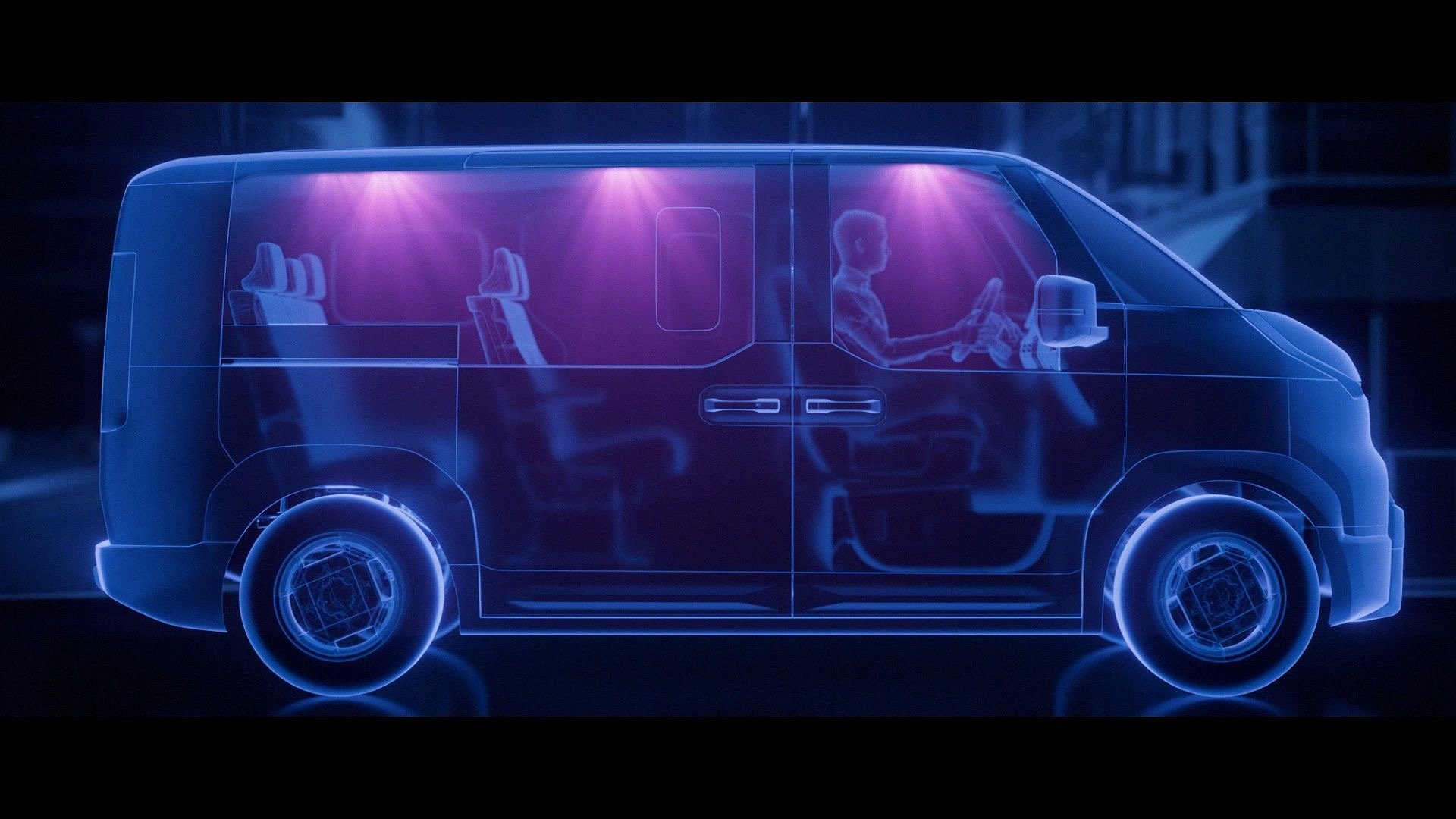


The pandemic is over, but Hyundai and Kia didn’t get the memo. The two Korean automakers have developed an ultraviolet light sanitizer designed to sterilize entire car interiors — while passengers are still sitting in them.
Called Plasma Care UVC, the system uses far-ultraviolet C light in the 200-230 nanometer wavelength range. That’s a narrow band powerful enough to kill bacteria and viruses but, the automakers claim, too weak to penetrate the keratin layer of human skin. It’s a careful balancing act between lethal and safe, and Hyundai and Kia say they’ve threaded the needle.
The tech isn’t entirely new in concept. Far-UVC has been floated for hospitals and schools. But cramming it into a car cabin introduced a fresh set of problems — tight quarters, faces inches from emitters, and a dashboard full of sensitive electronics that don’t appreciate being bathed in radiation.
Engineers swapped typical LEDs for plasma lamps, which hit the target wavelength more precisely, and added a filter as an extra safety layer.
The lab numbers are impressive, if you take them at face value. In a 282-cubic-foot chamber built to simulate a vehicle interior, the system cut airborne viruses by 96.8 percent in 30 minutes. Under more controlled conditions, it wiped out 99.9 percent of pneumonia-causing bacteria in 30 seconds and finished the job entirely in a minute.
A real-world test inside a Kia PV5 electric van eliminated 99.9 percent of E. coli after 40 minutes. Those are three very different test environments producing three very different timelines, which tells you more about the gap between lab results and production reality than the press release probably intended.
And production reality is exactly where this gets tricky. Hyundai and Kia acknowledge the system isn’t ready for showroom vehicles. More testing is needed, and regulatory approval remains a prerequisite. The automakers have a long history of publicizing R&D projects that quietly die on the vine, and there’s no timeline attached to this one.
The pitch makes the most sense for robotaxis and ride-share fleets, where vehicles cycle through dozens of passengers daily and nobody wants to think about what the last rider left behind. A system that reduces both pathogens and odors between fares has obvious commercial appeal in that context.
But there’s a glaring omission in the announcement. UV light is one of the most destructive forces an interior can face. It fades leather, cracks dashboards, degrades plastics, and yellows fabrics.
Every car owner who’s parked in the sun for a decade knows this intimately. Hyundai and Kia say nothing about what sustained UV exposure does to the seats, trim, and surfaces being sanitized. Killing bacteria is useful. Killing your $60,000 interior in the process is less so.
The automakers also don’t address whether customers actually want this. The germaphobia wave that drove demand for UV wands and surface sprays has receded considerably since 2021. Building hardware into a vehicle — with the associated cost, weight, and complexity — is a different proposition than buying a $30 gadget off Amazon.
For fleet operators running autonomous or shared vehicles, the calculus could work. For the average consumer shopping a Hyundai Elantra, it’s a solution still searching for a problem. The technology is real. The question is whether anyone asked for it.


Share this Story