
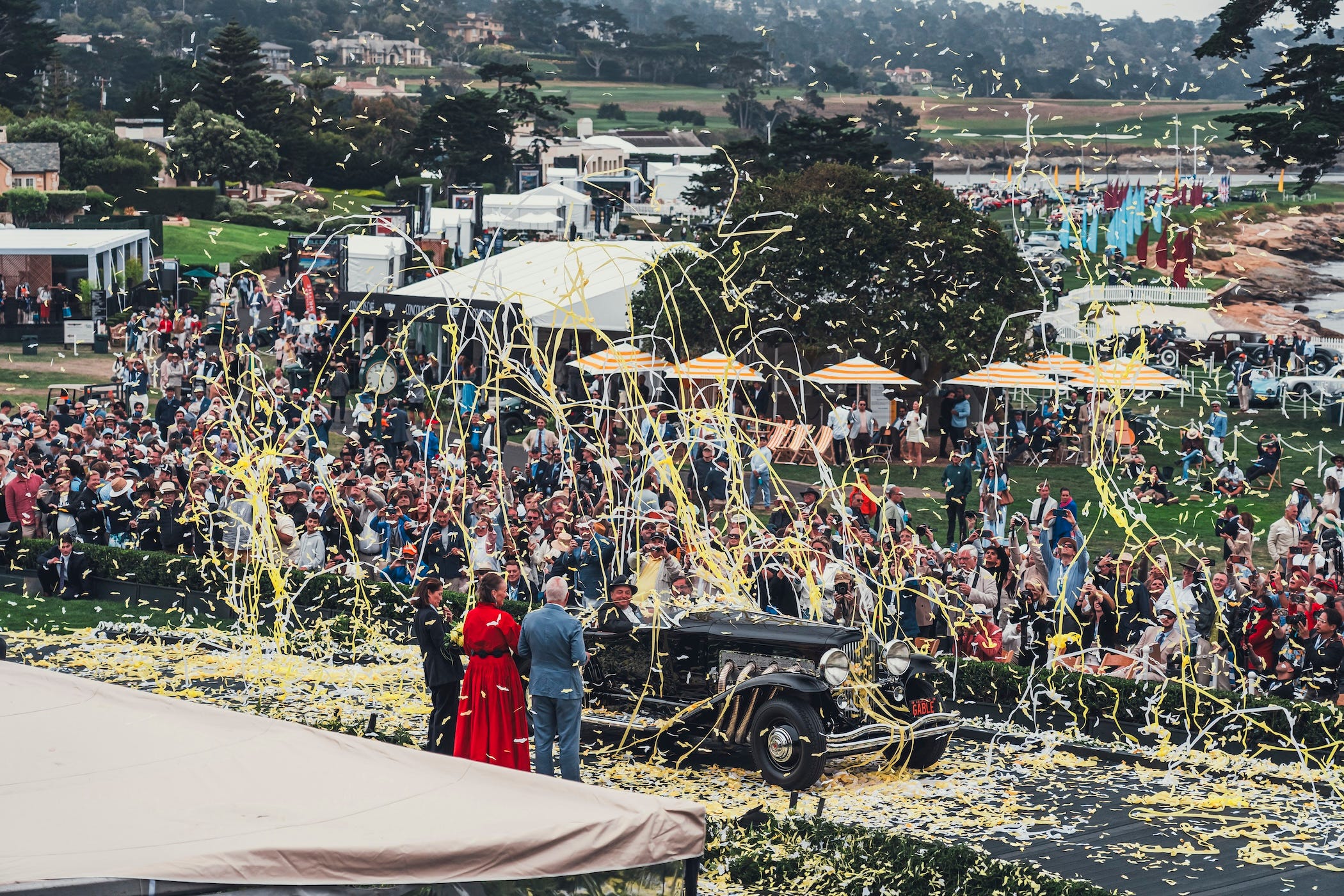


Harry Yeaggy spent 40 years chasing one car. He finally caught it.
The Cincinnati collector’s 1935 Duesenberg SSJ Special Speedster took Best of Show at the 75th annual Pebble Beach Concours d’Elegance, the single most coveted trophy in the world of classic automobiles. Yeaggy purchased the car three years ago after decades of pursuit, prying it from a family that had held it for more than 60 years.
“I’ve been trying to buy the car for 40 years,” Yeaggy said from the winner’s stand. “But I got it physically three years ago.”
Only two SSJs were ever built. Duesenberg took the already ferocious supercharged SJ, shortened the wheelbase, and turned the wick up further. Clark Gable drove this one. Gary Cooper had the other.
Hollywood royalty, Depression-era engineering excess, a production run of exactly two. The car practically wrote its own mythology before it ever rolled onto the 18th fairway.
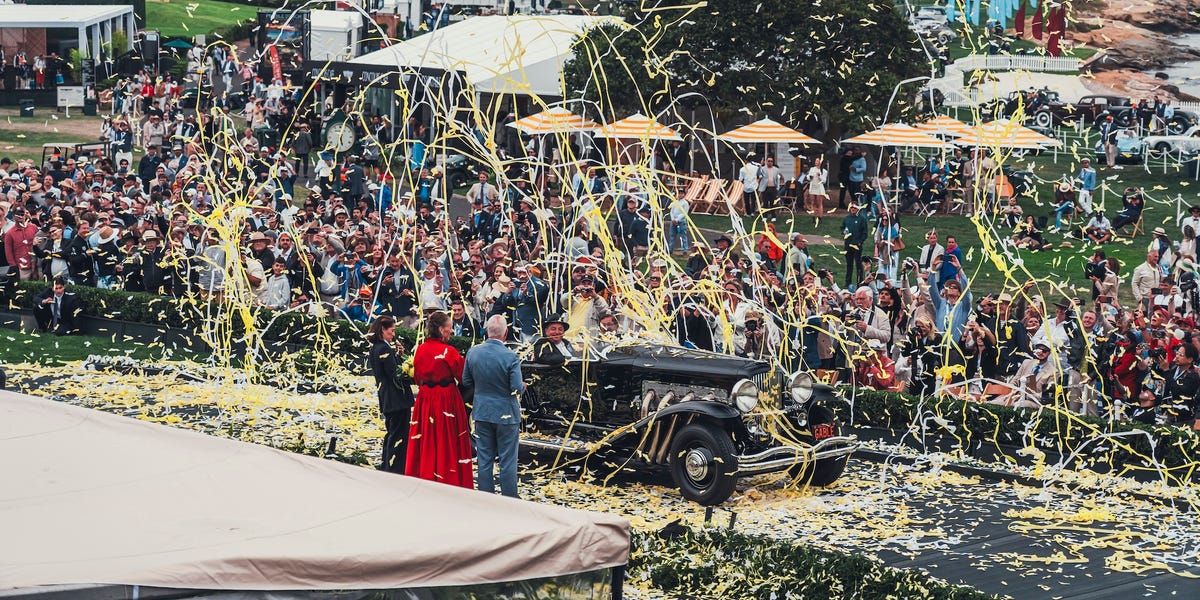
Ken Gross, a longtime concours judge and automotive historian with 36 years of involvement at Pebble Beach, called it the obvious choice. “Duesenberg’s slogan was ‘The Mightiest Motorcar.’ This is the mightiest Duesenberg,” Gross said. “It has all the elements needed to win at Pebble Beach.”
That assessment is hard to argue with, and it is also entirely predictable. Pebble Beach has long favored interwar European and American classics, the kind of cars built in single digits by craftsmen who understood that excess was a design philosophy. A prewar Duesenberg winning Best of Show at Pebble Beach is like a Bordeaux winning at a French wine competition.
Gross himself acknowledged the pattern. “I liked it when a postwar car won Best of Show several years ago. I think we’ll see another postwar winner in the near future,” he said. “For now, the tradition endures. At least for a while.”
That quiet concession tells you where the tension lives. The Concours is 75 years old now, a Diamond Jubilee, and the gravitational pull of prewar metal remains strong. Postwar cars, mid-century racers, even early supercars have all made deeper inroads into the show field over the past decade. But when the judges gather on the lawn for the final vote, the safe money still rides on something from the 1920s or 1930s with a long hood, exposed exhaust pipes, and a former movie star’s name in the provenance file.
Yeaggy’s SSJ checks every box. Rarity, celebrity ownership, mechanical distinction, visual drama. It is a car that exists at the intersection of art, engineering, and wealth, which is exactly what Pebble Beach has always celebrated.
Gross called this year’s gathering the finest in his three and a half decades with the event. Whether the field was truly the best ever or whether nostalgia sharpens with round-number anniversaries is a question best left to the people who were there. What is clear is that the 75th Concours ended the way most of them do, with a prewar titan on the ramp and a crowd that expected nothing less.
The real question is whether the 76th will look any different. Gross seems to think the walls are shifting. The judges, many of whom grew up worshipping cars from the 1950s and 1960s, are slowly expanding the definition of what belongs at the top.
Pebble Beach moves at the speed of tradition, and tradition just won again.


Share this Story