


The first-generation Dacia Spring sold more than 210,000 units across 40 countries. Built in China, it was the cheapest electric car in Europe. Now the second generation ditches the Chinese factory entirely, shifting production to Renault Group’s plant in Novo Mesto, Slovenia.
That single decision tells you more about the state of the European auto industry than any policy paper could.
The EU slapped tariffs on Chinese-built EVs last year. Dacia’s parent company Renault saw the writing on the wall and pulled the trigger on reshoring before the politics got worse. The new Spring arrives as a European-built car priced at €17,900 in Italy, with Dacia promising it will stay under €20,000 across the continent before government incentives.
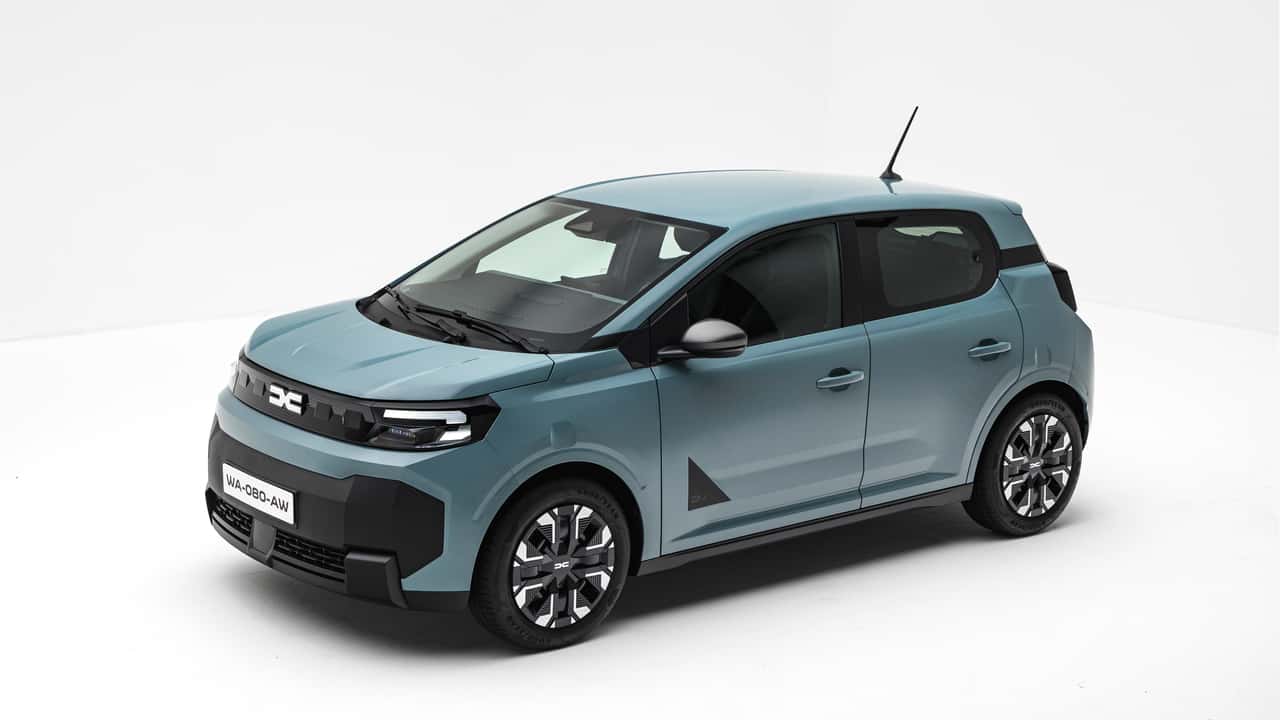
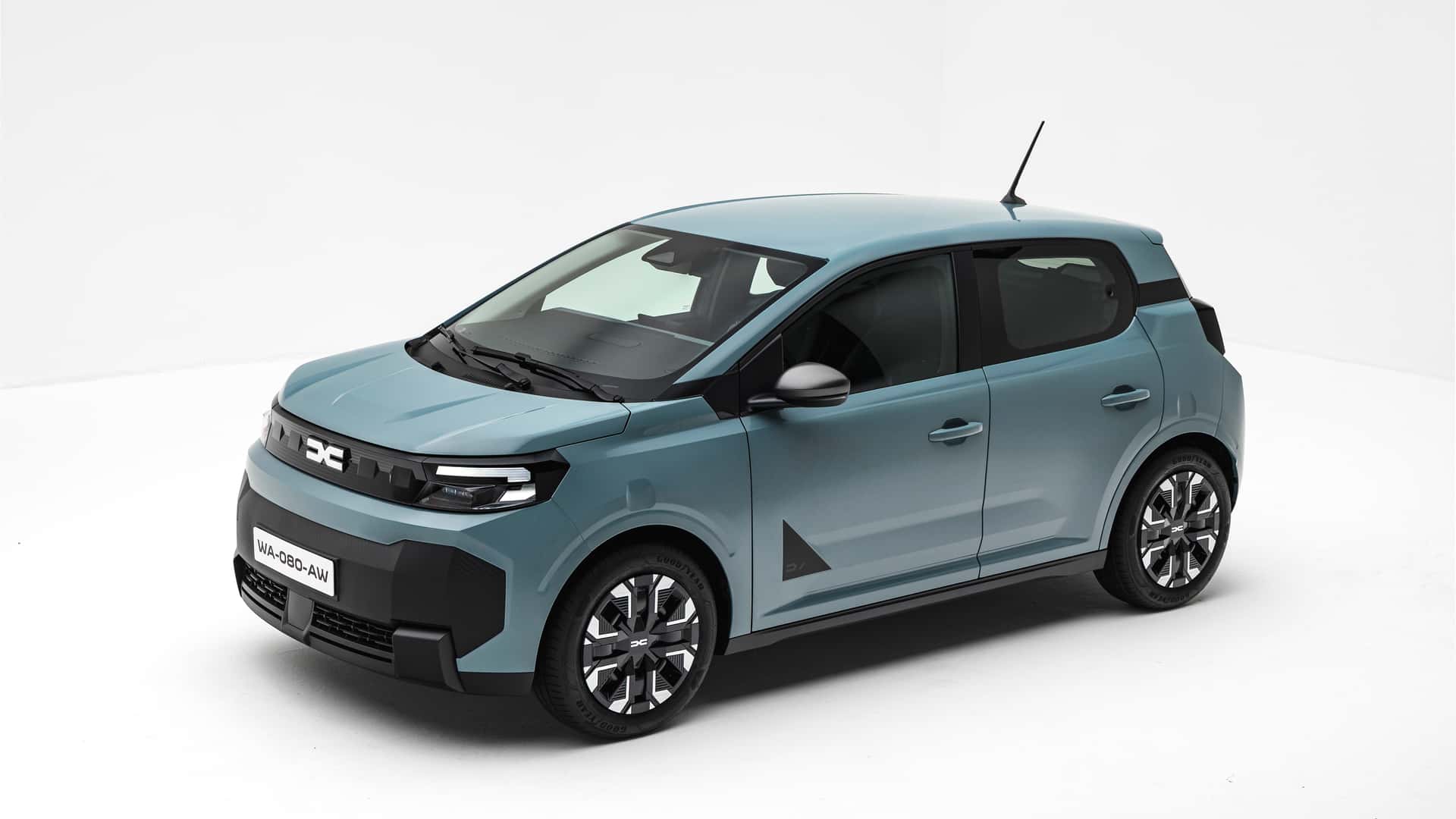
For that money, buyers get a complete redesign. The new Spring is 5.9 inches longer and 7.1 inches wider than the outgoing model, pushing it from “toy” territory into something that actually looks like a proper car. Pronounced wheel arches, a sculpted front end, and an upright stance give it a chunkier presence on the road, even though at 151.6 inches long it remains firmly a city car.
Under the skin, a single electric motor produces 80 horsepower and 129 pound-feet of torque. Zero to 62 mph takes 12.1 seconds. Top speed is 81 mph.
None of that will quicken anyone’s pulse, and it’s not supposed to. Dacia says previous Spring owners averaged just 21 miles of daily driving, with three-quarters of them charging at home. The car is built for the school run and the supermarket, not the autobahn.
The 27.5-kWh lithium iron phosphate battery delivers up to 155 miles of WLTP range, a marginal improvement over the old car. Standard 6.6-kW AC charging fills the battery overnight. An optional 50-kW DC fast charger gets from 15 to 80 percent in 28 minutes, which is reasonable for a battery this small.
Inside, Dacia has resisted the urge to strip out every physical control. A 7-inch digital instrument cluster pairs with a 10.1-inch touchscreen, but real buttons and knobs handle climate and audio. The shifter and volume controls live behind the steering wheel, a Renault trait that dates back years.
Trunk space hits 337 liters, expanding to 1,283 liters with the rear seats folded. An optional under-hood compartment adds 18 liters for the charging cable. The feature list, depending on trim, runs to keyless entry, a rear camera, wireless Apple CarPlay and Android Auto, and vehicle-to-load capability.
Pop-out rear windows, a near-extinct species in 2026, make an appearance.
The Spring is the first of four fully electric Dacia models planned before 2030. It lands as the Renault Twingo, its corporate cousin, also gets an electric reboot with a retro design. The two cars will share showroom floors in some markets, creating an unusual dynamic where a parent company competes directly with its budget brand in the same segment.
Zero-emission vehicles accounted for 22.2 percent of all new car sales across the EU, UK, and EFTA countries during the first half of this year. The EU’s 2035 target demands a 90 percent reduction in fleet CO2 emissions compared to 2021 levels. Cheap EVs are no longer a nice-to-have; they are the math that makes compliance possible.
Dacia has never pretended to be anything other than the cheapest option in the lot. The question now is whether a European-built Spring at under €20,000 can hold that line as raw material costs, labor rates, and regulatory burdens keep climbing.

Share this Story