
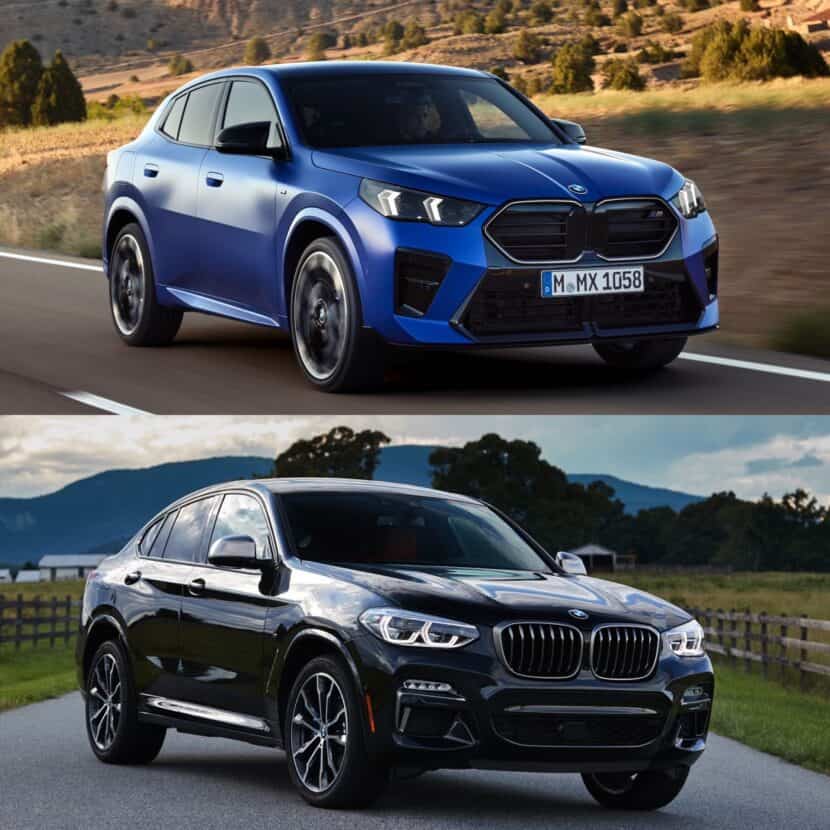


The last gasoline BMW X4 rolled off the Spartanburg line in late 2025. No combustion successor is coming. BMW’s official position is that the front-wheel-drive-based X2 can absorb leftover demand until the electric iX4 arrives from Hungary sometime this fall, and that logic looks increasingly thin.
The X4 moved 10,620 units in the U.S. in 2021, right in the teeth of the chip shortage, when dealer lots were half-empty and allocation was rationed across the entire lineup. It hit 9,969 in 2022. These are not numbers that suggest a dying product.
The decline that followed, dropping to roughly 5,000 units by 2025, tracks perfectly with a car that hadn’t received a meaningful update since 2021 and was visibly running out the clock.
BMW says the X2 covers the coupe SUV niche now. From a silhouette standpoint, sure. From an engineering standpoint, the comparison collapses.
The X4 rode on CLAR, the same rear-wheel-drive-based architecture underpinning the X3. The X2 sits on UKL2, a front-wheel-drive platform shared with the X1, the 2 Series Active Tourer, and the MINI Countryman. Even in xDrive form, the X2 is a transverse-engine, FWD-biased crossover that sends torque rearward only when it has to.
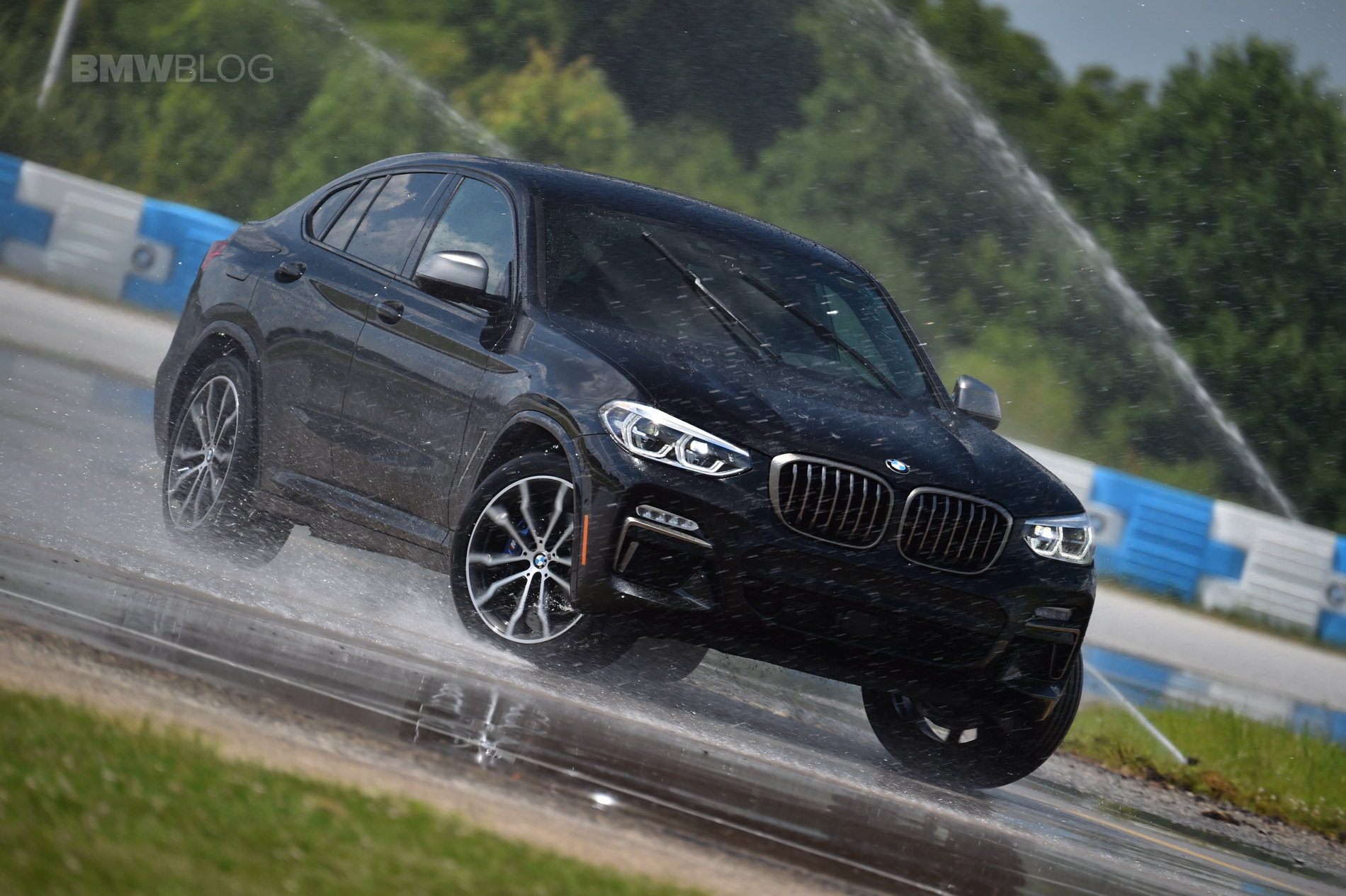
Anyone who has driven an X4 M40i back to back with an X2 M35i feels the difference before the first corner exit. The X4 rotates. The X2 pushes. One behaves like a 3 Series in a taller suit, and the other, despite genuinely good chassis tuning, carries the fundamental character of a front-driven hot hatch wearing lifts.
The X4 M40i and X4 M Competition were the real point of the car’s existence. The B58 inline-six, a chassis tuned more aggressively than the X3’s, a limited-slip differential borrowed from the M5. Road testers consistently called the X4 M one of the most entertaining SUVs BMW sold, full stop.
There is no direct replacement for that formula in the current lineup. The X3 M does not exist right now. The X2 M35i is a four-cylinder, front-driven car pretending to play in the same league.
Meanwhile, the rest of the segment is still spending money on coupe SUVs. Audi kept the Q5 Sportback through its latest redesign. Mercedes redesigned the GLC Coupe rather than killing it. Porsche’s Macan, now electric-only, remains the enthusiast benchmark at this price point.
If the format were played out, BMW’s competitors would be retreating too. They are not.
BMW is betting the coupe SUV’s future entirely on the iX4, arriving roughly two years after the gas car died. That is a long gap, and it comes at a moment when American EV demand has softened through 2025 and 2026. A growing share of shoppers who considered going electric two years ago are back to cross-shopping gasoline.
The X4 buyer skewed toward someone willing to trade rear headroom for style and a sportier chassis, someone disproportionately likely to spend up into M40i or M territory. That customer cross-shops the Macan and the GLC Coupe, not a Highlander. And that customer is the least likely person on earth to be satisfied by a UKL2-based crossover marketed as a spiritual successor.
BMW invented the compact coupe SUV segment in 2014. It sold the car in five figures through a global chip crisis. It built some of the most entertaining performance variants in the SUV world around that platform. And then it walked away from the format before anyone else did, leaving a two-year hole in the lineup that its competitors are more than happy to fill.
Share this Story