
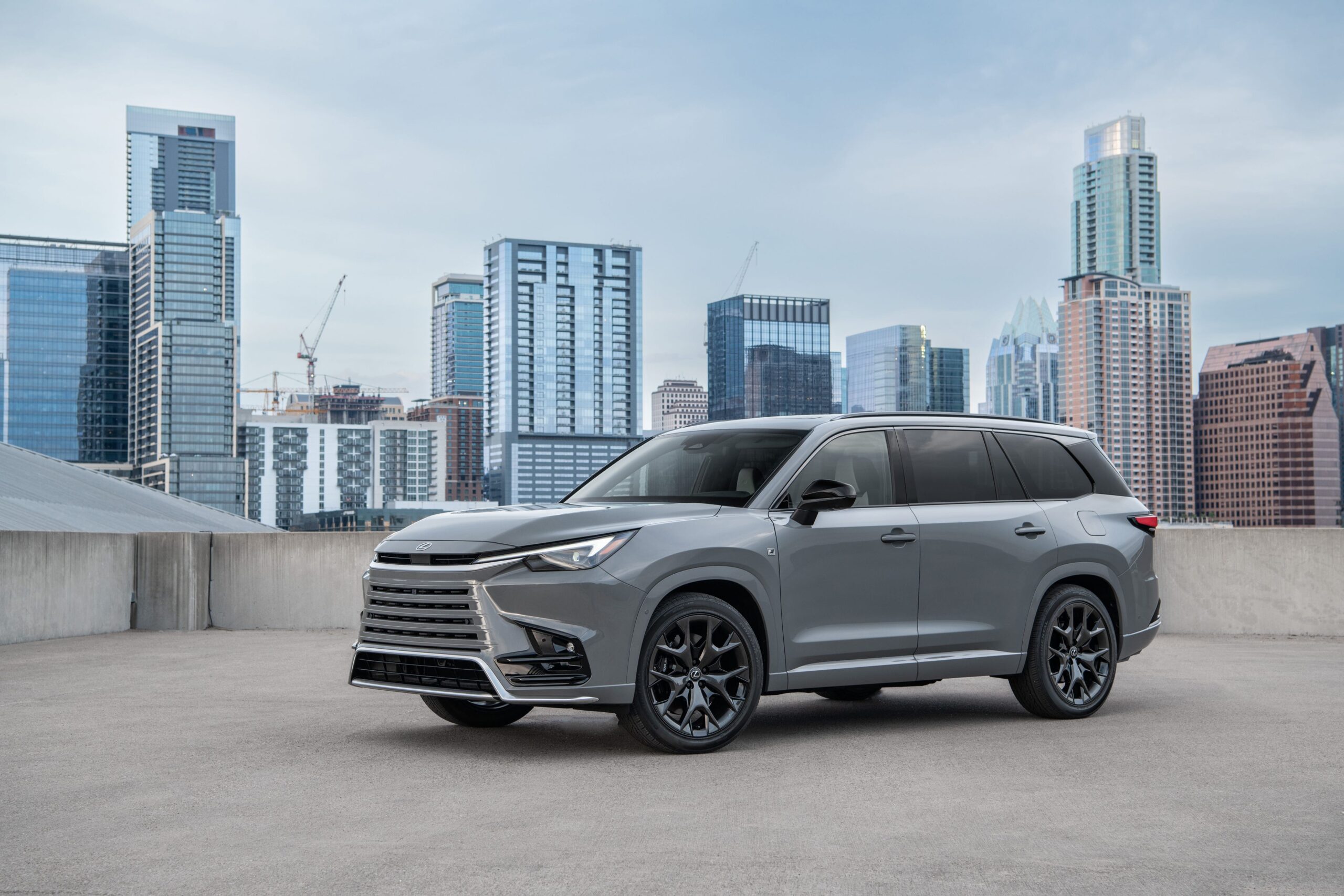


Lexus sold 57,346 units of the TX in 2025. Exactly 953 of those were the plug-in hybrid TX550h+. That is 1.7 percent of the lineup’s total volume, and it was the model’s best year.
Now the TX550h+ is dead, discontinued after the 2026 model year, barely two full cycles after Lexus launched the three-row SUV with a plug-in option as part of its electrification push. The automaker confirmed the cut without offering an official reason, but the sales ledger does all the talking.
The standard hybrid TX500h, by contrast, moved 10,740 units last year. More than eleven times the PHEV’s volume. Buyers who wanted electrification in their three-row Lexus overwhelmingly chose the simpler, cheaper hybrid over the plug-in, which carried a heavier price tag and the kind of complexity that clearly didn’t translate into showroom demand.
Through the first three quarters of 2026, the TX550h+ has already matched its full-year 2025 total of 953 sales, so it will likely post a slight improvement in its final year. A modest uptick on the way to the grave is hardly a success story.
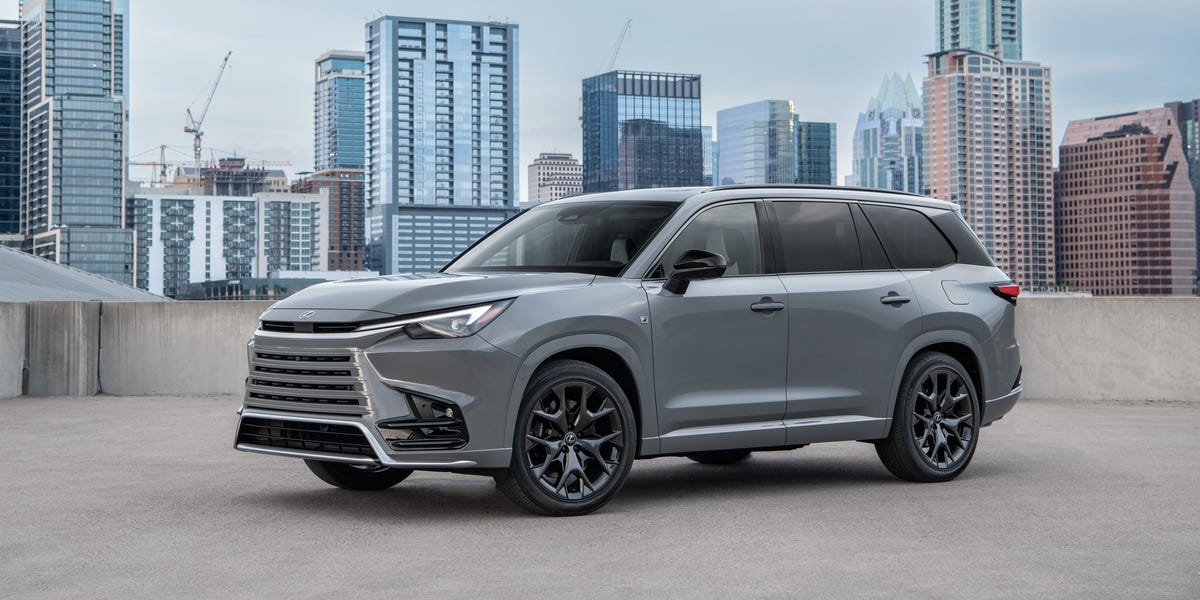
The TX itself is doing fine. It slotted neatly between the RX and LX as Lexus intended, and the gas-only TX350 accounts for the bulk of sales. For 2027, both surviving models get minor updates. Matador Red Mica paint, previously restricted to F Sport trims, expands across the lineup. F Sport models pick up red brake calipers.
The TX350 gets revised brake booster tuning and darker 20-inch wheels. The TX500h drops its “DIRECT4” badge in favor of a simple “AWD” designation, a quiet acknowledgment that most buyers neither know nor care about the specifics of the all-wheel-drive system’s torque distribution.
Powertrains carry over unchanged. The TX350 runs a turbocharged 2.4-liter four-cylinder making 275 horsepower, offered in front-wheel-drive or all-wheel-drive configurations. The TX500h pairs that engine with two electric motors for 366 combined horsepower and standard all-wheel drive. Pricing starts at $58,890 for the TX350 and $72,410 for the TX500h F Sport Performance Premium.
The TX550h+’s failure is not unique to Lexus. Plug-in hybrids occupy an awkward middle ground, too expensive for buyers who just want fuel efficiency and too compromised for those ready to go fully electric. When the price gap between a conventional hybrid and a PHEV is substantial, and when the hybrid already delivers strong fuel economy, the math rarely works in the plug-in’s favor.
Lexus learned this lesson quickly and, to its credit, acted on it rather than dragging the model along for years to save face. Automakers across the industry loaded up on PHEV variants between 2022 and 2024, betting that plug-in hybrids would serve as a bridge technology. Some have found traction, particularly in segments where tax credits and fleet regulations tilt the economics.
Three-row luxury SUVs, where buyers prioritize space and refinement over charging logistics, turned out to be the wrong place for that bet. The 2027 TX is expected at dealerships before year’s end. It will arrive as a simpler, two-powertrain lineup, which is probably what it should have been from the start.


Share this Story