
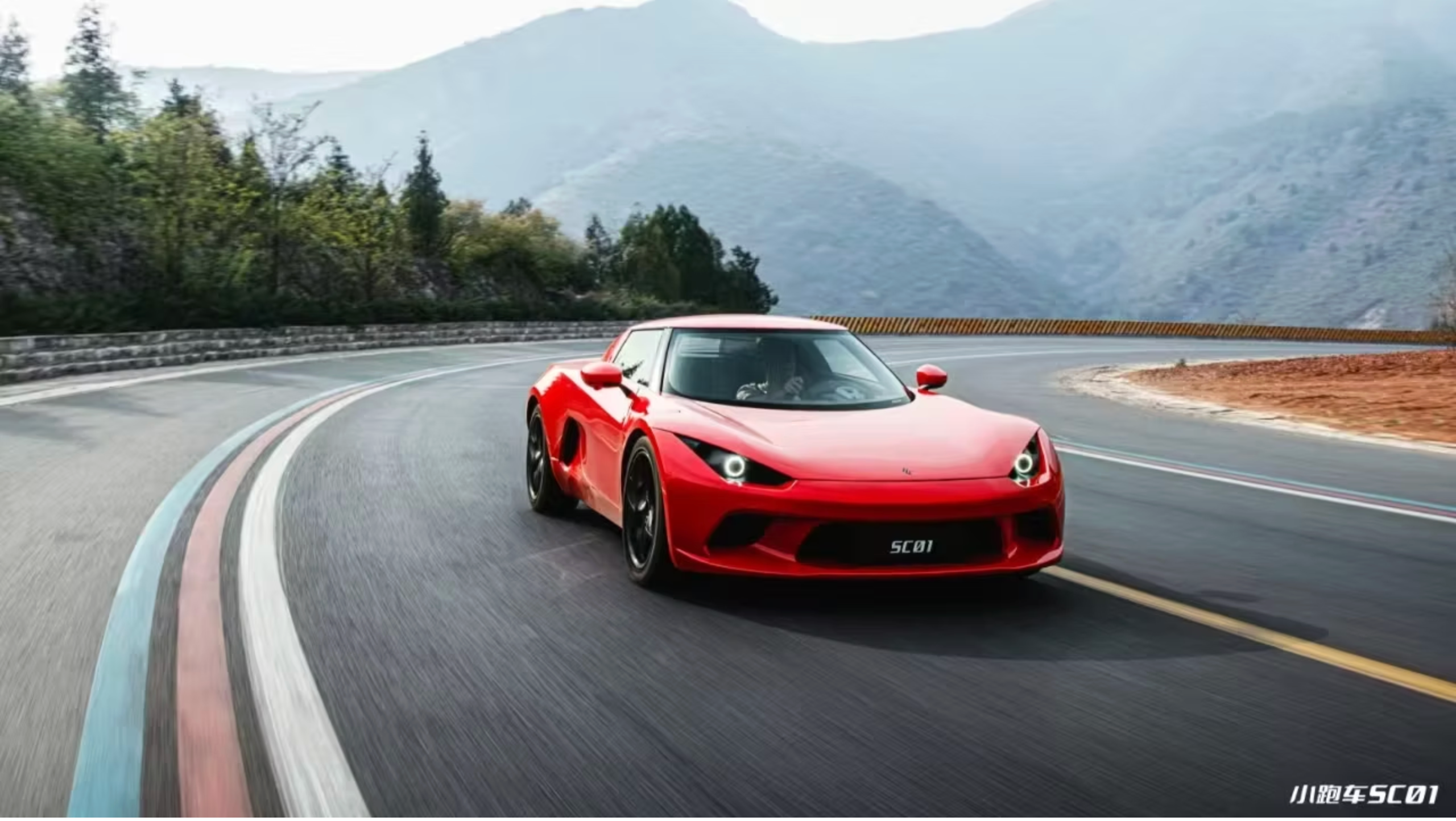


The Small Sports Car Company, a Chinese startup with a name that leaves nothing to the imagination, has unveiled the SC01, a fully electric two-seater with 430 horsepower, a claimed curb weight just north of 3,000 pounds, and a home-market price equivalent to roughly $34,000. That’s less than a four-cylinder Ford Mustang.
Read those numbers again. A power-to-weight ratio nudging Porsche 911 territory, for the cost of a base pony car.
The SC01 packs a 60-kWh battery, dual electric motors, and a chassis that borrows liberally from the Lotus playbook. Unequal-length control arms at all four corners, inboard springs and dampers, and styling that evokes a baby Evora make the lineage clear. British racing green launch color? Not subtle.
SSCC is targeting the U.K. first, joining a growing wave of Chinese automakers using Britain as a beachhead into Western markets. U.K. pricing hasn’t been released, and any talk of American availability runs headfirst into the tariff wall that currently makes Chinese-built EVs functionally unimportable to the U.S. at competitive prices.
The irony here is thick enough to cut. Lotus, the company Colin Chapman built on the mantra of “simplify, and add lightness,” now sells the Eletre, a 5,500-pound electric SUV assembled in China. Meanwhile, a Chinese company nobody has heard of is building what looks and specs like a spiritual successor to the Elise, also in China, for a fraction of the Eletre’s price.
Chapman would have opinions about this.
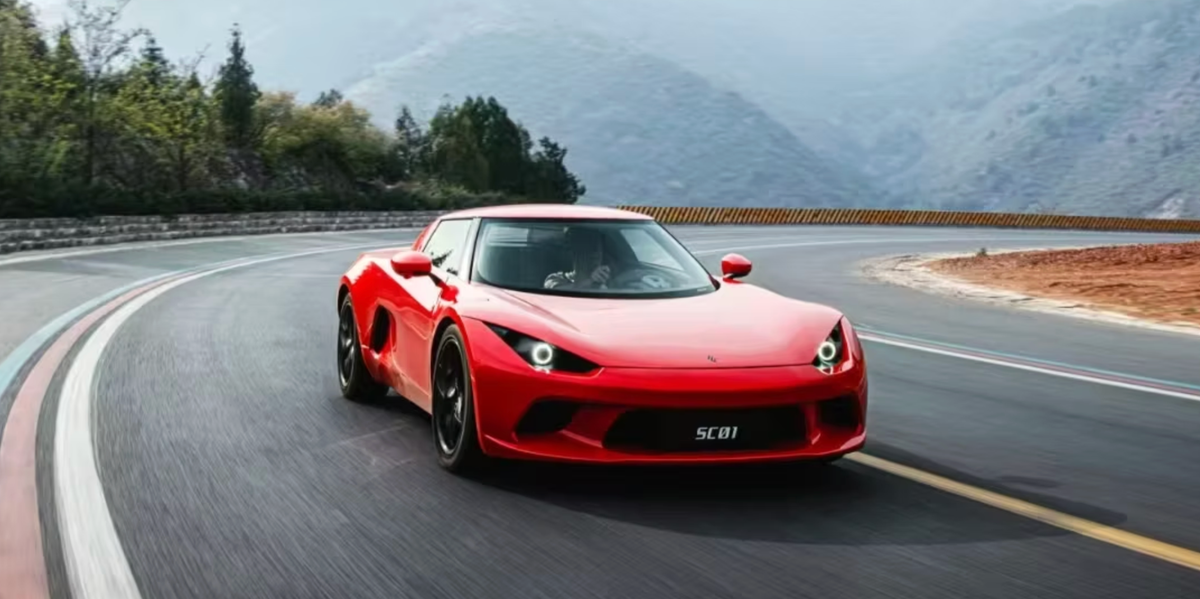
Sub-three-second sprints to 60 mph and an estimated 300-mile range put the SC01 squarely in the performance conversation, not just the curiosity bin. Getting an EV down to 3,000 pounds is an engineering achievement that most established automakers haven’t managed, or frankly haven’t bothered to attempt. The industry has been so consumed with building electric crossovers that the idea of a lightweight, affordable electric sports car has been treated as a fantasy.
The parallel to Japan in the 1980s is hard to ignore. Mazda studied the Lotus Elan, distilled its essence, and created the Miata, a car that went on to outsell every British roadster combined. China’s auto industry has spent years absorbing Western engineering philosophy, sometimes too literally. The SC01 feels like an attempt to move past imitation into something more deliberate.
Whether this particular car ever reaches buyers in meaningful numbers is another question. The sports-car market is a niche within a niche, and SSCC has zero brand recognition outside of enthusiast forums. Building a compelling spec sheet is one thing. Building a car that actually delivers on a twisting road, that holds together after 50,000 miles, that earns trust from buyers accustomed to Porsche and Mazda quality, is something else entirely.
But the threat it represents is real. If a startup can package this kind of performance at this price, it puts pressure on every legacy automaker still charging six figures for an electric sports car and calling it accessible. Toyota’s GR86 suddenly has a theoretical rival with twice the horsepower. The Porsche Cayman’s electric successor, whenever it arrives, will have to justify a price premium three or four times what the SC01 costs at home.
SSCC has said nothing about U.S. plans. Tariffs currently sitting at 100 percent on Chinese EVs would double the price and kill the value proposition. A partnership model, perhaps something resembling Caterham’s kit-car approach, could be a workaround. Or it could remain a U.K.-only curiosity.
Either way, a Chinese company just showed up with a car that looks like the affordable electric Lotus that Lotus itself decided not to build.
Share this Story