
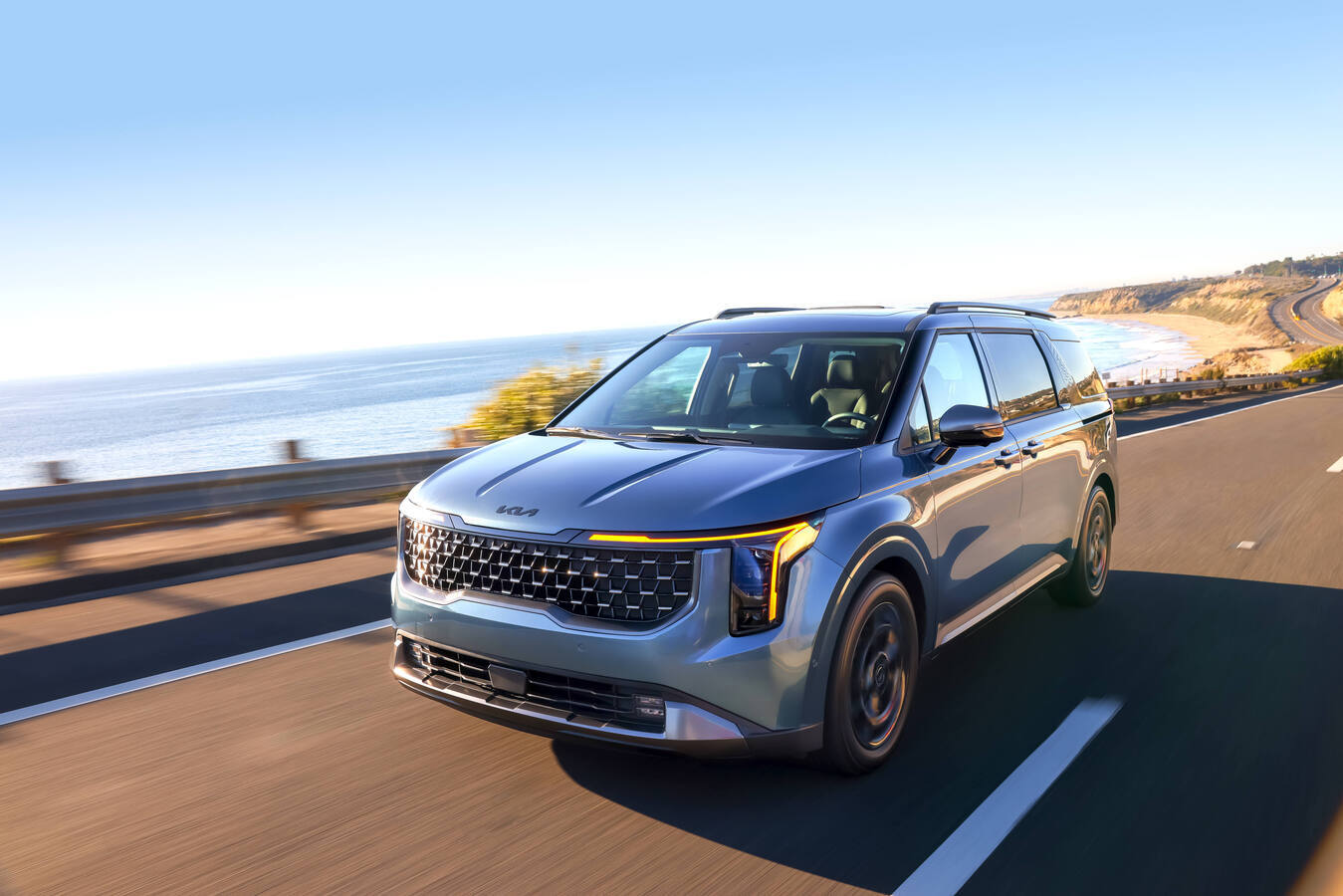


Two Kia models just landed at the top of J.D. Power’s 2026 U.S. Initial Quality Study, and one of them nearly beat every vehicle in the industry. The K4 compact sedan ranked second overall across all brands and segments, while the Carnival minivan claimed the top spot among minivans. Both were measured on problems reported during the first 90 days of ownership.
The K4 result is the more interesting one. A compact sedan — not a luxury flagship, not a tech-laden SUV — finishing as the second-cleanest new vehicle sold in America is unusual. That the car is built at Kia’s Nuevo Leon, Mexico plant, which simultaneously won J.D. Power’s Gold Plant Quality Award for the Americas, makes the story harder to dismiss as a fluke.
Plant quality awards strip out design-related complaints and focus strictly on manufacturing defects. Earning that recognition means the assembly line is tight, the supplier quality is controlled, and the processes are repeatable. For a relatively new plant turning out a relatively new nameplate, it’s a strong signal.
The Carnival’s win in the minivan segment is less surprising but no less relevant. Kia has been refining the Carnival since it replaced the Sedona, and the current generation has steadily built a reputation for interior space, feature content, and build quality. Six consecutive months of record sales preceded this award. The K4 posted five.
J.D. Power’s methodology has evolved significantly. The 2026 IQS, now in its 40th year, surveyed 78,514 owners and lessees but also folded in repair visit data from hundreds of thousands of real-world service events reported through franchised dealers. That hybrid approach — combining traditional customer surveys with hard service records — makes the results more difficult to game and more reflective of actual ownership experience.
Kia’s broader trajectory in quality rankings has been one of the more dramatic arcs in the modern auto industry. Two decades ago, the brand was a punchline. Today it regularly competes with or outperforms legacy players in the same studies that once buried it.
Sean Yoon, president and CEO of Kia North America, pointed to the results as evidence of the company meeting and exceeding customer expectations. That’s the standard executive quote. The numbers speak more plainly: Kia is building cars with fewer problems than almost everyone else in the market, and doing it at price points that undercut most of the competition.
There’s a practical dimension worth watching. The K4 slots into one of the most price-sensitive segments in the industry, where buyers scrutinize every dollar. A compact car that also happens to be one of the best-built vehicles you can buy changes the calculus for shoppers cross-shopping Civics, Corollas, and Mazda3s.
For the Carnival, the quality win reinforces a broader argument Kia has been making: that the minivan isn’t dead, it just needed better execution. Sales records and quality awards in the same breath tend to validate that thesis.
The real question is sustainability. One strong showing is a headline. Repeating it year after year is a brand identity. Kia has been doing this long enough now that the burden of proof has shifted. It’s no longer on Kia to prove it belongs at the top of these rankings. It’s on everyone else to explain why they don’t.


Share this Story