
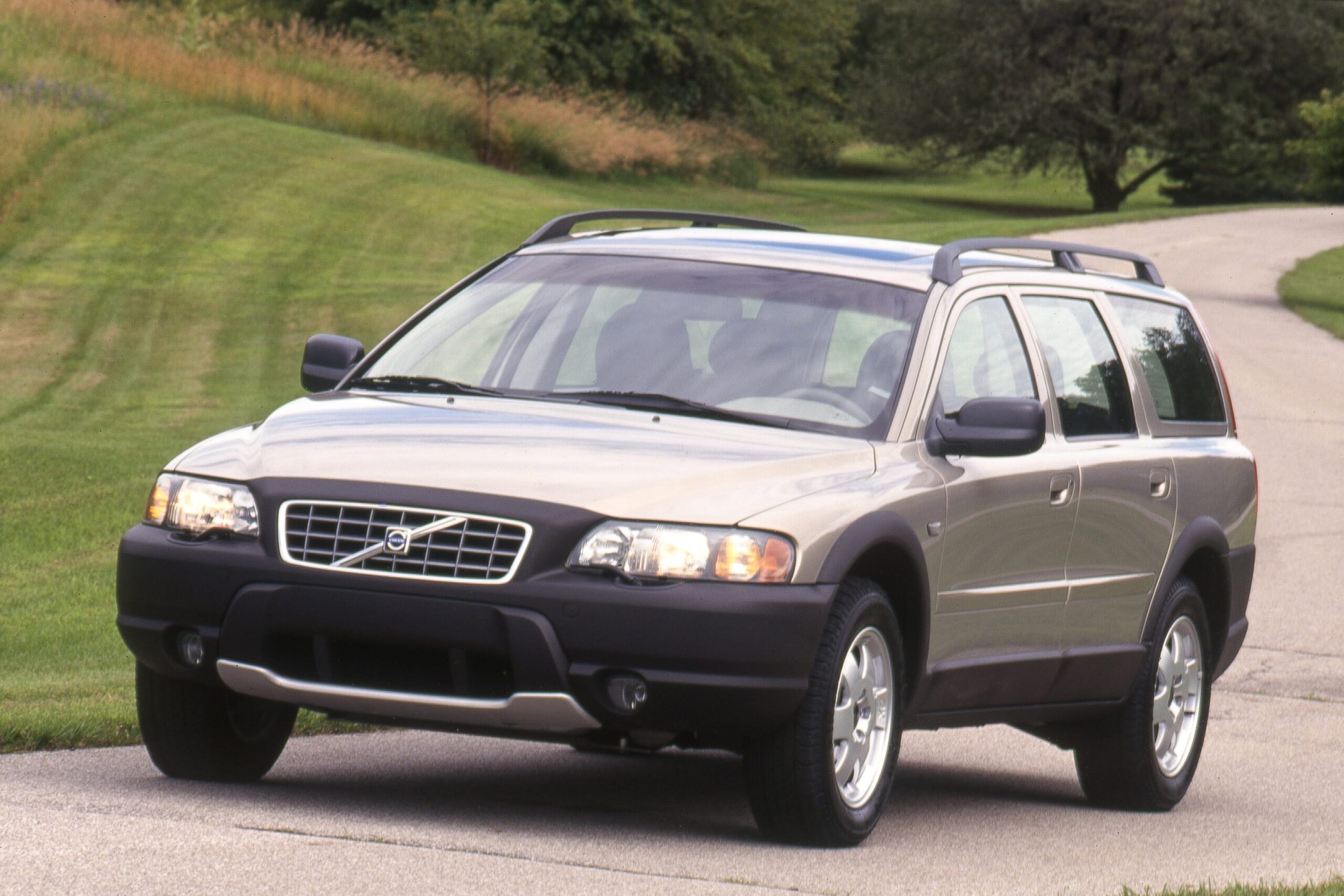


Twenty-five years ago, Volvo looked at the SUV boom devouring the American market and made a calculated bet. Rather than spend billions engineering a body-on-frame truck it had no business building, the Swedish automaker grabbed its V70 wagon, jacked it up an inch, wrapped it in textured plastic cladding the color of dried lake mud, and called it the Cross Country. It worked embarrassingly well.
The V70 XC accounted for 45 percent of all V70 wagon sales by 1999, a number that stunned even Volvo’s own marketing department. So for 2001, the company doubled down, giving the Cross Country a full macho makeover that made the first-generation car look like a timid rehearsal.
Ground clearance jumped to 8.2 inches, matching the Audi Allroad and actually beating the Ford Explorer. New Pirelli Scorpion tires on 16-inch wheels forced a quarter-inch wheelbase stretch and a 2.3-inch wider front track. Volvo considered Audi’s trick adjustable air suspension and wisely walked away from the complexity.
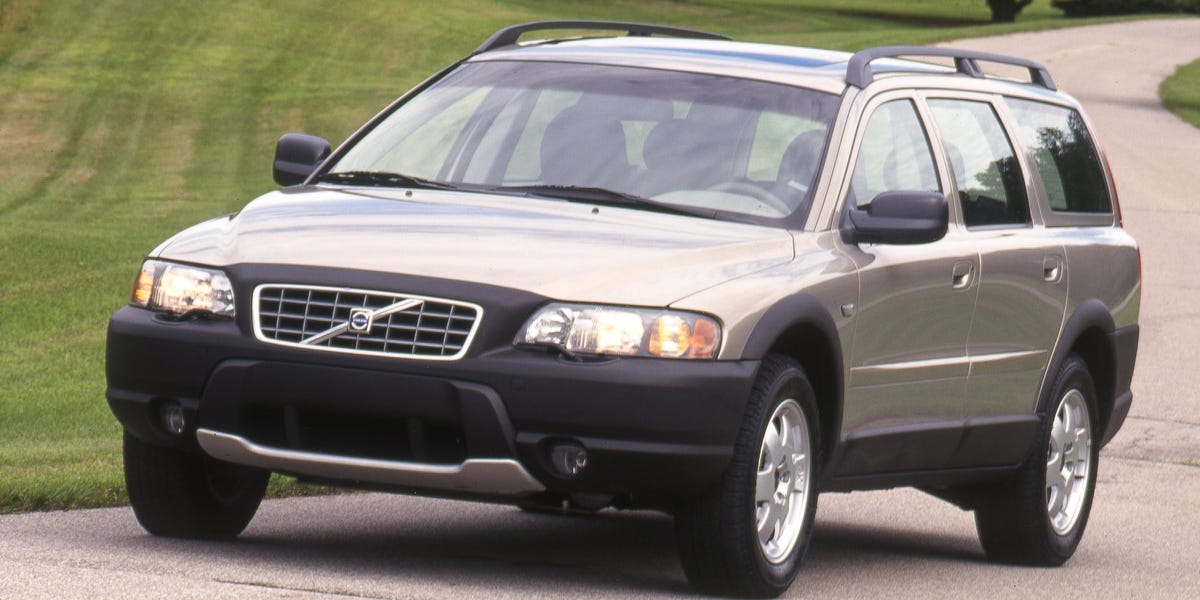
The plastic body armor — dark brown or dark blue depending on paint color — covered everything from the nose to the wheel arches to the rear bumper. Volvo’s designers said it made the car look taller. They weren’t wrong.
Under the hood sat a 2.4-liter turbocharged five-cylinder making 197 horsepower, enough to push the 3,884-pound wagon to 60 mph in 8.6 seconds. Not quick, but nearly a full second faster than a Mercedes ML320. The Geartronic five-speed automatic shifted cleanly, and manual mode proved genuinely useful descending loose-surface grades where engine braking kept things civilized.
The all-wheel-drive system was simple stuff — 95 percent front-wheel bias on dry pavement, with a viscous clutch shuffling torque rearward when traction disappeared. On a skidpad, the XC pulled 0.77 g. Not sharp, not embarrassing either.
Inside, the real innovation hid in the back seat. Volvo introduced an industry-first 40/20/40 split rear bench. The center section could become an armrest, get yanked out entirely, or be replaced with a plug-in beverage cooler or custom storage bag.
A cargo grate folded from the ceiling. A picnic table bolted to the tailgate latch. Volvo was selling a lifestyle, and every accessory reinforced the pitch.
The price reinforced something else entirely. At $35,475 base, the XC was already expensive. Loaded with navigation, leather, a sunroof, premium audio, and cold-weather gear, the test car hit $42,867 — more than a comparably equipped Lexus RX300 or Mercedes ML320. That’s a lot of money for a station wagon wearing a Halloween costume.
Car and Driver’s own staff was split in a revealing way. The editors unanimously preferred the XC to any SUV on the market. But given a choice within Volvo’s own lineup, every single one of them picked the T5 wagon — fifty more horsepower, 160 fewer pounds, a real turbo instead of the XC’s low-pressure unit, and none of the mud-flap aesthetics.
That tension defined the Cross Country perfectly. It was a wagon pretending to be something tougher, sold to buyers who wanted the image of ruggedness without the penalty of actually driving a truck. Subaru’s Outback had pioneered the formula. Audi’s Allroad added Germanic sophistication.
Volvo brought safety credentials, Scandinavian practicality, and enough plastic cladding to armor a small building. The SUV pretenders of 2001 now look like prophets. Every luxury automaker eventually followed the same logic — lift it, clad it, market it — until the crossover consumed the entire industry.
Volvo just got there early, armed with a five-cylinder engine and a straight face.


Share this Story