
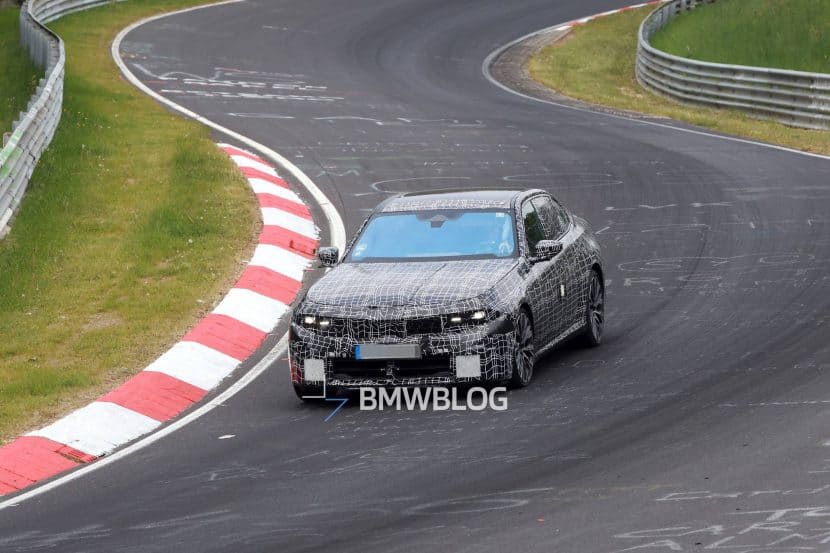


Months. That’s all it took for BMW to flip its position on the 2026 Paris Motor Show. The company confirmed it would attend, then quietly pulled the plug, citing what it calls “a shift in priorities.” MINI goes with it. The 91st edition of one of the oldest auto shows on the planet will run October 12–18 without a single car from Munich on the floor.
The official explanation is corporate vapor. “A shift in priorities” tells you nothing and everything at the same time. Bloomberg connects the dots to a broader cost-cutting push under Milan Nedeljkovic, who took over as CEO just a couple of months ago after replacing Oliver Zipse.
New bosses cut budgets. That’s not news. But doing it this publicly, this clumsily — confirming attendance and then reversing course — sends a different kind of signal.
BMW says it will maintain a “selective presence” at future auto shows. The Italian news agency ANSA quotes the company saying it plans to “focus on other events.” Translation: BMW wants to control the stage, the audience, and the narrative, and a shared exhibition hall in Paris doesn’t fit that playbook anymore.
The timing stings because BMW has real product to show. The next-generation 3 Series, internally known as the G50, is still on track to debut later this year. So is the iX4, a fully electric crossover that hasn’t been officially announced but has already been spotted on BMW’s own U.S. website.
These are flagship launches — the kind of cars that used to anchor an entire automaker’s presence at a major show. Now they’ll get revealed somewhere else, likely a controlled brand event with hand-picked media and influencers.
Meanwhile, the competition will be in Paris. Mercedes is confirmed. So are Audi, Alfa Romeo, Volvo, Ford, Hyundai, Kia, and Honda. More than 60 automakers are listed as exhibitors. BYD, Geely, and Xpeng will be there too, a reminder that Chinese brands are happy to fill any vacuum left by European incumbents who decide the show floor isn’t worth the expense.
That’s the quiet irony here. BMW walks away from the exact stage where its Chinese competitors are eager to stand. Paris isn’t Geneva — it hasn’t been sliding toward irrelevance. The 2024 edition drew serious crowds and real reveals.
There’s a pattern forming across the industry. Automakers increasingly prefer their own launch events, private unveilings, and digital presentations over the expensive, chaotic environment of a traditional motor show. They get cleaner messaging, tighter control, and lower costs. What they lose is harder to quantify: the energy of a packed hall, the side-by-side comparisons with rivals, and the kind of spontaneous media coverage that no corporate event can replicate.
For Nedeljkovic, this is an early marker of how he intends to run things. Cost discipline is the stated goal. But pulling out of Paris after publicly committing reads less like strategy and more like scrambling. A CEO confident in his plan doesn’t need to reverse a decision made under his predecessor just weeks earlier.
The 3 Series is the backbone of BMW’s lineup. The iX4 represents its electric future. Both deserve a proper stage. Whether BMW can build one as compelling as Paris remains to be seen. History says the cars that matter most sell themselves regardless of where they’re unveiled. But history also says the brands that stop showing up eventually stop being part of the conversation.
Share this Story