
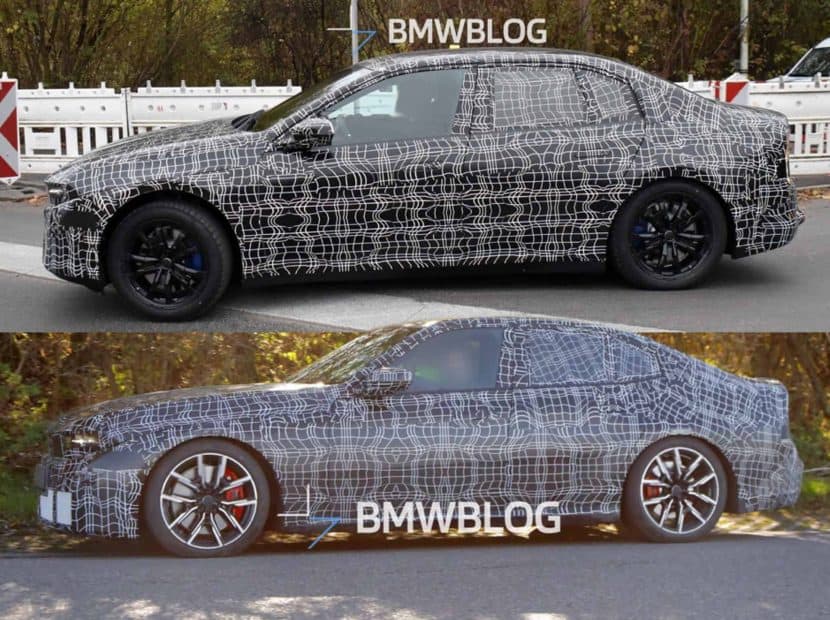


BMW plans to cram more new metal into a single calendar year than most automakers manage in three. A new-generation 3 Series, an electric M3 with roughly 800 to 900 horsepower, a redesigned X7, a Neue Klasse iX1, and facelifts for the 5 Series and M5 are all pointed at 2027 production dates. The connecting thread is a company running two parallel worlds at once and hoping nobody notices the seams.
Take the 3 Series. For the first time, BMW will sell combustion and electric versions built on entirely different architectures. The gas-powered G50 sedan and G51 Touring stay on the evolved CLAR II platform, while the electric i3 moves to Neue Klasse.
Design boss Adrian van Hooydonk says the goal is to make them nearly identical at a glance, though the electric car’s shorter front overhang will give it away to anyone paying attention. The G50 enters production at Dingolfing by year’s end. The i3 is already rolling in Munich.
Then there’s the ZA0, the fully electric M3. BMW isn’t choosing sides. It’s building both a gasoline G84 M3, due in 2028, and the electric ZA0 at the same time.
Reports peg the ZA0 somewhere in the 800 to 900 horsepower range. That’s a division hedging its bets after years of hand-wringing over whether electrifying the M3 would send loyalists running.
The same dual-track logic runs through the compact crossover lineup. The combustion X1 and X2 get a standard mid-cycle facelift with new screens and software, but the electric iX1 skips that refresh entirely and jumps to a clean-sheet Neue Klasse replacement. Codenamed NB5, it switches from front-wheel drive to a rear-biased layout, picks up sixth-generation cylindrical battery cells, and borrows design cues from the iX3.
BMW is targeting November 2027 for series production at Regensburg, which recently shut down for three weeks to install Neue Klasse-specific tooling.
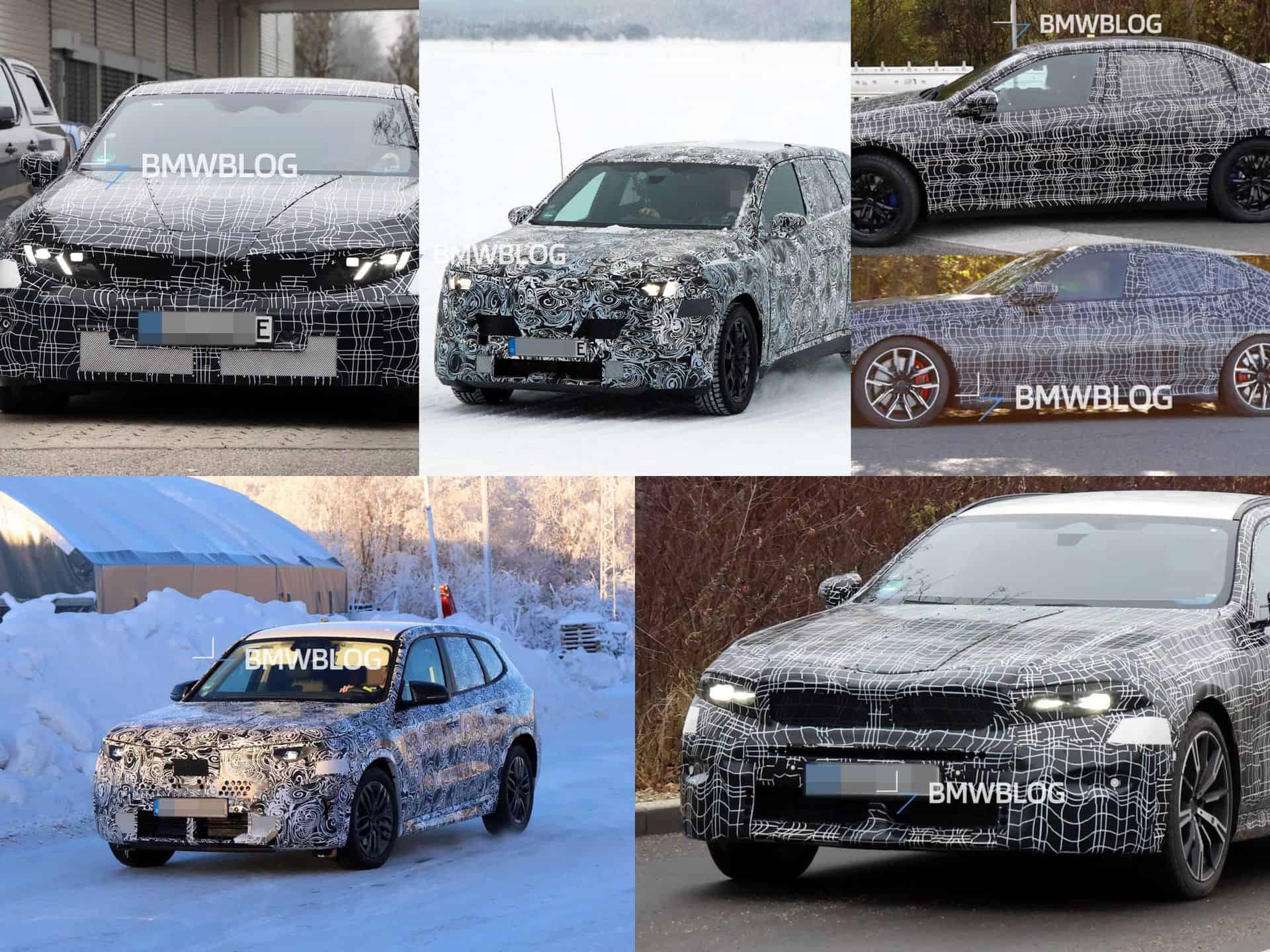
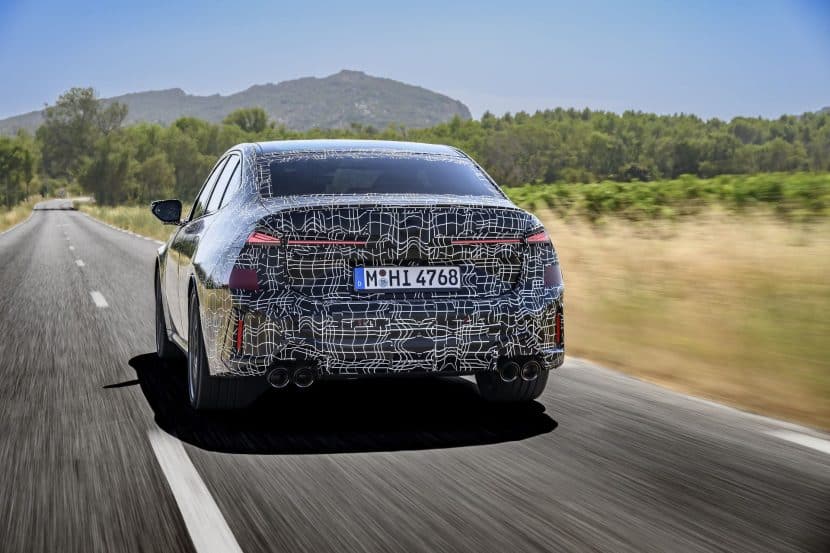
Up the food chain, the G60 5 Series gets a Life Cycle Impulse more aggressive than the usual mid-cycle nip and tuck. Early spy shots suggested a full Neue Klasse face, but more recent sightings point to a milder evolution. The interior is the bigger change: Panoramic Vision, the new iDrive X software, and reportedly the death of the rotary iDrive controller.
The M5 sedan and Touring follow the same timeline, with production aimed at July 2027.
At the top of the SUV range, the second-generation G67 X7 keeps its split headlights and two-piece tailgate, two details the newest X5 has dropped. Dealers who previewed the X7 in Nashville say BMW wants sharper separation between the two models. A first-ever electric iX7 is confirmed, and an ALPINA version is expected under the G69 code, with production targeting fall 2027 in Spartanburg.
China gets its own exclusive hardware: a long-wheelbase 3 Series (G58) and a stretched X5 (G78) with a wheelbase longer than the X7’s. BMW has ruled out bringing either to North America or Europe.
BMW M’s electrification push extends to the X3 M and X4 M, both going electric-only under the ZA5 and ZA7 codes. Both drop the “i” prefix, so they’ll simply be called X3 M and X4 M. Both target 2027 production at BMW’s new Debrecen plant in Hungary, though that timing is soft enough that either could slip into 2028.
The ALPINA revival adds another layer. The G72 7 Series ALPINA, built entirely in-house for the first time, will offer both a V8 and an all-electric drivetrain. ALPINA is reportedly moving upmarket and letting smaller nameplates like B3 and B4 fade away.
None of this is officially confirmed as a single coordinated roadmap. It’s assembled from spy shots, dealer previews, and insider reporting. But the picture is clear enough: BMW is betting it can run combustion and electric platforms in parallel across nearly every segment without stumbling over its own complexity.
Whether the factory network, the dealer body, and the customers can keep it all straight is a question 2027 will have to answer.
Share this Story