
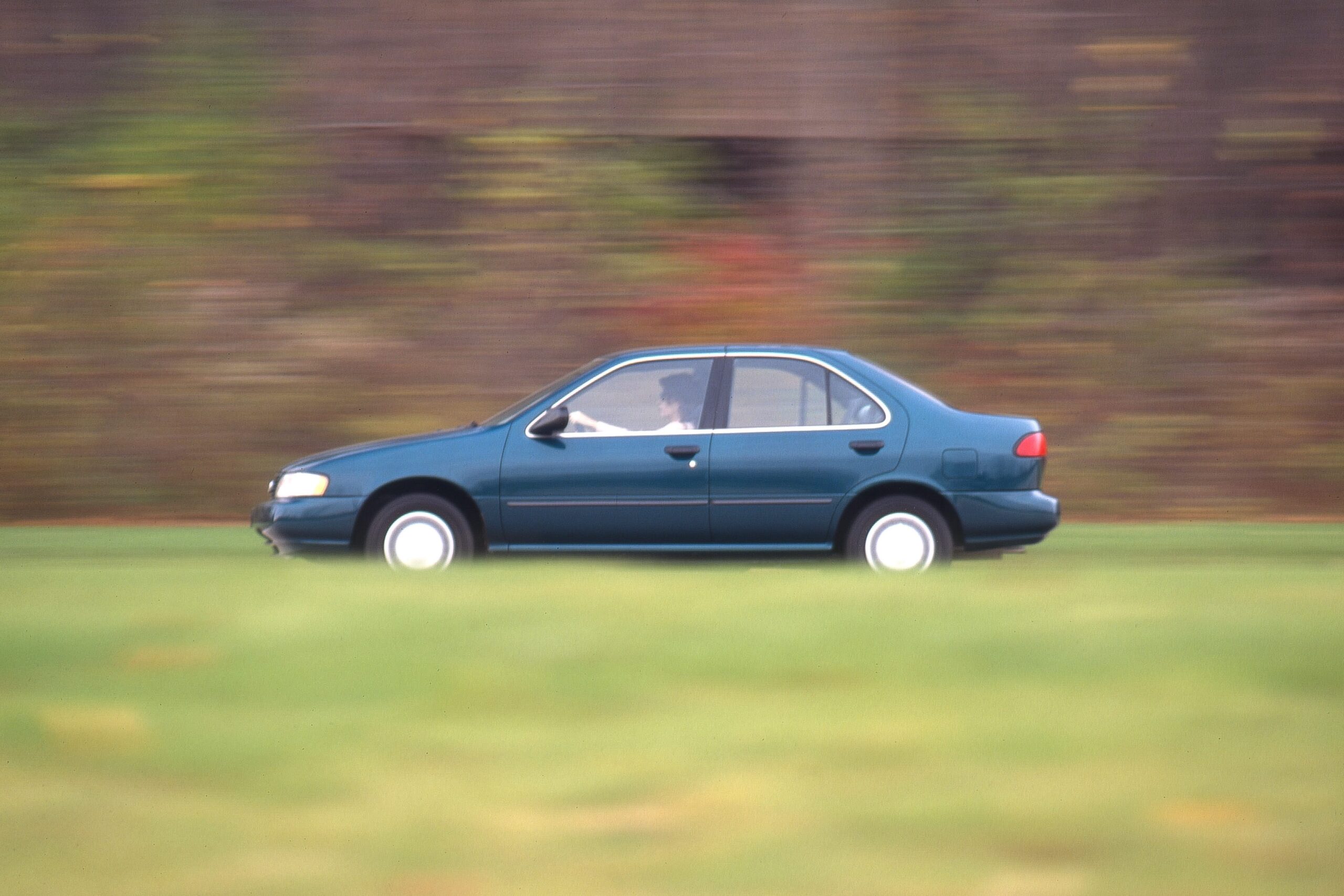


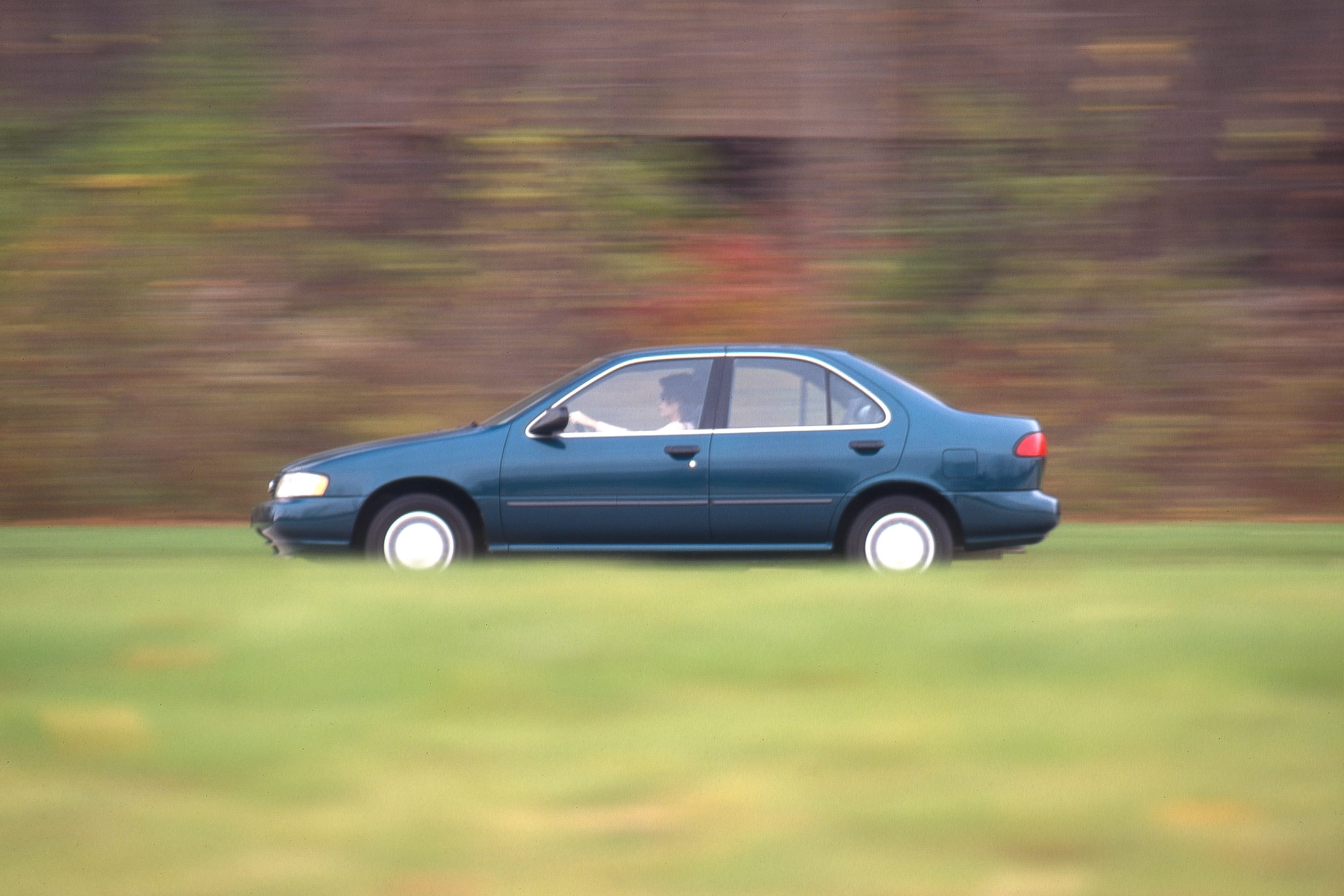
A base price of $13,839. Two airbags. Air conditioning. Power windows and locks. Cruise control. A cassette deck. And the whole thing weighed less than its predecessor. The 1995 Nissan Sentra GXE landed in showrooms carrying more equipment, more space, and more performance than the car it replaced, yet Nissan had the audacity to cut $656 from the sticker.
Car and Driver’s test of the GXE, published in June 1995, reads like a case study in a philosophy Detroit has since abandoned: give the customer more while charging less, and make the engineering do the heavy lifting instead of the marketing department.
The numbers told the story. Nissan stretched the wheelbase four full inches without adding a single inch to overall length. They shaved roughly 100 pounds from the curb weight.
The 1.6-liter twin-cam four picked up five horsepower to 115, and the EPA city rating actually climbed a tick to 30 mpg. Zero to 60 came in 8.5 seconds, more than a full second quicker than the 1993 GXE.

That packaging trick came largely from the rear suspension, a beam-axle design with a lateral sliding link that saved space while delivering respectable wheel control. The same thinking Nissan applied to the Maxima, one of Car and Driver’s 10Best that year, filtered down to its cheapest sedan. The result was genuine rear-seat legroom in a car that still parked like a compact.
But the Sentra’s gains came with a trade. The previous model had been one of Car and Driver’s favorite-handling small sedans, and the new car surrendered some of that sharpness. John Phillips, driving old and new back to back, noticed slightly duller steering and more body roll despite the weight reduction.
The longer wheelbase and beam axle softened the car’s reflexes. Barry Winfield called the controls “light and silky,” which was a polite way of saying Nissan had sanded down the edges for broader appeal.
Phil Berg saw the pattern clearly. He compared it to the Datsun 510’s fate. That car was beloved by enthusiasts but sold well only two of its six years on the market. Its replacement, the forgettable 610/710, moved more metal. Nissan was chasing Corolla and Neon buyers, not autocross trophies.
The interior punched above its weight. Car and Driver noted the cabin seemed ready for duty a class or two up the price scale, and took a jab at BMW’s 3-series for its comparative austerity. The dash sat lower for a more open feel, and the materials were honest without looking cheap.
At $13,914 as tested, with floor mats as the only option, the value proposition was almost disorienting.
Skidpad grip measured 0.78 g, strong for a sedan riding on 175-width Michelin MX4 tires mounted on 13-inch wheels. Braking from 70 mph took 208 feet, adequate but unremarkable. The structure stayed quiet under stress, with no squeaks or rattles surfacing during testing.
The 1995 Sentra existed in a moment when Japanese automakers still believed the small car itself was the product, not merely a compliance play or a gateway to something pricier. Nissan engineered a lighter, roomier, quicker, more fuel-efficient sedan and then cut the price. The car asked nothing of its buyer except the willingness to drive something that looked sensible at a stoplight.
Three decades later, the cheapest new Nissan sedan costs nearly twice as much, adjusted for inflation, and weighs a thousand pounds more. The word “more” has gotten tricky again.

Share this Story