
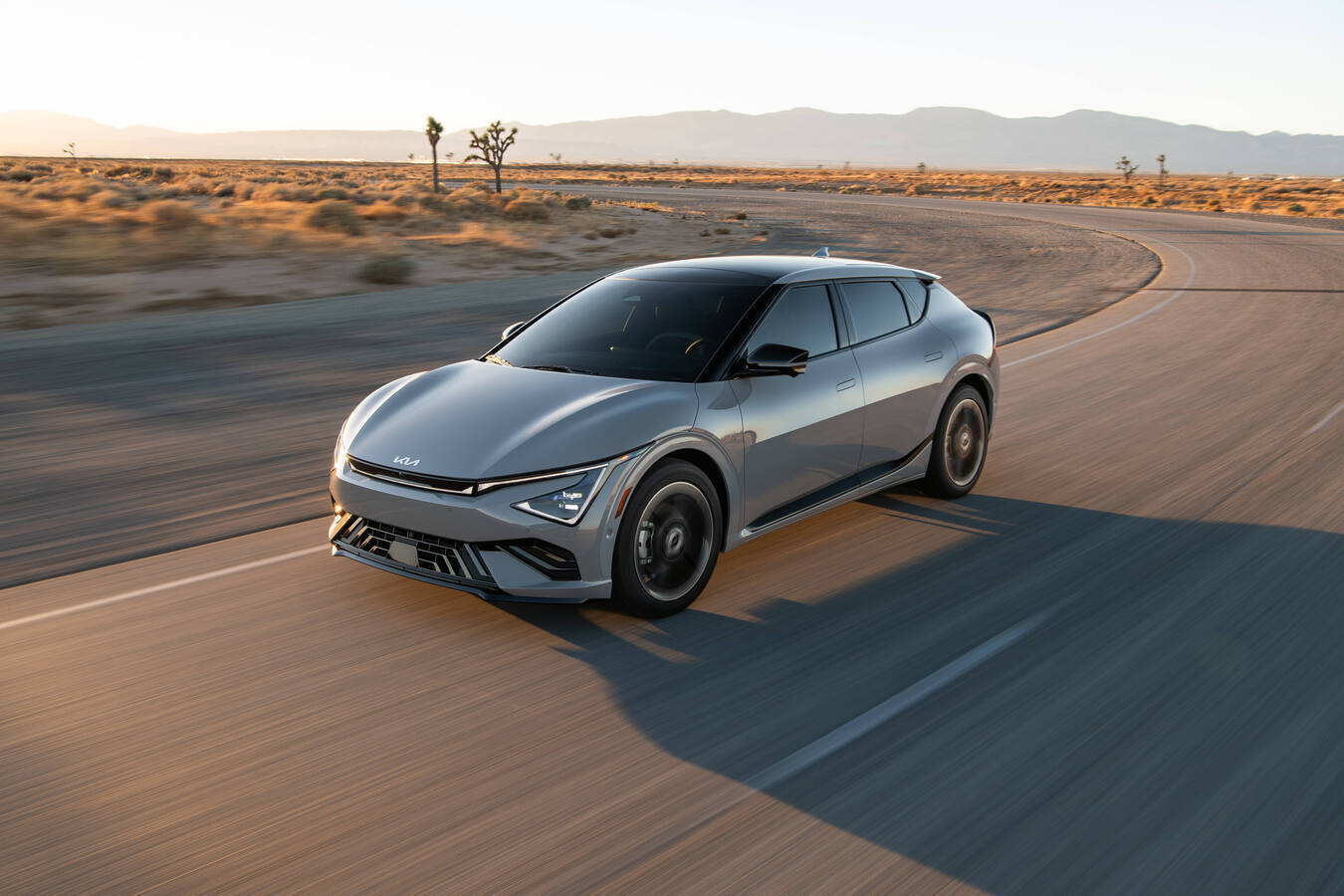


The 2026 Kia EV6 now starts at $37,900 before destination, a price cut that averages roughly $5,000 across every trim and pushes some configurations closer to $6,000 cheaper than last year. Including the mandatory $1,545 destination charge, the entry-level Light Standard Range RWD lands at $39,445 — just barely ducking under that psychologically critical $40,000 line.
This isn’t a redesigned car. It’s a carried-over model year with a sharper pencil, built at Kia’s West Point, Georgia plant, and repositioned to make room beneath it for the incoming EV3 compact electric SUV.
The price drops are consistent up and down the lineup. The Light Long Range RWD checks in at $41,200, the Wind RWD at $44,800, and the GT-Line RWD at $48,700. Add all-wheel drive and you’re looking at $45,200 for the Light Long Range AWD, $48,800 for Wind AWD, and $53,000 for the GT-Line AWD at the top of the range.
The high-performance EV6 GT remains on hiatus. For context, last year’s Wind AWD started at $55,845. This year it’s $50,345 — a $5,500 haircut on a vehicle that’s mechanically identical.
So what did change? The biggest functional addition is a dual-voltage charging cable now standard across every trim. Buyers in ZEV states also get a DC fast-charger adapter included.
Kia Plug & Charge, tied to the Kia Charge Pass system, handles charger authentication and billing automatically at compatible stations. It’s a convenience feature, not a revolution, but it addresses one of the persistent friction points in daily EV ownership.
Kia also deleted the Tech Package on the EV6 Light Long Range model. The company frames this as “streamlining the offering,” which is corporate speak for simplifying the order sheet and trimming cost. Fewer configurations, fewer headaches at the factory and the dealer lot.
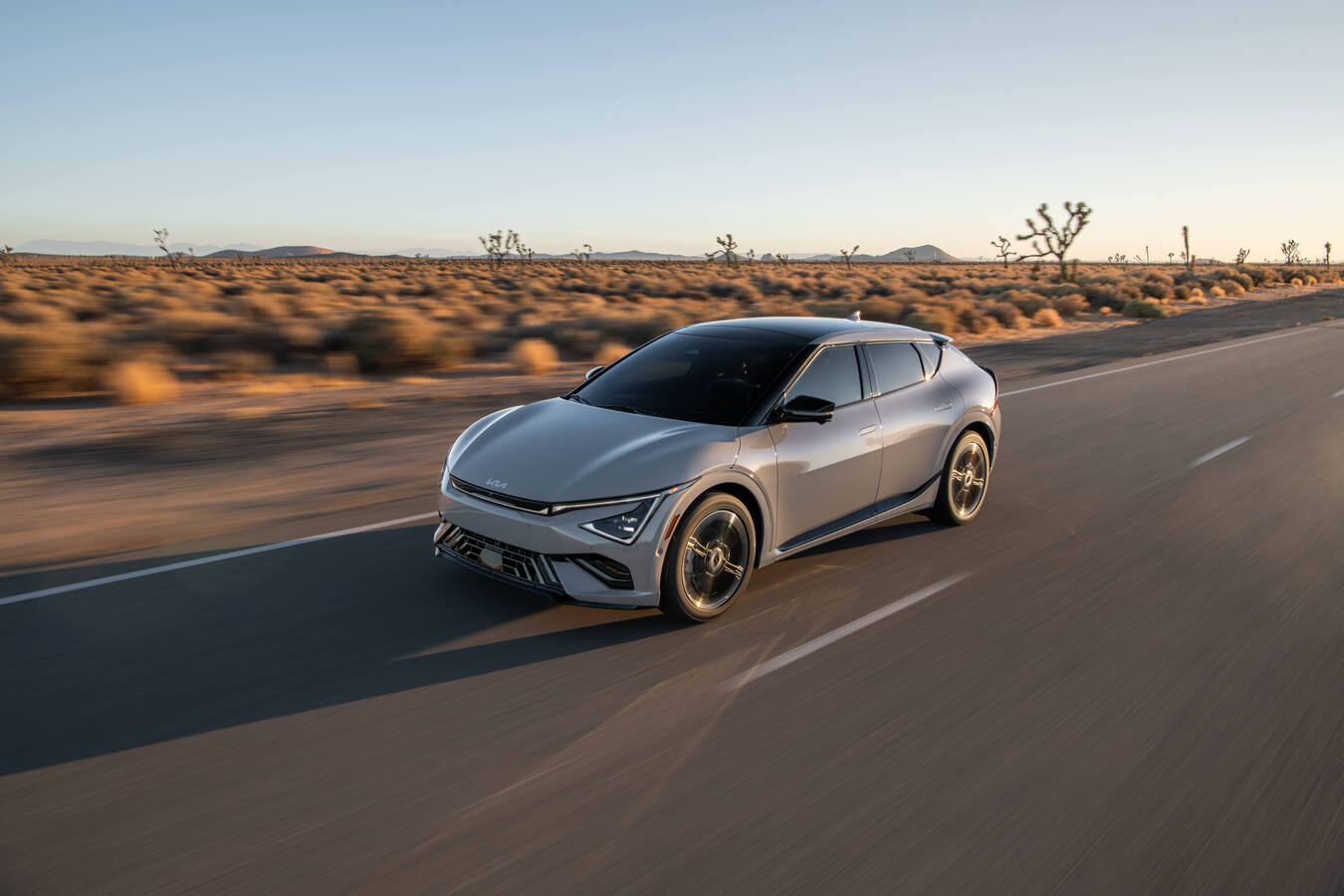
The color palette gets a minor shuffle. Ivory Silver and the Hunter Green/Misty Gray two-tone interior are gone. In their place: Wolf Gray and Glacier White Pearl exteriors, both paired with a Saturn Black/Mild Toffee Brown interior.
Mid-model-year, the GT-Line picks up two-tone roof treatments in those same new colors.
The powertrain math remains unchanged. The base 63-kWh Standard Range battery makes 167 horsepower and delivers 237 miles. Step up to the 84-kWh Long Range pack and you get 225 horses with rear drive, good for 319 miles — still the longest range in the EV6 family.
Adding the front motor for AWD bumps output to 320 horsepower but trims range to 295 miles. The GT-Line is rated at 270 miles.
Kia’s strategy here is transparent and aggressive. With Chinese EVs pressing hard on global pricing, Tesla continually adjusting its own numbers, and the Hyundai Ioniq 5 sharing the same E-GMP platform at a similar price point, the EV6 needed to get leaner to stay relevant. The EV3, arriving below it, will cover the true entry-level space.
The EV6 now occupies the middle ground — a proven, Georgia-built electric crossover that qualifies for federal tax incentives and no longer asks buyers to stretch past $40,000 just to get in the door. No new tech. No new sheet metal. Just a price that finally matches the competitive reality of the American EV market in 2026.
Sometimes that’s enough.


Share this Story