
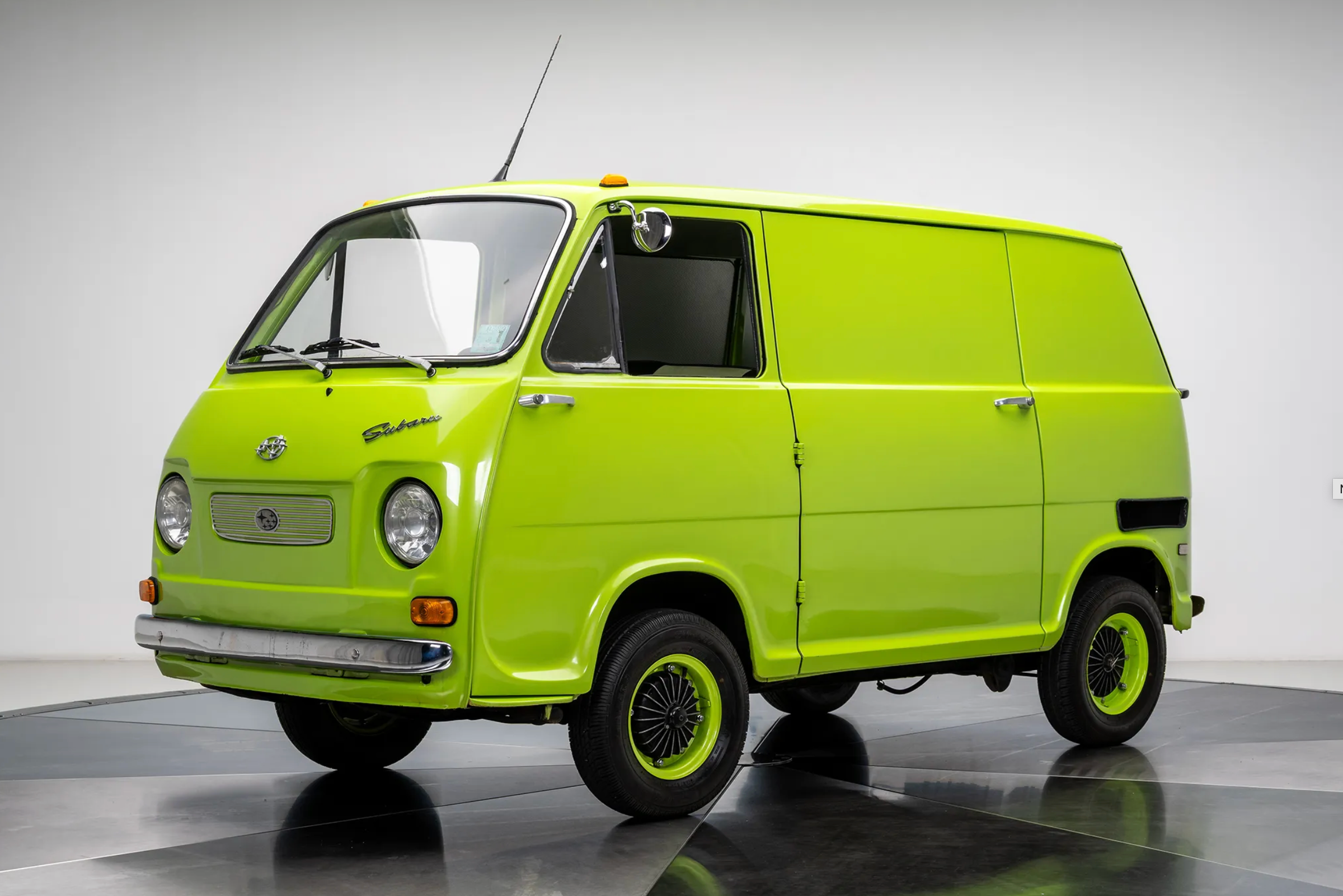


Before there were Outbacks clogging every Whole Foods parking lot in America, before Foresters became the unofficial car of every Pacific Northwest trail system, Subaru’s pitch to the U.S. market was a 25-horsepower microvan shorter than a parking space.
A 1969 Subaru Sambar 360, finished in metallic lime green that practically dares you to ignore it, is currently up for auction on Bring a Trailer with bidding set to close August 13.
The Sambar is powered by a rear-mounted 356cc two-stroke, two-cylinder engine mated to a four-speed manual. That’s less displacement than most modern motorcycles. The odometer reads roughly 32,000 miles, though true mileage is unknown.
What makes this particular example unusual in the kei car collector market is its left-hand-drive configuration. Most Japanese microcars and microvans turning up at U.S. auctions are right-hand-drive imports pulled from the Japanese domestic market under the 25-year import rule. This one was built for American roads.
Credit for that goes to Malcolm Bricklin, the serial entrepreneur who first brought Subaru to U.S. shores in 1968. Bricklin saw the 360 as perfect for American buyers looking to save on fuel, and its tiny dimensions helped it slip past certain import regulations. He brought over sedans primarily, but a small number of Sambar vans tagged along.
Bricklin would later go on to import Fiat and Yugo to the States, and launch his own gullwing sports car in Canada. The man had a type: cheap, foreign, and weird.
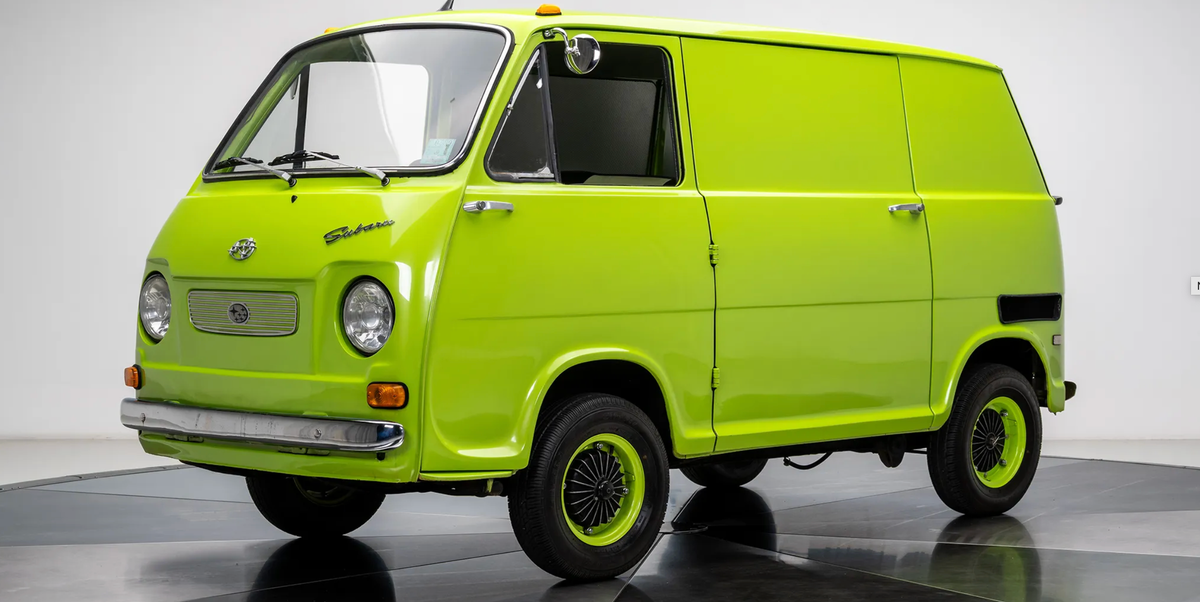
The Sambar’s interior matches its exterior in both color and ambition. Green cloth accents on vinyl seats, a dashboard bare enough to count every gauge in under two seconds, and a cargo area that offers a surprisingly usable amount of space despite the van measuring under ten feet bumper to bumper. Just don’t load it with anything heavier than your expectations.
The 25-horsepower rating wasn’t a limitation born of laziness. Japan’s kei car regulations capped engine displacement and vehicle dimensions to give buyers tax and insurance breaks. The formula created an entire class of vehicles that prioritized clever packaging over outright performance, and the Sambar was the commercial expression of that philosophy.
Fifty-seven years later, it exists in a completely different context. Kei trucks and vans have become a genuine collector niche in North America, driven partly by nostalgia, partly by social media appeal, and partly by the practical reality that something this small can fit into garages and driveways that modern full-size trucks cannot.
Subaru itself has traveled an almost unrecognizable distance from the Sambar. The brand now sells nothing smaller than the compact Impreza and has staked its identity on all-wheel drive, boxer engines, and rugged outdoor lifestyle marketing. The company moved 632,000 vehicles in the U.S. last year. It is difficult to connect that operation to a two-stroke van with the footprint of a large refrigerator.
But every empire starts somewhere. For Subaru in America, it started with Malcolm Bricklin, a tiny engine, and a willingness to look ridiculous. The lime green Sambar sitting on Bring a Trailer right now is a rolling artifact of that bet.
Bidding is active. No reserve has been listed.
Share this Story