
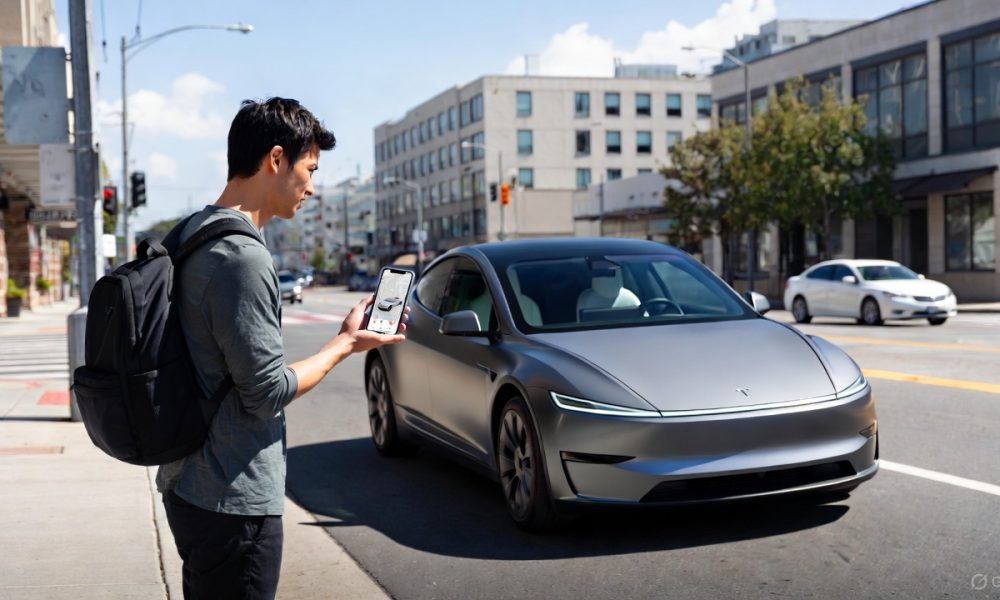


Four days before Tesla’s Cybercab launch event in Austin, the company’s unsupervised robotaxi fleet quietly ballooned from roughly 28 vehicles to nearly 200 across Texas. That sevenfold increase happened in about three weeks, according to data from the crowdsourced Robotaxi Tracker, and it landed with zero fanfare from Tesla itself.
The fleet now operates without safety monitors in Austin, Dallas, and Houston. On the Q2 earnings call, Autopilot chief Ashok Elluswamy cited more than 380,000 unsupervised miles with no notable incidents. For months, critics pointed to a fleet stuck in the low double digits as proof that Tesla’s driverless ambitions were running well ahead of its actual deployment. A quiet expansion to 200 vehicles answers that without a press release.
But the fleet surge is only half the story. Tesla has simultaneously been registering purpose-built Cybercabs with the Texas Department of Motor Vehicles. The count climbed from seven to 45 units in a matter of days, all carrying the new 5YJA VIN prefix that distinguishes them from the 7SAYG Model Y robotaxis already authorized in the state.
Those Cybercabs are the real product. Two seats, no steering wheel, no pedals. They have been rolling off the Giga Texas line for months, though earlier examples still carried temporary driver controls for data collection. The versions now appearing in the state’s automated vehicle registry are the finished design.
Texas Senate Bill 2807, which took effect in late May, created a self-certification framework for commercial Level 4 operations. Tesla filed through the Texas Motor Carrier Credentialing System, attested to SAE Level 4 capability, posted insurance, and listed its vehicles. Adding Cybercabs to the same authorization means the steering-wheel-free machines are now legally cleared for commercial use on public roads.
Running both ramps in parallel is a calculated move. When Tesla takes the stage Thursday evening at its Austin campus, it can point to an operating robotaxi business already at meaningful scale, not just a concept car waiting for regulatory permission. The Cybercab runs the same underlying Full Self-Driving software stack as the Model Y fleet, so the argument becomes simple: this is the same system, just in a dedicated body.
Tesla also widened its Austin geofence to roughly 288 square miles, a nine percent expansion that pushes coverage northward toward Pflugerville along the US 183 corridor. It is the first boundary increase in about ten months. The zone now ranks among the larger driverless service areas in the country, though the fleet operating inside it remains small compared to Waymo’s footprint in San Francisco and Phoenix.
Registration does not equal unsupervised public rides. It is the legal prerequisite. Whether those 45 Cybercabs carry paying passengers on Thursday night or in the weeks that follow remains an open question. Mixing a steering-wheel-free vehicle into a fleet that has so far relied on modified Model Ys introduces variables that 380,000 clean miles in a different body style cannot fully predict.
The September 3 event will be livestreamed. Tesla has invited select robotaxi riders and other guests to its Austin campus for what it calls a chance to “experience the future of full autonomy.” The fleet numbers suggest the company wants that evening to feel less like a product reveal and more like a status report on a business already in motion.
Whether the math holds once Cybercabs start mixing into real traffic is the question that Thursday’s applause lines won’t answer.
Share this Story