
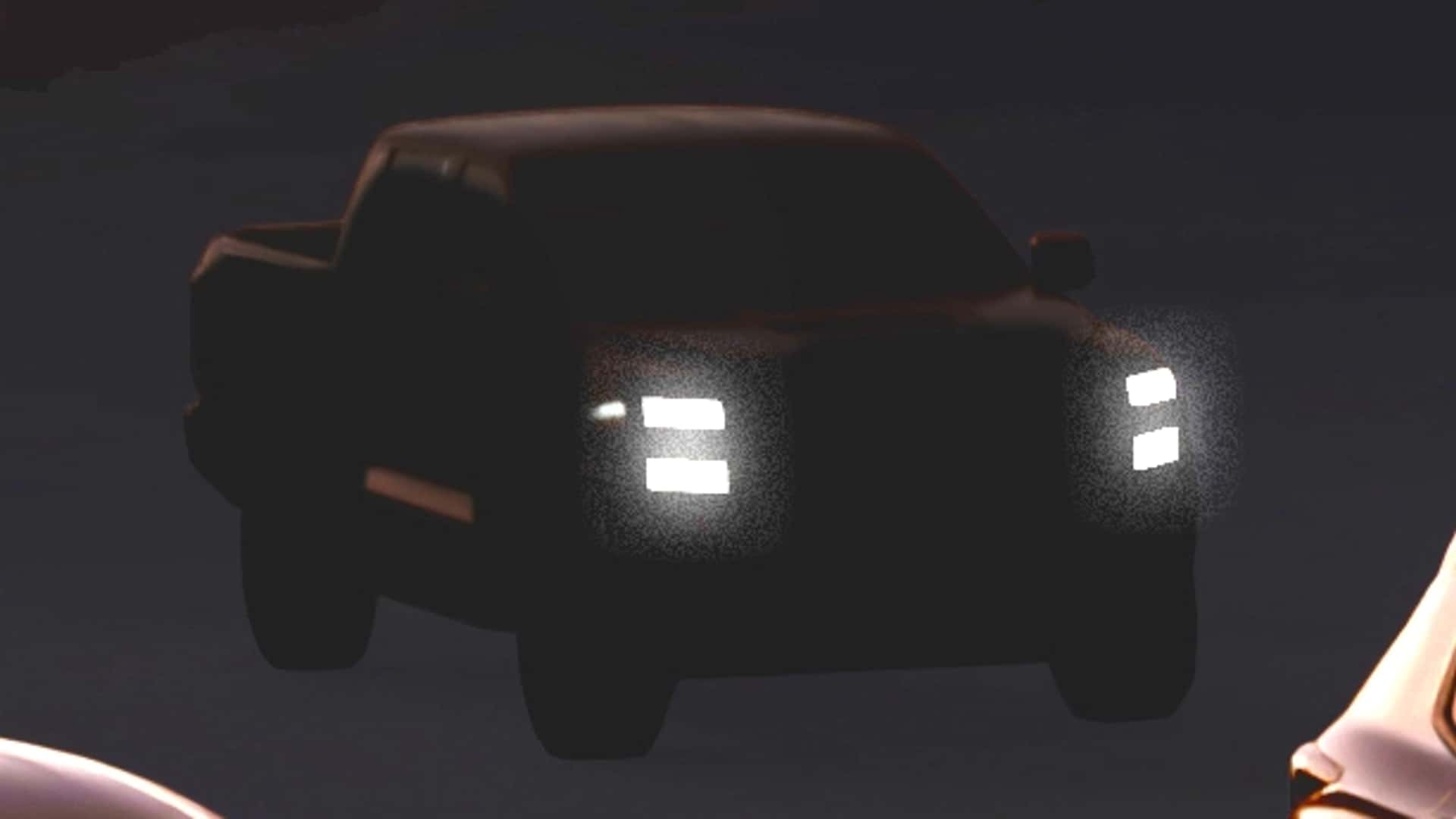


Mitsubishi is planning a return to the US pickup market, and it won’t be building the truck itself. The company’s updated Momentum 2030 plan, recently shown to dealers, reveals a Nissan-built midsize pickup headed for North American showrooms, likely sometime after mid-2027.
No name, no confirmed platform, no announced powertrain. Mitsubishi is keeping the details locked down even as internal sketches leak a boxy silhouette with split LED headlights that looks nothing like its current SUV family. Nissan already sells the Frontier here, and the Navara platform used globally is the most obvious donor chassis.
This is not the first time Mitsubishi has relied on a partner to fill gaps. The brand’s entire US survival strategy now hinges on shared alliance hardware. Before the truck arrives, Mitsubishi plans to launch the Eclipse Sportback EV in the second half of 2026, a rebodied version of the next Nissan Leaf wearing Mitsubishi sheet metal.
A tougher, off-road-focused Outlander variant follows in Q1 2027. The pickup slots in after both.
If it all lands on schedule, Mitsubishi’s US lineup jumps from four models to six. That’s a 50 percent expansion for a brand that currently sells the Outlander Sport, Eclipse Cross, Outlander, and Outlander PHEV. Mitsubishi hasn’t confirmed whether both compact crossovers survive the transition unchanged, which hints at possible consolidation even as the portfolio grows.
The truck pitch makes dealer-level sense. Midsize pickups remain one of the healthier segments in the US market, and Mitsubishi retailers have been vocal about wanting one. The Frontier’s bones are proven, and slapping different bodywork on a tested platform is far cheaper and faster than a clean-sheet development program.
Mitsubishi has essentially admitted it can’t afford to engineer its own EVs. Trucks are an even heavier capital lift.
But this approach carries real risk. Consumers in the midsize truck space are brand-loyal and mechanically literate. They cross-shop Tacomas, Rangers, Colorados, and Frontiers. A Mitsubishi badge on what amounts to Nissan hardware needs a convincing reason to exist beyond price.
Tuning, payload specs, warranty terms, and design identity all have to separate it from its donor vehicle, or it becomes a footnote.
Separately, Mitsubishi is teasing the return of the Pajero, known as the Montero in North America, with a world premiere set for September 2 in Japan. The company is treating the Pajero revival as its own ladder-frame SUV project, distinct from the pickup program. Some observers have speculated the two could share architecture, but Mitsubishi has not connected the dots publicly.
The broader pattern here is a brand that once built rally legends and rugged 4x4s now operating almost entirely on borrowed engineering. The Renault-Nissan-Mitsubishi alliance makes that possible, and Mitsubishi’s thin margins make it necessary. Whether dealers and buyers accept a truck that shares its guts with the Frontier depends entirely on how much Mitsubishi identity actually makes it into the final product.
No pricing, no production location, no timeline beyond “after Q1 2027.” Mitsubishi is selling a vision to its dealer body before it has a truck to put on the lot. The question is whether the product arrives with enough differentiation to justify its existence, or whether it ends up as the kind of badge-engineered exercise that has quietly killed other brands’ credibility in segments where authenticity still matters.
Share this Story