
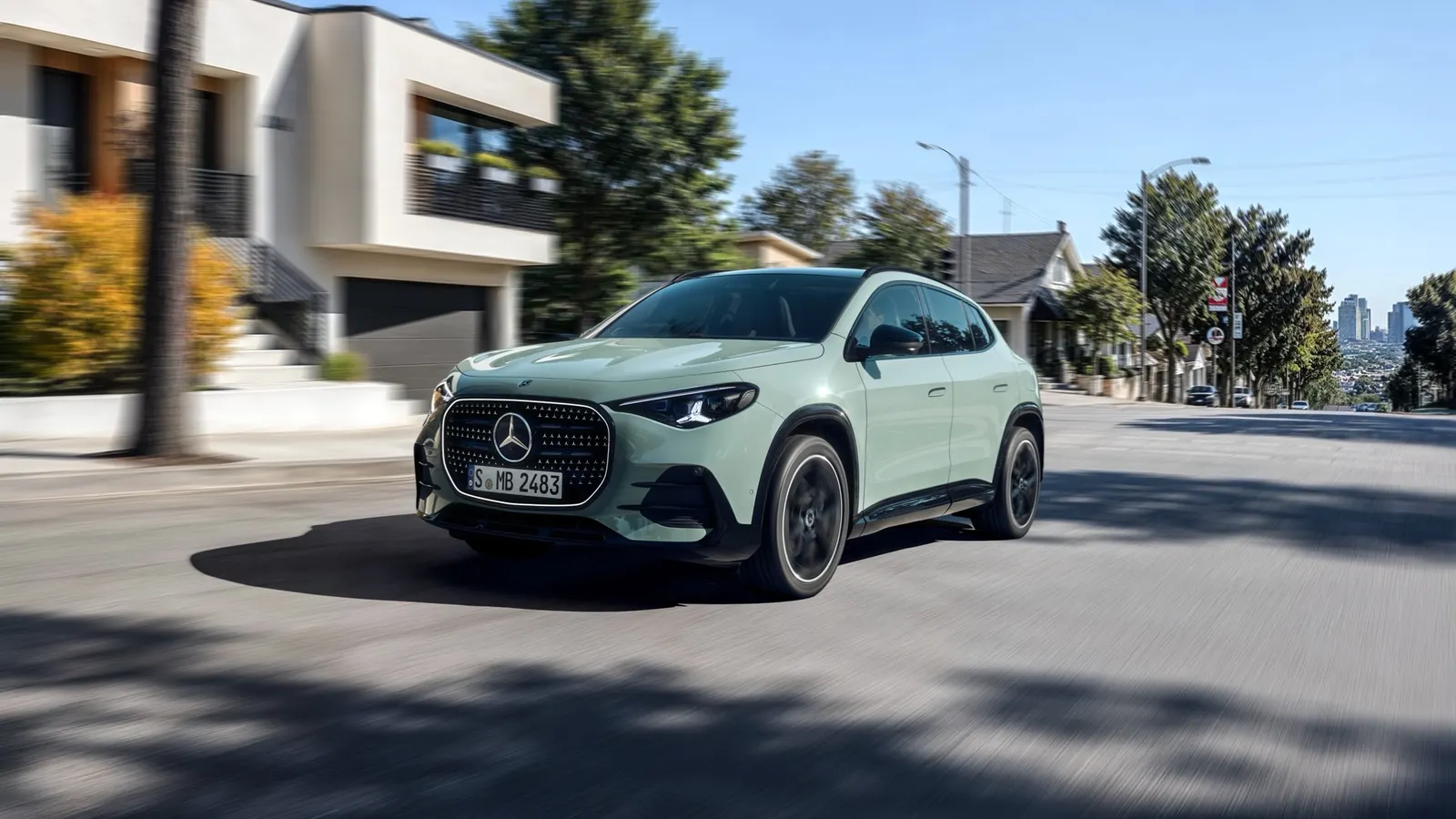


The EQA badge is dead after a single generation. Mercedes-Benz has rolled its electric compact SUV into the 2028 GLA, creating one model line where buyers pick a powertrain rather than a brand identity. European order books opened July 30, with electric deliveries starting in November and U.S. orders following in 2027.
This is the third time Mercedes has executed the merger this year, following the same playbook with the CLA and GLB. The EQ sub-brand, once positioned as Mercedes’ electric future, is being systematically dismantled. The separate naming, the separate styling, the separate showroom presence — all of it is going away.
The new GLA rides on the Modular Mercedes Architecture platform, replacing the older Modular Front Architecture that underpinned both the previous GLA and EQA. That shared foundation is what makes the consolidation work. Electric and gasoline versions share a steel body, nearly identical proportions, and the same interior.
The visual tells are minor. EVs get a closed grille with up to 608 illuminated star elements, while gas models wear a louvered grille with 150 stars and a full-width LED light bar.
Three electric drivetrains launch first. The base GLA 200 electric puts 221 hp through a rear motor, paired with a 58-kWh lithium iron phosphate battery on a 400-volt system. Mercedes quotes 278 miles of WLTP range.
The GLA 250+ electric steps up to 268 hp with an 85-kWh nickel-manganese-cobalt pack and 408 miles of claimed range. At the top, the GLA 350 4MATIC electric adds a front motor for all-wheel drive, producing 349 hp and hitting 62 mph in 5.4 seconds.
The larger battery runs on 800-volt architecture, accepting DC fast charging at up to 320 kW. Mercedes says that translates to 168 miles of range recovered in 10 minutes under ideal conditions. The smaller pack tops out at 200 kW.
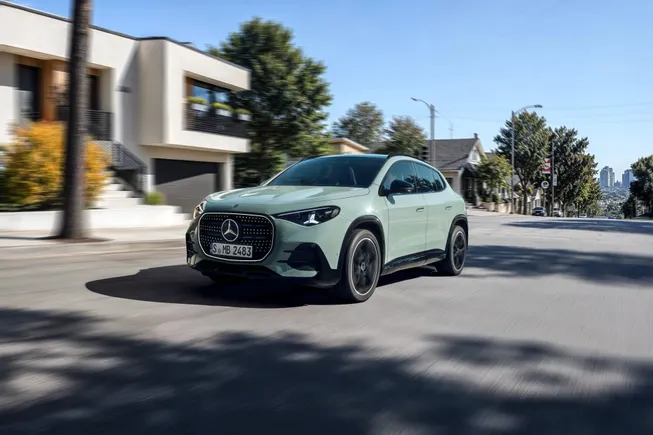
Gasoline models arrive later and will use a new turbocharged 1.5-liter four-cylinder paired with a 30-hp electric motor built into a freshly developed eight-speed dual-clutch gearbox. The 48-volt mild hybrid system can drive short distances on electricity alone in town and coast with the engine off at highway speeds. Front-drive and all-wheel-drive variants are both confirmed.
Dimensionally, the GLA sits about an inch lower than before on a wheelbase stretched 2.4 inches, with an overall length around 180 inches. Mercedes claims real gains in passenger room and cargo space. Electric models pick up a 3.8-cubic-foot front trunk under the hood alongside a 14.5-cubic-foot rear cargo area.
Inside, the cabin centers on the MBUX Superscreen setup: a 10.25-inch digital instrument cluster, a 14-inch central touchscreen, and an optional 14-inch passenger display. The new MB.OS operating system debuts here with three AI agents — ChatGPT, Google Gemini, and Microsoft Bing — handling voice queries. Level 2 driver assistance includes automated lane changes, parking assist, and a 360-degree camera system.
The strategy is clear enough. Mercedes tried selling EVs as a parallel universe and the market shrugged. The EQA never caught fire commercially, and maintaining separate model lines for separate powertrains costs money that doesn’t come back when volumes disappoint.
Folding everything under one roof simplifies production, simplifies the dealer experience, and lets the customer choose a powertrain the way they’d choose a color. What remains to be seen is whether Mercedes can price the electric GLA competitively enough to actually move units in a compact segment where every dollar matters. The company has not released U.S. pricing for any variant.
Share this Story