
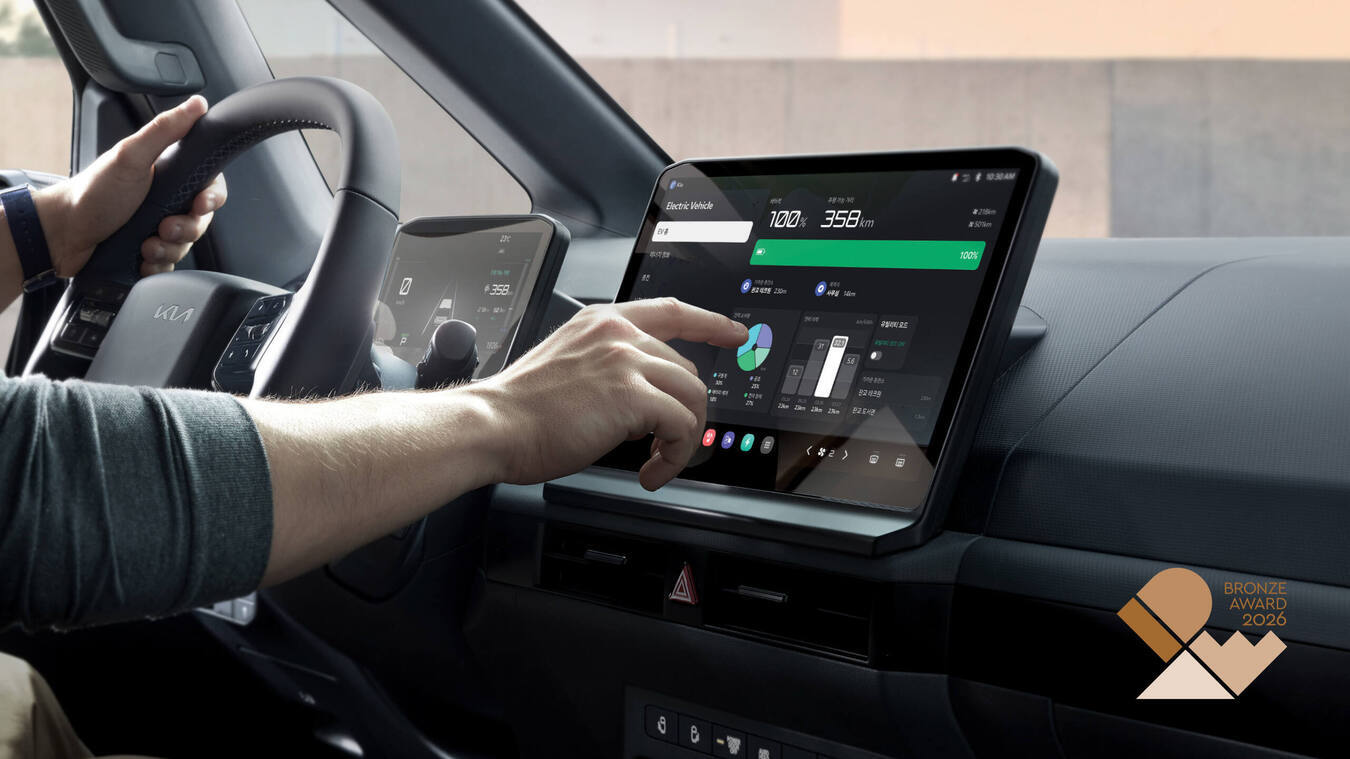


A Bronze medal at the 2026 International Design Excellence Awards is not the kind of trophy automakers hang on the wall and brag about at dinner parties. But Kia is doing exactly that, announcing the PV5 Infotainment System’s recognition in the Digital Interaction category alongside a Finalist nod for its ocean cleanup marketing campaign.
The IDEA awards, judged by the Industrial Designers Society of America, carry genuine weight in design circles. They evaluate innovation, user benefit, aesthetics, and societal impact. Kia earned its Bronze for the infotainment system built into the PV5, the brand’s first dedicated electric Platform Beyond Vehicle.
PBVs are Kia’s bet on commercial and lifestyle-flexible electric vans. The PV5 infotainment runs on a 16:9 widescreen layout with multi-view capability, letting drivers or fleet operators toggle between media, camera feeds, and climate controls on a single screen. It is built on a scalable software platform designed to adapt across business, service, and personal-use applications.
Kia calls it “software-defined mobility,” which is corporate shorthand for a system that can be updated and reconfigured over the air as customer needs change.
The interface shares a unified design language with the rest of Kia’s digital ecosystem, right down to the typography and icons. That kind of consistency matters when you are selling a van meant to serve as a delivery vehicle one week and a mobile office the next. Getting the digital experience right inside a commercial EV is not glamorous work, but it is the kind of detail that separates fleet vehicles operators actually want to drive from the ones they tolerate.
The second recognition, a Finalist spot in the Social Impact Design category, went to “Kia x The Ocean Cleanup: Creating a Wave of Movement, Together.” It is a seven-part video series tied to Kia’s ongoing partnership with The Ocean Cleanup, the nonprofit that has pulled more than 42 million kilograms of plastic waste from the world’s oceans.
The campaign translates environmental data into content meant to generate public awareness. Judges apparently liked its visual language and its attempt to link Kia’s brand philosophy of “Movement” to the literal movement of cleaning up marine plastic.
Whether a slick video series actually reduces ocean pollution is a fair question, but Kia at least has the receipts. The Ocean Cleanup partnership is real, the waste removal numbers are documented, and the campaign avoids the kind of hollow greenwashing that plagues auto industry sustainability efforts.
What is interesting here is where Kia chose to compete. Not in vehicle design, where it has won plenty of awards for the EV6 and EV9. Not in powertrain engineering.
Instead, it entered a digital interface for a commercial van and a sustainability campaign. That tells you something about where the Korean automaker sees its future differentiation. Hardware is table stakes, and software and brand perception are the fight.
The PV5 itself is still early in its commercial rollout. Kia is positioning it as the anchor of a PBV ecosystem that could eventually serve last-mile delivery, ride-hailing, and mobile retail. An infotainment system that earns design awards is a nice line item in the brochure, but the real test is whether fleet buyers and small business owners find it intuitive enough to justify the price premium over a conventional van.
A Bronze is not a Gold. Kia knows that. But in the PBV segment, where competitors are still figuring out whether to prioritize cargo space or driver experience, even a small design edge could compound quickly.



Share this Story