
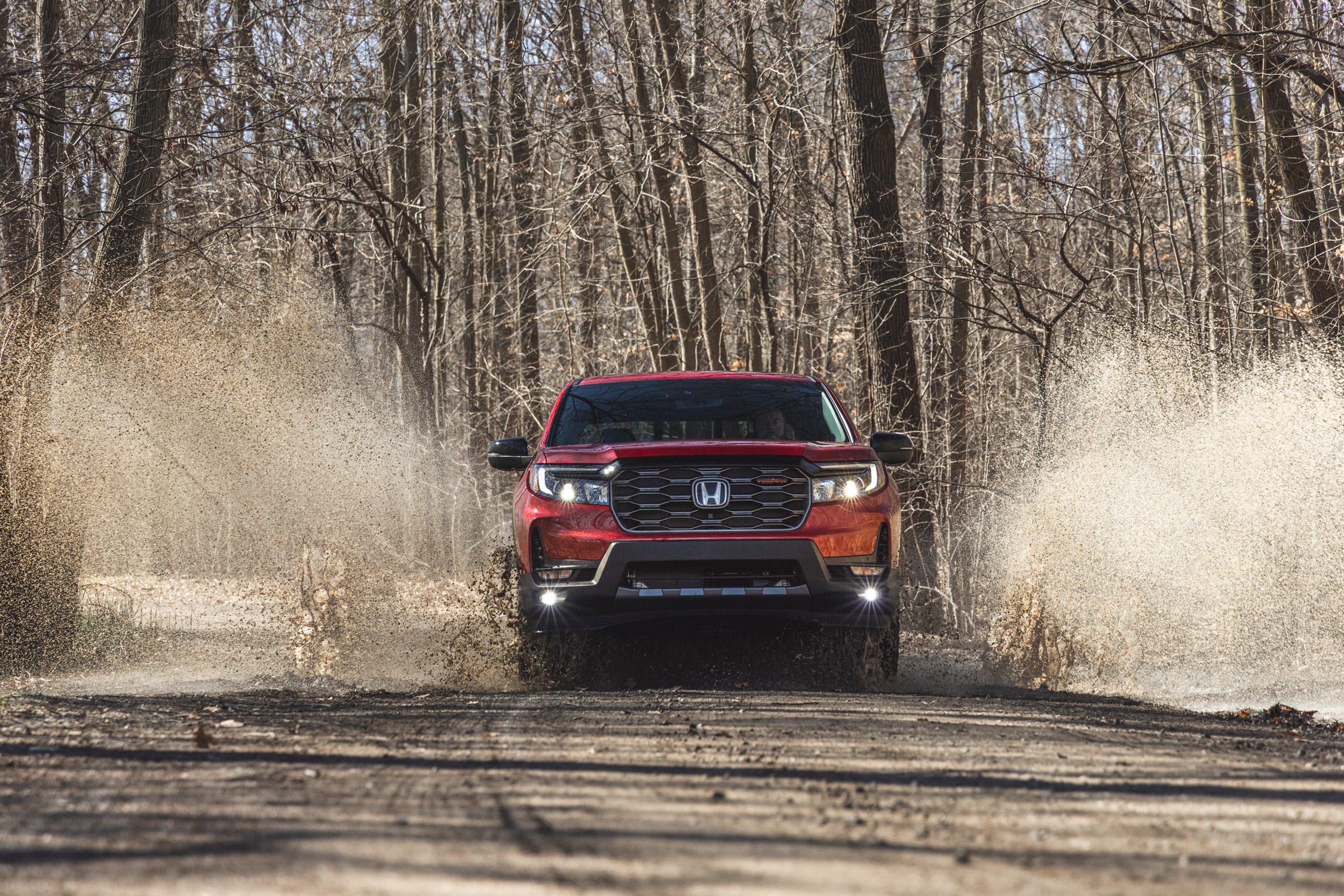


Honda will build its third-generation Ridgeline on a unibody platform, doubling down on the architecture every new entrant to the mid-size truck segment is running away from.
At a media roundtable ahead of the Freedom 250 Grand Prix in Washington D.C., Lance Woelfer, Honda’s vice president of auto sales, stopped just short of explicit confirmation but left little room for interpretation. “It’s been a tremendous success in the current format; it’s been with a unibody,” Woelfer said. “That’s been something where it has really met market needs.”
The timing makes this decision sharper than it might seem. Hyundai and Kia have both declared they will enter the mid-size truck fight with body-on-frame platforms, designed to challenge the Toyota Tacoma and Ford Ranger on their own terms. Ram is resurrecting the Dakota. The segment is about to be more crowded than it has been in two decades, and nearly every new contestant is bringing a ladder frame to the party.
Honda is bringing a minivan platform.
That sounds like a punchline, but the sales figures say otherwise. The Ridgeline has consistently cleared 40,000 units annually since 2021, climbing from the low 30,000s that marked the early years of the second generation. It will never outsell a Tacoma or a Ranger, but Honda appears content owning a specific slice of buyer rather than fighting for the whole pie.
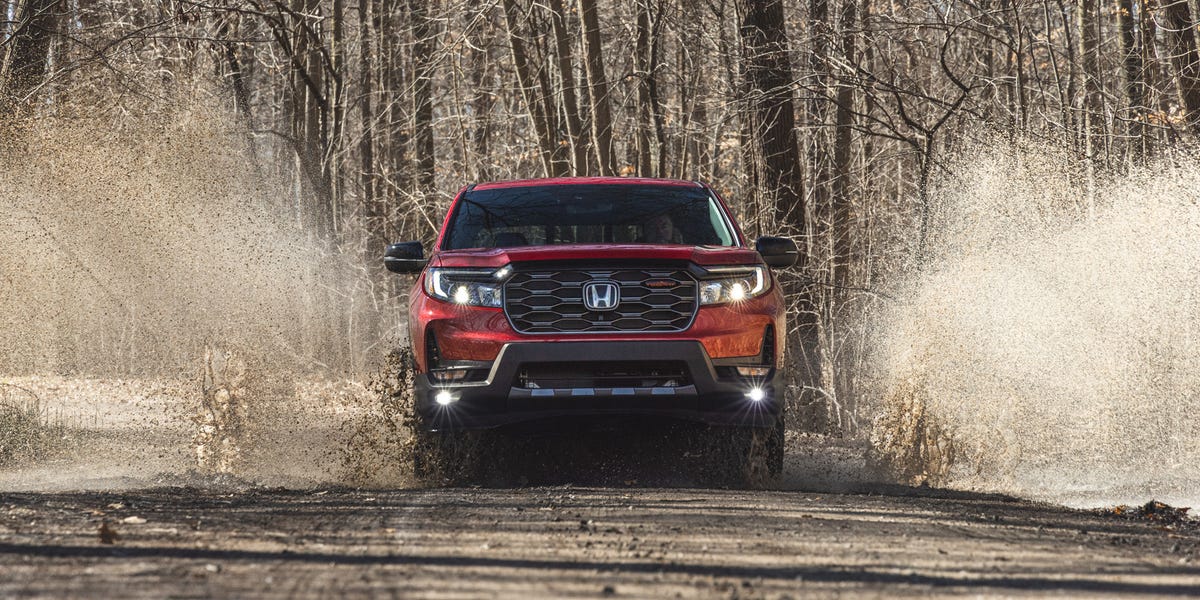
The unibody construction, shared with the Odyssey, gives the Ridgeline a ride quality and handling character that no body-on-frame competitor can touch. It tows 5,000 pounds and has a lockable in-bed trunk. For the enormous number of truck owners who never tow a horse trailer or crawl a rocky trail, it does everything they actually need while driving like a crossover the other six days of the week.
But Honda wants to push further with the next generation. Woelfer pointed to the Ridgeline as “a good opportunity” to take the TrailSport off-road trim in a more extreme direction. “I think there’s a lot of upside for it, so we could be far more extreme in products like that as we go forward,” he said.
That is an interesting needle to thread. Making a unibody truck more rugged without changing what makes it appealing to its existing buyers requires careful engineering. The first-generation Ridgeline was criticized for looking too soft, and the second generation fixed that but still struggled with perception among traditional truck buyers. A more aggressive TrailSport trim could push visual and functional credibility without abandoning the comfort-first formula.
Production of the current Ridgeline ends later this year, with the truck going dark until the next generation arrives, likely as a 2028 model. That gap is a gamble. Buyers who might have cross-shopped a Ridgeline will have a newly refreshed Tacoma, a capable Ranger, and potentially a Dakota to consider by then.
Winning them back after a year or more off the market is not automatic. Woelfer sounded unfazed. “I’m very confident that consumers will respond well to it,” he said. “I think it will be a bigger contributor to our sales when it comes back.”
Every other automaker entering this segment has decided the path to credibility runs through a body-on-frame chassis. Honda looked at the same market and reached the opposite conclusion. One of them is reading the room wrong, and the 2028 model year will start to sort out which.

Share this Story