


Stellantis promised a range-extended Ram pickup as a 2025 model. Then it slipped to customer orders in the first half of this year. That deadline now looks increasingly fictional.
While one of the world’s largest automakers keeps pushing timelines, a Canadian startup and a YouTube gearhead just got a prototype running under electric power in a garage.
Edison Motors, a small company that started building diesel-electric hybrid semi trucks, has teamed up with Rich Bosch of the Deboss Garage YouTube channel to develop conversion kits that turn older pickups into series-hybrid machines. Bosch was given the title Vice President of Work Truck Fabrication, which is a fancy way of saying he’s the lead designer working out of a shop with cameras rolling.
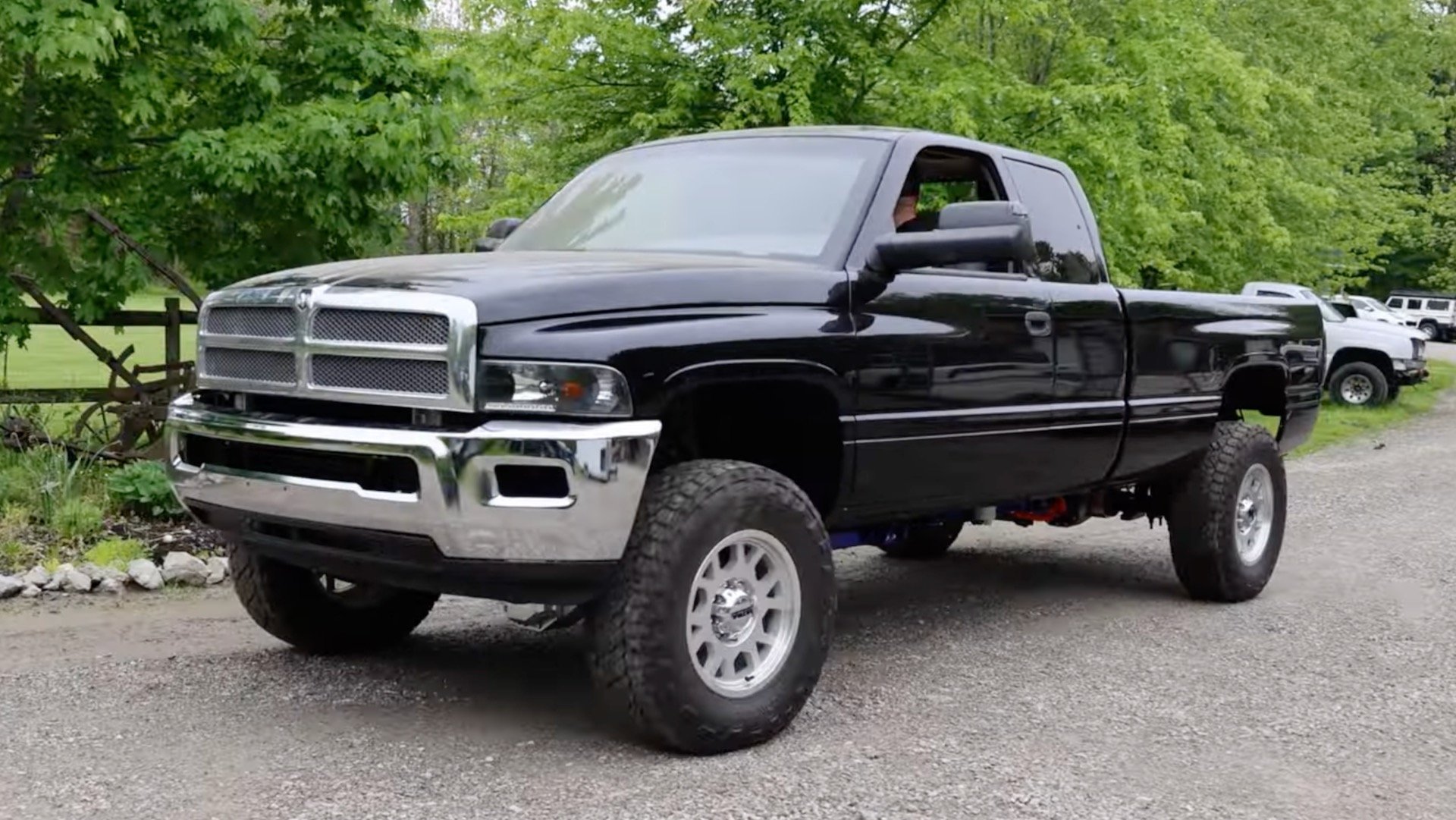
The project has been documented across 15 YouTube episodes. In the latest one, a 1995 Dodge Ram rolled under its own electric power for the first time.
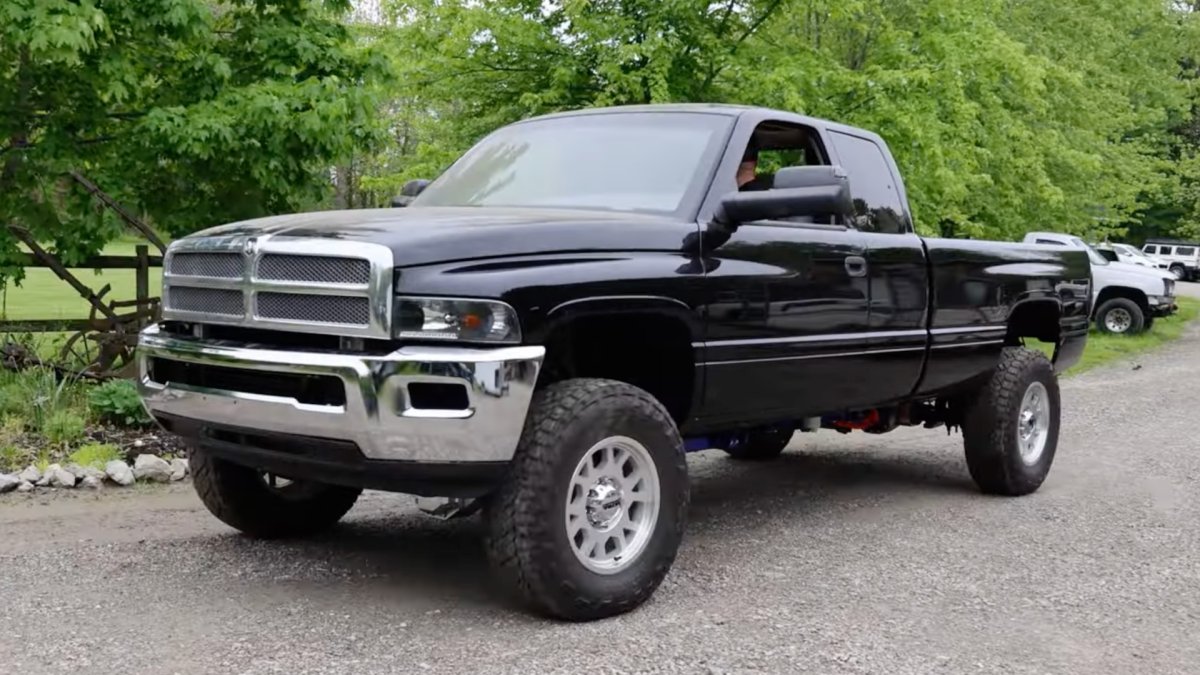
A Cummins 2.8-liter four-cylinder diesel crate engine sits under the hood, but it doesn’t turn the wheels. It powers a generator, which feeds a battery pack mounted between the frame rails. The wheels are driven by a pair of e-axles with integrated electric motors, front and rear.
No driveshafts. No transfer case. Just instant torque from electric motors, with a small diesel keeping the battery topped off. It’s the same series-hybrid logic that locomotives have used for decades, miniaturized to fit a pickup truck.
From the outside, the truck looks like a regular second-gen Ram. The giveaway is silence when the diesel isn’t running. Underneath, the e-axles are visible, but the packaging is surprisingly clean.
The battery management system and cooling hardware sit in a repurposed housing from Edison’s semi truck program, tucked between the frame rails and rear crossmember without hanging below the hitch or eating into bed space.
The truck was only driven far enough to confirm everything worked. But working is the operative word. Edison now has a functioning prototype while Ram’s Ramcharger remains somewhere in the fog of Stellantis’ ongoing financial restructuring and product delays.
Edison’s ambitions go well beyond YouTube builds. The company wants to sell these conversion kits to militaries and government agencies, pitching the series-hybrid architecture as emergency backup power when the electrical grid fails. Edison president and co-founder Chance Barber has also floated the idea of selling complete rolling chassis with hybrid powertrains already installed, turning the company into a turnkey supplier for anyone who wants a hybrid work truck without waiting for Detroit to figure it out.
A second prototype, a 79-Series Toyota Land Cruiser, was unveiled alongside the Ram late last year, broadening the potential market beyond North American trucks.
None of this means Edison will ship kits before Ram ships the Ramcharger. Prototypes and production are separated by a canyon of regulatory approvals, manufacturing scale-up, and capital. But the optics are brutal.
A company with a fraction of Stellantis’ resources, working out of a garage with a YouTuber, has a running truck. Stellantis, with billions in infrastructure and a century of manufacturing expertise, keeps moving dates to the right.
The Ram Ramcharger was supposed to prove that legacy automakers could blend electric performance with real-world range. Instead, it has become a symbol of how slowly big companies move when internal chaos takes priority over product. Edison’s little diesel-electric Ram isn’t a threat to Stellantis’ balance sheet, but it is an embarrassment to its timeline.

Share this Story