
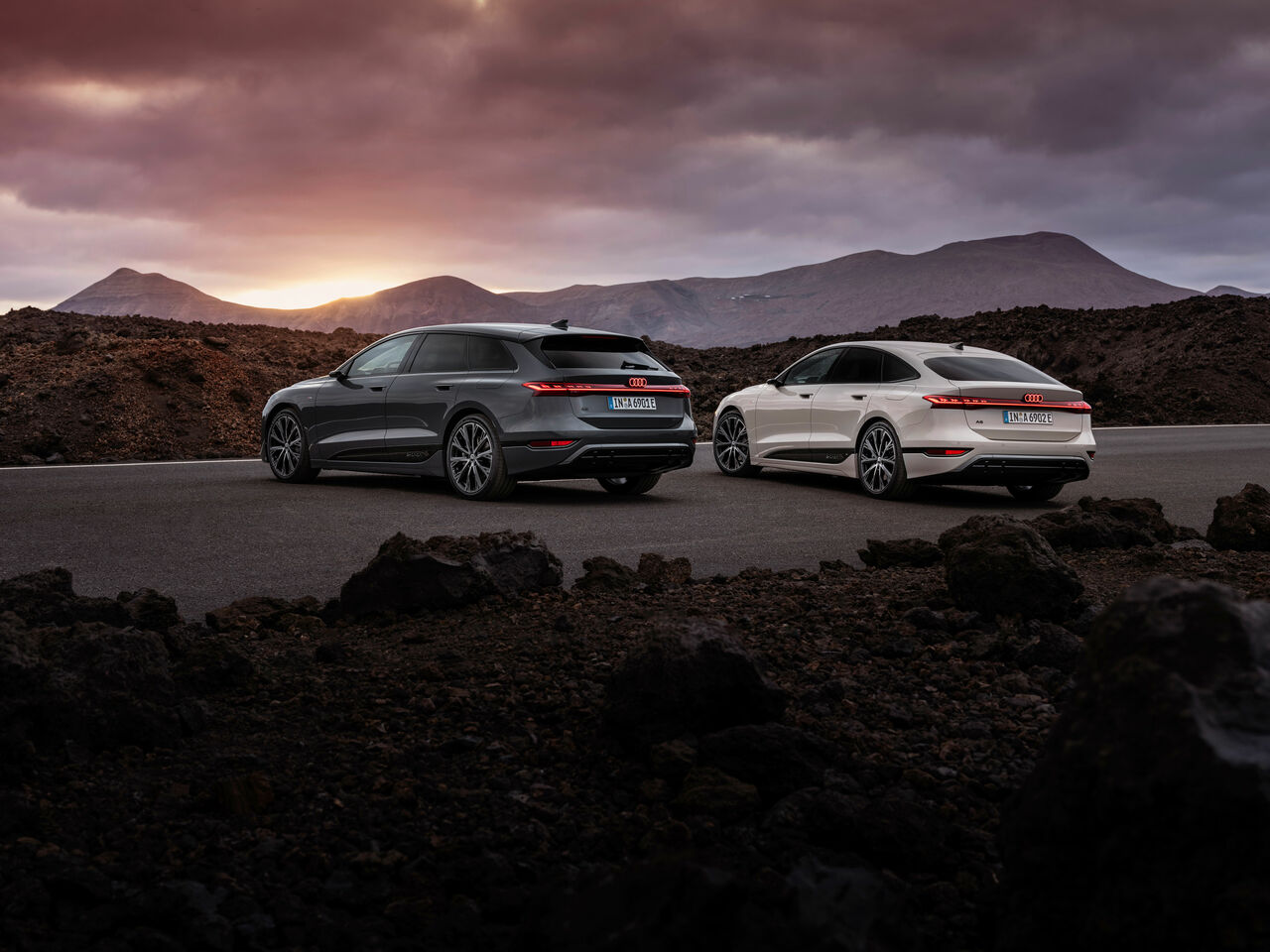


A 2.0 percent injury risk in a side-impact crash. That single number tells you almost everything you need to know about where the Audi A6 e-tron stands in the safety conversation right now.
The electric sedan just collected a five-star rating from NHTSA’s U.S. New Car Assessment Program, adding it to the five stars it already earned from Euro NCAP in 2025 and the IIHS Top Safety Pick+ award it picked up in April. That’s a clean sweep of the three most influential safety evaluations in the Western world, a trifecta few vehicles manage to pull off simultaneously.
Side-impact collisions remain among the deadliest crash scenarios globally, which makes that 2.0 percent injury-risk figure worth lingering on. The A6 e-tron also posted an 8.1 percent injury risk in the frontal crash test and a 6.9 percent rollover risk. NHTSA reserves its top rating for vehicles whose serious-injury risk falls significantly below its defined thresholds, and the Audi cleared every bar with room to spare.
These aren’t comparable apples, though. The U.S. NCAP focuses squarely on traditional crash scenarios — frontal, side, rollover. Euro NCAP casts a wider net, pulling in driver-assistance systems and vulnerable road-user protection, particularly children.
The IIHS layers on headlight performance and pedestrian safety. The A6 e-tron didn’t just survive one test methodology. It thrived across three fundamentally different evaluation philosophies.
That breadth matters because engineering a car to ace a single test protocol is a well-understood exercise. Tuning a structure, its restraints, and its electronics to satisfy regulators who don’t agree on what “safe” even means — that’s a harder trick. The PPE platform underpinning the A6 e-tron clearly has the structural rigidity and crash-energy management to handle whatever gets thrown at it, regardless of which continent’s bureaucrats are doing the throwing.
Audi is stacking five-star results across its lineup at a pace that’s starting to look systematic rather than lucky. The Q6 e-tron earned “Best in Class” for child occupant protection across all vehicles tested in 2023 and 2024, scoring 92 percent. The A3, Q3, Q4 e-tron, A5, Q5, and Q8 have all collected top marks in their respective NCAP tests.
When every car in a portfolio passes at the highest level, the conversation shifts from individual model achievement to platform and organizational capability.
The timing is strategic, too. In the U.S., NHTSA results carry enormous weight with fleet buyers and consumer organizations. The IIHS designation, funded by insurers, directly influences insurance premiums and purchasing decisions. For Audi, which is working to establish its electric lineup against entrenched competitors and aggressive newcomers, stacking independent safety credentials is one of the most cost-effective trust signals available.
Software updates are quietly expanding the safety envelope further. Current PPE-based models now receive an enhanced Adaptive Driving Assistant with lane-change assistance, predictive speed adaptation, and connected road-surface monitoring. These features didn’t exist at launch but arrive over the air. The car that earned five stars today is not the same car it will be in six months.
The electric luxury segment is crowded, loud, and increasingly difficult to differentiate on spec sheets alone. Range numbers blur together. Charging speeds converge. Interior technology leapfrogs quarterly.
But crash-test results are binary and brutal. A car either protects its occupants or it doesn’t.
The A6 e-tron does. On every test, on every continent where it’s been evaluated, by every organization that’s hit it with a barrier. That’s not marketing. That’s engineering receipts.



Share this Story