



Adrian Hallmark has a problem he never expected: the clutch pedal is cheaper than the software. Aston Martin’s CEO told Road and Track at Monterey Car Week that sourcing an actual manual gearbox isn’t what keeps him up at night. Making the car’s electronic brain accept one is.
Modern Aston Martins are laced with adaptive cruise control, automatic crash intervention, and a web of systems that all assume the car is picking its own gears. Retrofitting a three-pedal setup into that architecture means teaching every one of those systems to play nice with a driver who might dump the clutch at the wrong moment. Hallmark says the cost of rewriting that electronic handshake could exceed the price of engineering a brand-new transmission from the ground up.
That’s a brutal math problem for a company that builds roughly 6,000 cars a year.
Aston Martin last offered a manual in the Valour and Valiant, two ultra-limited specials built on older bones. Those cars used legacy electronics that simply don’t exist in the current lineup. There’s no parts-bin shortcut here.
So the company is eyeing a side door. Ferrari cracked it open with the 12Cilindri Manuale, which gives drivers a shift lever and the sensation of rowing gears while keeping the underlying dual-clutch automatic intact. No third pedal, no need to rearchitect the stability control or the cruise system. The gearbox still talks the language the electronics already speak.
Hallmark was blunt about the fork in the road. “Do we do a fake manual? Or, don’t go manual? So that’s the problem,” he said.
Earlier this year, Aston Martin leadership told journalists the brand “needs a manual.” That language was deliberate. Want is optional. Need implies survival, or at least brand identity. The stick shift is part of Aston Martin’s mythology, baked into decades of GT cars that rewarded drivers who wanted involvement over convenience.
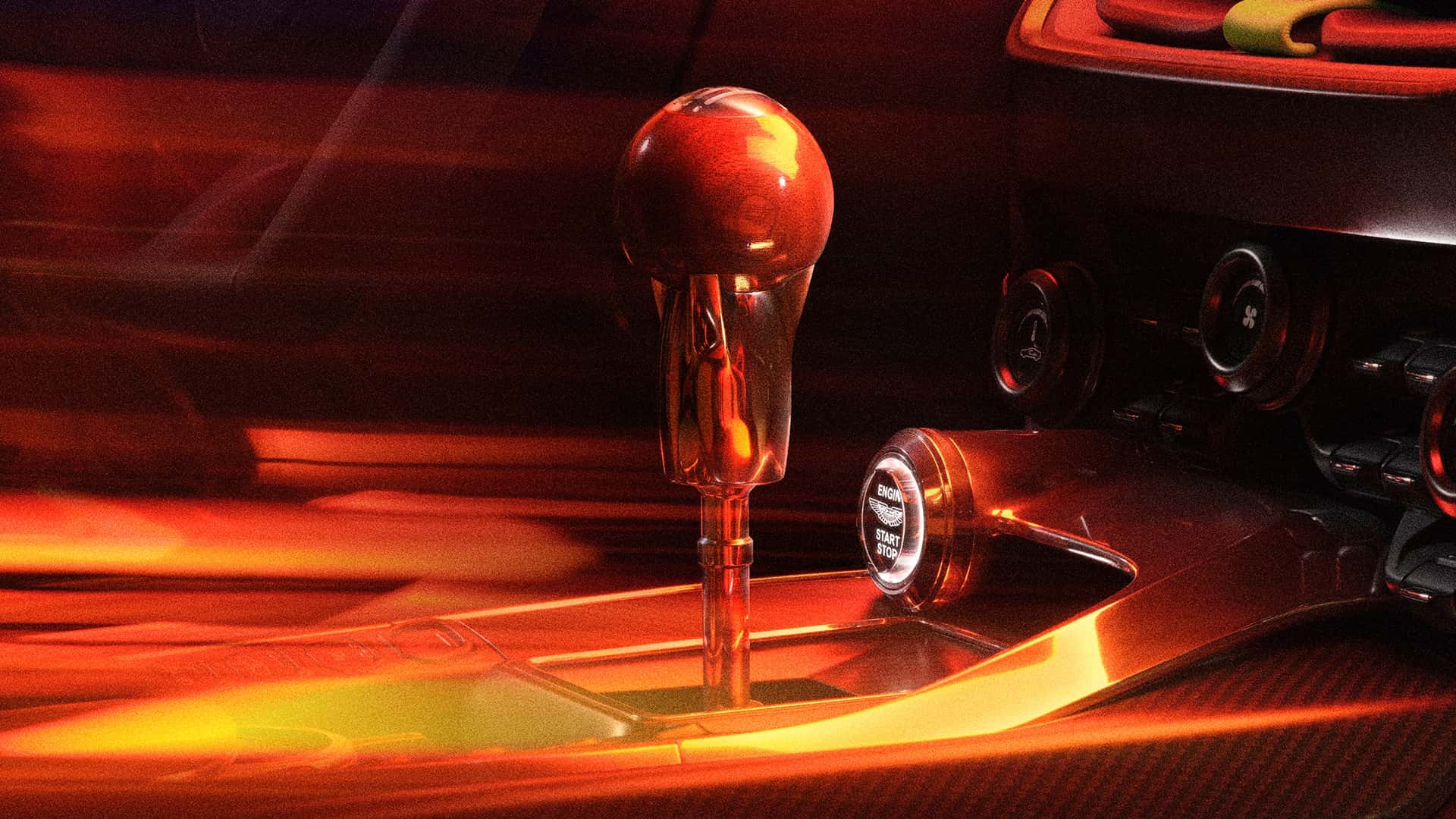
But mythology doesn’t fund engineering programs. Hallmark sees the business case as marginal at best. Even if Aston Martin charged a premium for a manual option, the take rate among buyers who actually spec ultra-luxury GTs with three pedals is slim. Most customers in that bracket want effortless power delivery, not a workout in traffic on the way to dinner.
Porsche figured this out years ago and still made it work. The 911 Carrera S got its manual back because Porsche sells enough volume to spread the cost across tens of thousands of units. Aston Martin doesn’t have that cushion.
McLaren just announced a manual for its new supercar after 34 years away from one. The stick shift is having a moment, and Aston Martin risks looking like the only British sports car maker sitting it out.
The simulated manual route has its own trap. Purists will call it a gimmick. Ferrari can get away with it because Ferrari gets away with everything.
Aston Martin occupies different territory, one where authenticity and craftsmanship are supposed to be the whole pitch. Selling a fake manual under that banner invites scrutiny.
Doing nothing is the cheapest option and the most dangerous one. Every rival that offers a manual, real or simulated, makes Aston Martin’s lineup feel a little more detached from the drivers who define its brand. Hallmark knows this. He just hasn’t found a number that makes the accountants agree.
The decision hasn’t been made. The clock, though, is running.



Share this Story