
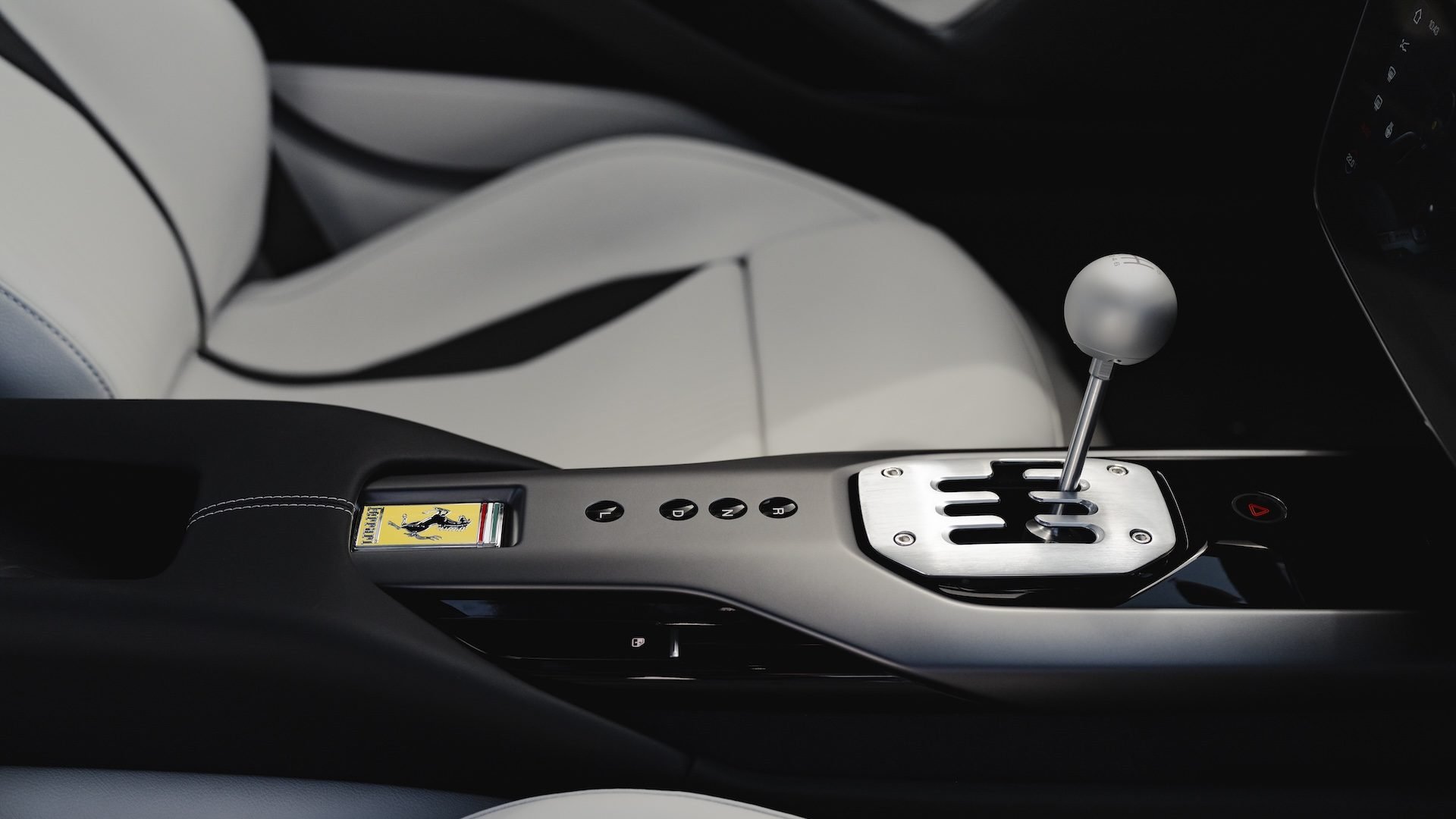


Thirty years ago, Ferrari ripped the stick shift out of Formula 1 and bolted paddle shifters into the F355 F1, making it the first road car to borrow that particular piece of racing tech. Now, in a move that feels like automotive history eating its own tail, Ferrari has put the stick shift back — sort of.
The new 12Cilindri Manuale has a clutch pedal. It has a gated six-speed lever. It has the whole theatrical setup that made driving a Ferrari feel like conducting an orchestra with your right hand. But none of it is mechanically connected to the transmission. It’s manuale-by-wire: electronic signals replacing physical linkage, a simulation of the analog experience delivered through digital architecture.
The internet, predictably, hates it.
Fake manual” is the consensus verdict from keyboard enthusiasts who will never be in a position to buy one anyway. And that reaction mirrors the backlash paddle shifters themselves received when they first appeared in F1. Racing legend Allan McNish recalled the early complaints: “People complained about it not being racing, and the driver not being in control with the new gearbox.” That resistance evaporated within a few seasons.
Ferrari is building exactly 1,499 units of the 12Cilindri Manuale, all through its Tailor Made program. That number tells you everything about the business calculus here. Engineering an entirely new mechanical manual transmission for a production run that small would be financial lunacy.
The dual-clutch unit already exists. The electronic infrastructure already exists. Bolting a physical lever and clutch pedal into the interface — even if the connection is by wire — is the only version of this car that pencils out. The alternative was no manual at all.
That context gets lost in the outrage cycle. Ferrari could have simply kept selling the 12Cilindri with paddles and moved on. Nobody asked for this. The company chose to build it because it recognized a segment of its clientele craving something tactile, something deliberately slower, something that trades a tenth on a lap time for a feeling you can’t quantify on a spec sheet.
A naturally aspirated V12 spinning to nearly 10,000 RPM, paired with a clutch pedal and a gated shifter, in a front-engine grand tourer — the ingredients list reads like a love letter to a generation of Ferrari owners who grew up heel-toeing through Alpine passes. Whether the clutch cable is steel or electrons changes the experience less than purists want to admit.
Ferrari knows the lap times will suffer. It doesn’t care. That’s the real story here — a company that spent three decades chasing milliseconds is now willingly surrendering them. Performance used to be the only religion in Maranello. Now driving pleasure is getting its own chapel, even if the pews only seat 1,499.
When asked whether this by-wire manual concept might spread to future models, Ferrari said the 12Cilindri Manuale would be the only car with the system for now. Read that carefully. “For now” is doing a lot of heavy lifting in that sentence.
The same company that killed the manual is now the one trying to resurrect it, albeit in Frankenstein form. Whether you call it authentic or artificial depends entirely on how much weight you give to the mechanical connection versus the physical ritual. The pedal still moves. The lever still slots through a gate. The engine still screams.
For a car that exists only because Ferrari decided it should, despite every spreadsheet argument against it, dismissing it as fake seems like missing the forest for the wiring harness.


Share this Story