



Lucid is offering zero percent financing for 72 months and a $10,000 credit on the 2026 Gravity SUV. That’s the kind of deal you roll out when the phone stops ringing.
The promotion, which appeared on Lucid’s website and was pushed via email to U.S. customers, covers remaining 2026 Gravity Touring and Grand Touring trims. The more expensive Dream Edition is excluded. Existing Lucid owners get a $3,000 loyalty credit, and everyone else can snag up to $3,000 for a trade-in. There’s a catch: you need to take delivery by July 31.
The urgency isn’t for the customer’s benefit. It’s for Lucid’s.
The 2027 Gravity launched more than three months ago, and the company still has considerable 2026 inventory gathering dust. That’s a painful position for any automaker, but it’s especially brutal for a startup that has never turned a profit and burns cash like kindling.
Zero percent for six years is not a confidence play. It’s a liquidation strategy wearing a nice suit. When you combine interest-free money with a five-figure credit, you’re essentially admitting the sticker price was fiction. A 2026 Gravity Touring starts around $79,900. Knock ten grand off, add free financing, and suddenly you’re looking at a transaction that screams desperation more than it whispers exclusivity.
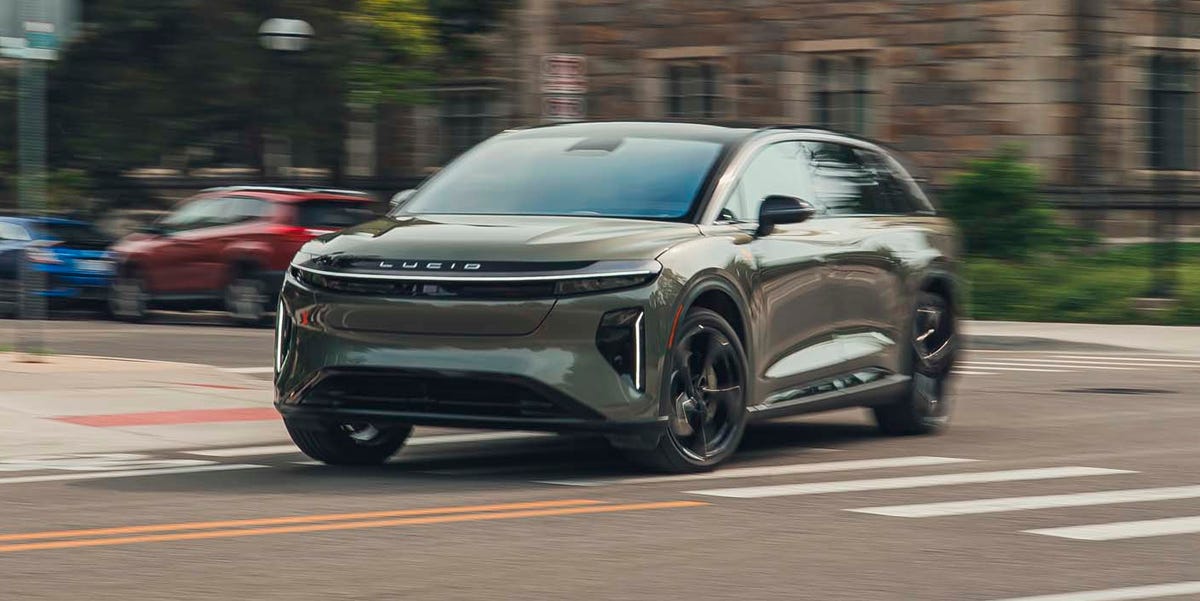
The Gravity itself is not the problem. Car and Driver named it to its 2026 10Best Trucks and SUVs list. The Grand Touring version tested well, and the Touring trim earned praise for its looks and driving dynamics.
Lucid builds genuinely impressive hardware. But impressive hardware at $80,000-plus in a market already crowded with capable electric SUVs from Tesla, BMW, Mercedes, and Rivian is a hard sell. Especially from a brand most Americans still can’t identify in a parking lot.
Lucid’s real bet is coming later this year. The Cosmos SUV is expected to be revealed this summer and go on sale before December, priced below $50,000. That’s the volume play Lucid desperately needs, a vehicle that could theoretically reach buyers who don’t need to be bribed with interest-free loans to sign on the dotted line.
But the Cosmos timeline raises its own questions. If Lucid can’t move the Gravity at deep discounts, what does that say about brand awareness heading into a mass-market launch? Building a great car has never been Lucid’s weakness. Selling one has.
The 2026 Gravity fire sale also highlights a structural challenge for low-volume EV startups. Traditional automakers can absorb a slow-selling model year across dozens of nameplates and thousands of dealers. Lucid has two models, a handful of studios, and a stock price that has tested investor patience for years.
Every unsold unit sitting on a lot is a line item that the Saudi Public Investment Fund, Lucid’s majority backer, has to stomach. Lucid needs the Cosmos to work the way the Model 3 worked for Tesla: as proof that the company can scale beyond wealthy early adopters. Until then, it’s stuck running clearance events on six-figure SUVs that reviewers love and buyers ignore.
The July 31 deadline ticks closer. Somewhere in Arizona, a warehouse full of 2026 Gravitys waits for someone to bite.



Share this Story