
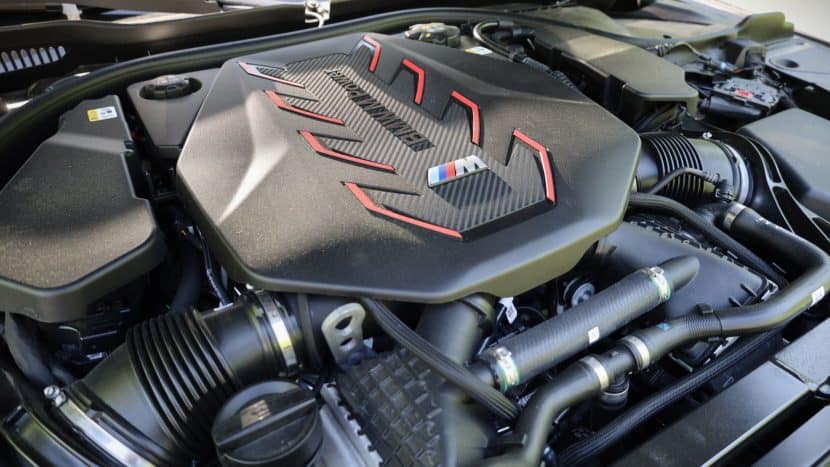


Frank van Meel stood at the 2026 Goodwood Festival of Speed and said something you don’t hear much from European automakers anymore. The BMW M boss told Bimmer Today that the company’s inline-six and V8 engines will be here “for a long time to come.” Not winding down. Not transitioning. Staying.
That’s a gutsy declaration when every European emissions regulation since 2020 has been designed to make exactly those words impossible to say. But BMW’s engineers appear to have called the bluff.
The S58 inline-six and S68 V8 have both been reengineered to pass Euro 7, the most punishing emissions standard the EU has ever imposed. The methods differ between the two engines, and the details reveal just how far BMW was willing to go to keep combustion alive inside its performance flagship division.
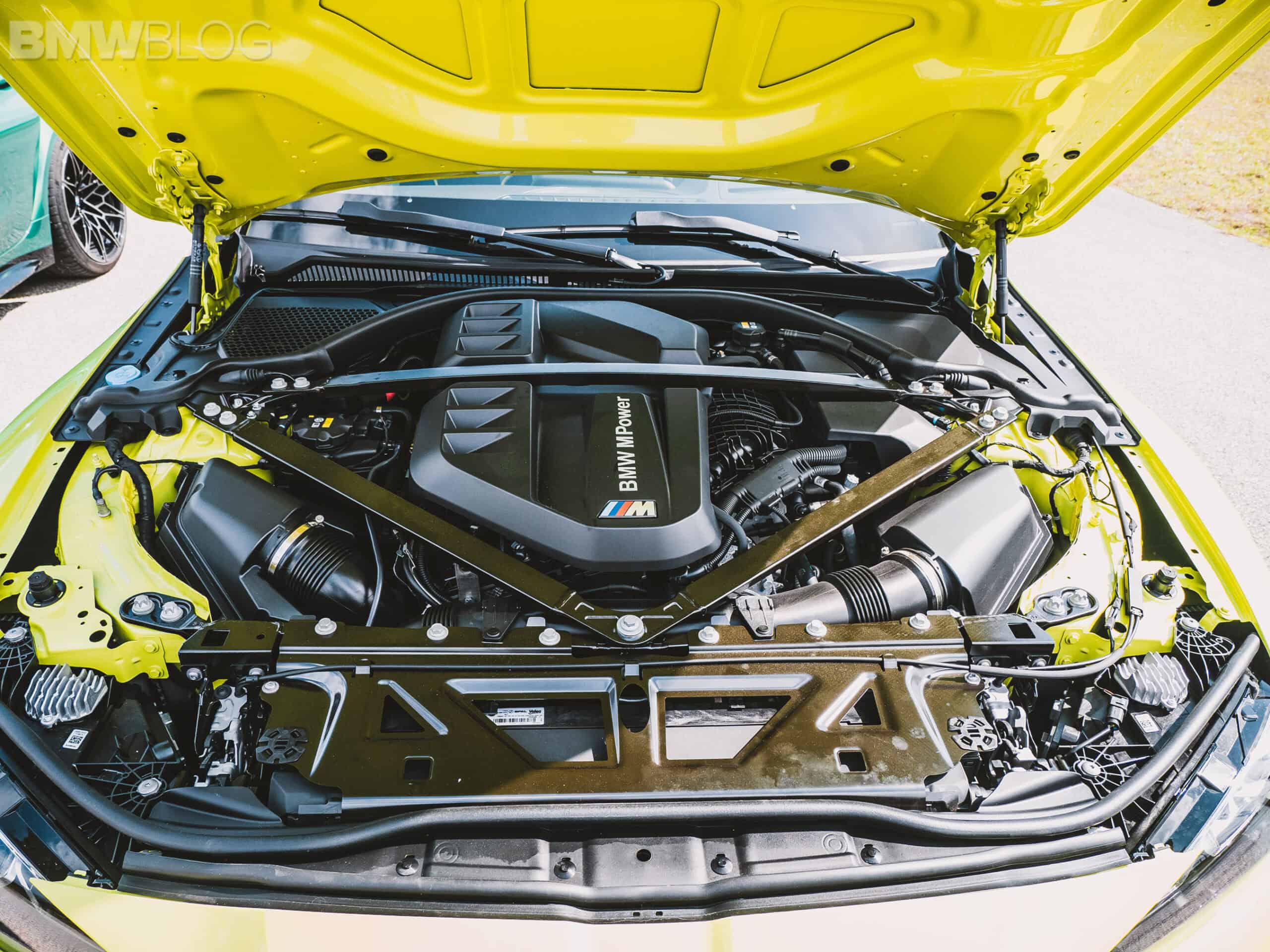
The 3.0-liter S58 now features “M Ignite,” a pre-chamber combustion system integrated directly into the cylinder head. It also gets a higher compression ratio and variable turbine geometry turbochargers. The result is lower fuel consumption, particularly under hard driving, which is the only kind of driving M cars are supposed to do.
The M3 and M4 are already in production with the updated six. The M2 follows in August.
The 4.4-liter S68 took a different path. BMW adopted the Miller combustion cycle, revised the engine management software, upgraded the exhaust aftertreatment system, and reworked the cooling architecture. The V8 did lose some horsepower in the process, but BMW compensated by boosting the electric motor output in its plug-in hybrid applications.
Combined power in the M5 and XM Label holds steady. Production of the updated M5 started in March, and the XM Label followed in April.
None of these Euro 7 changes apply to U.S.-spec cars. American buyers get the same engines without the regulatory surgery. That gap between European and American tune is not new, but it’s widening, and it raises an uncomfortable question about how long BMW can maintain two diverging performance identities under one badge.
The product pipeline tells the real story. The V8 is slated for the X5 M60, M760, and ALPINA 7 Series in 2027. A second-generation X7 M60 is expected the same year.
The next X6 should follow in 2028 with both M Performance and full M variants. The inline-six will power the next-generation M3 sedan, also due in 2028, possibly paired with a mild-hybrid system. Before that, the new 3 Series arrives later this year as the M350, with the B58 reportedly pushing past 400 horsepower.
There’s even talk of a new M3 Touring, though BMW hasn’t confirmed it.
This is not a company managing decline. This is a company investing heavily in combustion engine development at a moment when most of its German competitors are publicly hedging their bets or quietly mothballing ICE programs.
Mercedes has scaled back its EV timelines but hasn’t made this kind of engine-forward declaration. Audi is restructuring around electric platforms. Porsche is the closest parallel, but even Stuttgart hasn’t laid out this many upcoming combustion-powered performance variants in a single breath.
BMW M is making a calculated wager that performance buyers, the ones who pay the premiums that fund everything else, still want engines that burn fuel and make noise. Euro 7 was supposed to be the wall. Instead, BMW treated it as an engineering problem and solved it.
The S58 and S68 aren’t relics being kept on life support. They’re freshly re-engineered powertrains with a product roadmap stretching to the end of the decade and likely beyond. In a regulatory environment designed to kill them, that’s not just survival. It’s defiance with a business case attached.
Share this Story