
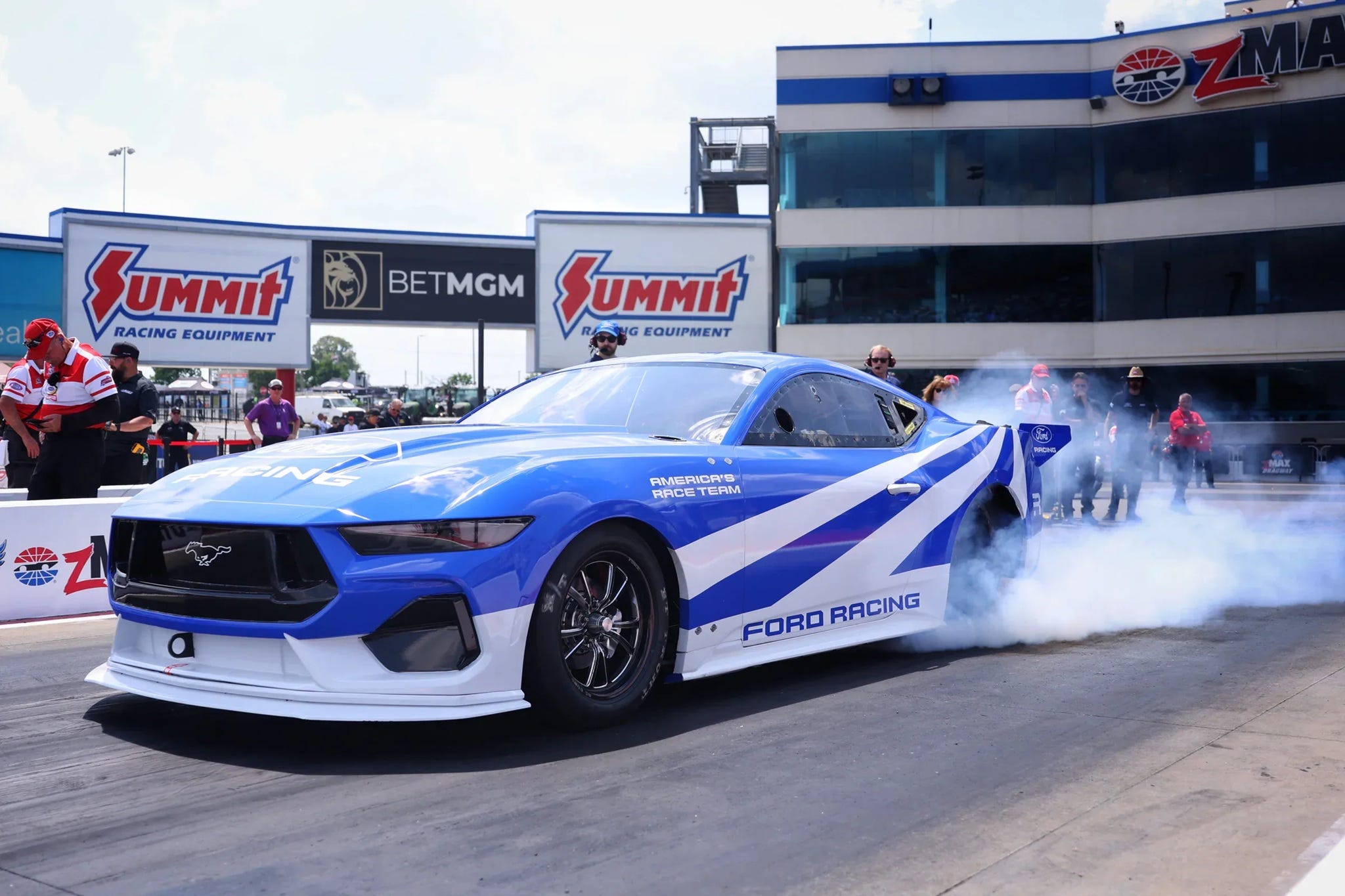


A full second. That’s how much time Ford Racing shaved off its own electric quarter-mile record last weekend at NHRA Charlotte, where the Mustang Cobra Jet 2200 ripped through the traps in 6.76 seconds at 222 mph. Both numbers now stand as world records for a full-bodied EV drag car.
Ford has been chasing this moment for five years. The original Cobra Jet 1400 ran an 8.128-second pass in 2021. The Super Cobra Jet 1800 trimmed that to 7.759 seconds in 2024. Each generation has been a controlled escalation, and the 2200 is the most violent leap yet.
The key wasn’t just adding horsepower, though 2200 ponies and 1340 pound-feet of torque to the wheels certainly helped. Ford Racing attacked weight with a borderline obsessive focus. The Cobra Jet 2200 is 900 pounds lighter than the 1800, and nearly 2000 pounds lighter than the original 1400.
That came from more power-dense electric motors, a carbon fiber body, a custom tube-frame chassis, and even a NASCAR-style vinyl wrap that saved 20 pounds over conventional vinyl. When you’re chasing tenths, you count ounces.
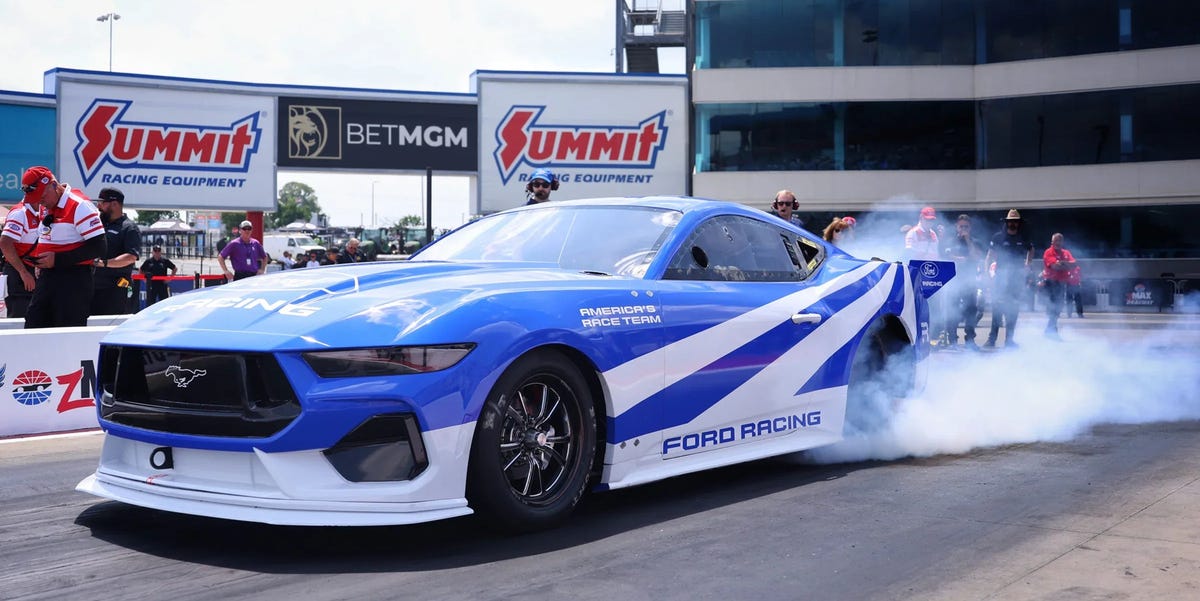
But raw power-to-weight ratios are useless if you can’t hook. Ford Racing fitted a Reverse-Acting Centrifugal Clutch paired with a five-speed clutchless transmission, a setup designed to manage the savage torque delivery that makes EV drag cars so notoriously difficult to launch cleanly. Getting 2200 horsepower to bite on a prepped surface without shredding the tires is an engineering problem as complex as generating the power in the first place.
Then there’s the part nobody glamorizes but everybody should respect: safety. High-voltage battery systems in a car experiencing the kind of deceleration forces a drag car sees, plus the ever-present risk of a crash at 222 mph, demand serious fail-safes. Ford Racing developed a pyrotechnic circuit breaker, a small explosive charge that can physically sever the high-voltage circuit in an emergency. It’s the kind of detail that separates a racing program from a publicity stunt.
For context, the Rimac Nevera R, a $2.4 million hypercar making 2107 horsepower, runs the quarter in 8.23 seconds. The Cobra Jet 2200 would put a second and a half on it. Granted, the Rimac has to carry air conditioning, door handles, and a compliance team’s worth of crash structure, but the gap illustrates just how far purpose-built EV drag racing has pulled ahead of even the most extreme street-legal machines.
Ford’s progression here tells a story the broader EV industry should be paying attention to. Each Cobra Jet generation has delivered improvements that defy diminishing returns. Not incremental gains, but massive chunks of elapsed time disappearing with every iteration.
The motors are getting smaller and more powerful. The battery packaging is getting tighter. The power management is getting smarter. This isn’t a program throwing unlimited money at a one-off spectacle. It’s iterative engineering with clear generational targets.
The Cobra Jet 2200 is not a production car and never will be. Ford isn’t selling you an electric Mustang that does six-second passes. But the technologies filtering through this program, from power-dense motors to advanced thermal management to lightweight structural design, have a way of migrating into vehicles that eventually do wear license plates.
For now, 6.76 at 222 is the number. And knowing Ford Racing’s cadence, the next one is probably already on a whiteboard in Dearborn.
Share this Story