
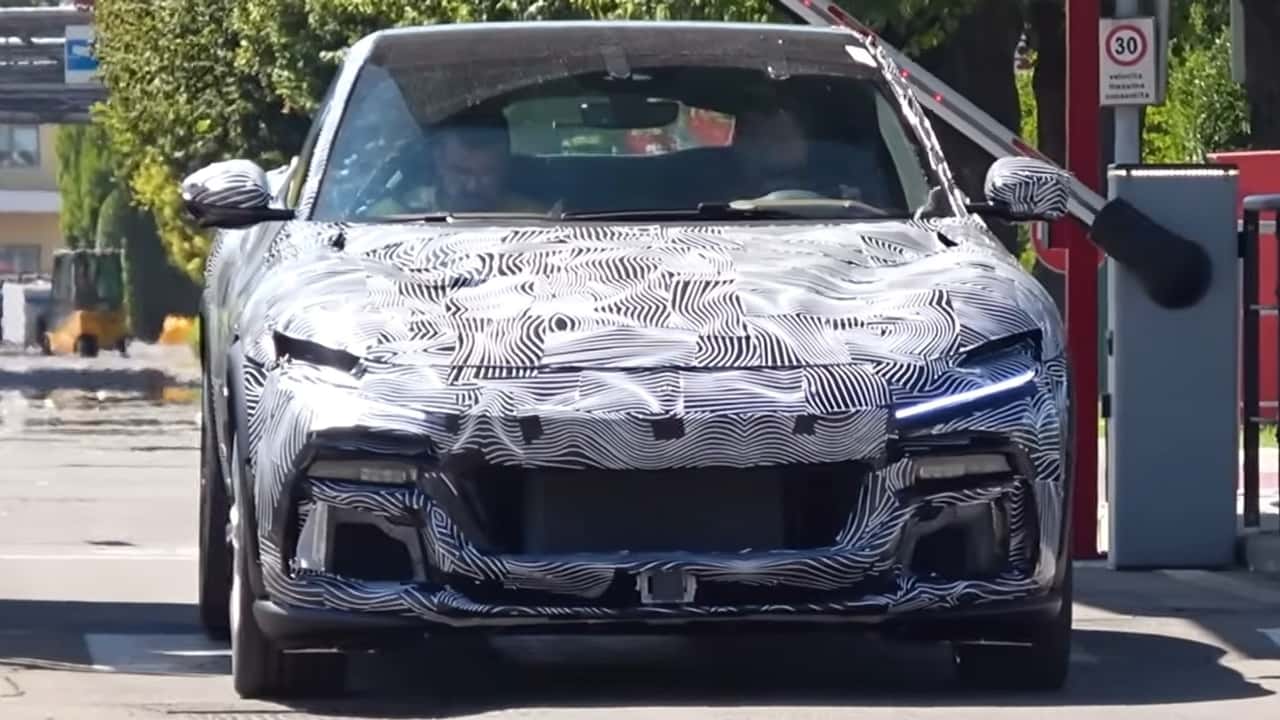


A heavily camouflaged Ferrari Purosangue prototype rolled out of the Maranello factory gates this week, captured on video by YouTuber Varryx. The disguise was thorough enough to suggest this is more than a mid-cycle nip and tuck.
The Purosangue launched in September 2022 with a naturally aspirated V12, the kind of powertrain that made purists forgive Ferrari for building an SUV in the first place. Nearly four years later, that goodwill may face a real test. The next version could drop to a V8, or even a V6, with plug-in hybrid hardware bolted on.
That math isn’t hard to follow. Ferrari already pairs an electrified V6 with the F80 hypercar. Sliding a smaller, electrified engine into the Purosangue would let Ferrari sell more of them without torching its fleet emissions averages.
The company currently caps Purosangue production at 20 percent of total annual output. Even with that artificial ceiling, the SUV has been a cash machine. Removing the V12 exclusivity and offering a less expensive derivative would open the door wider without cannibalizing the flagship model.
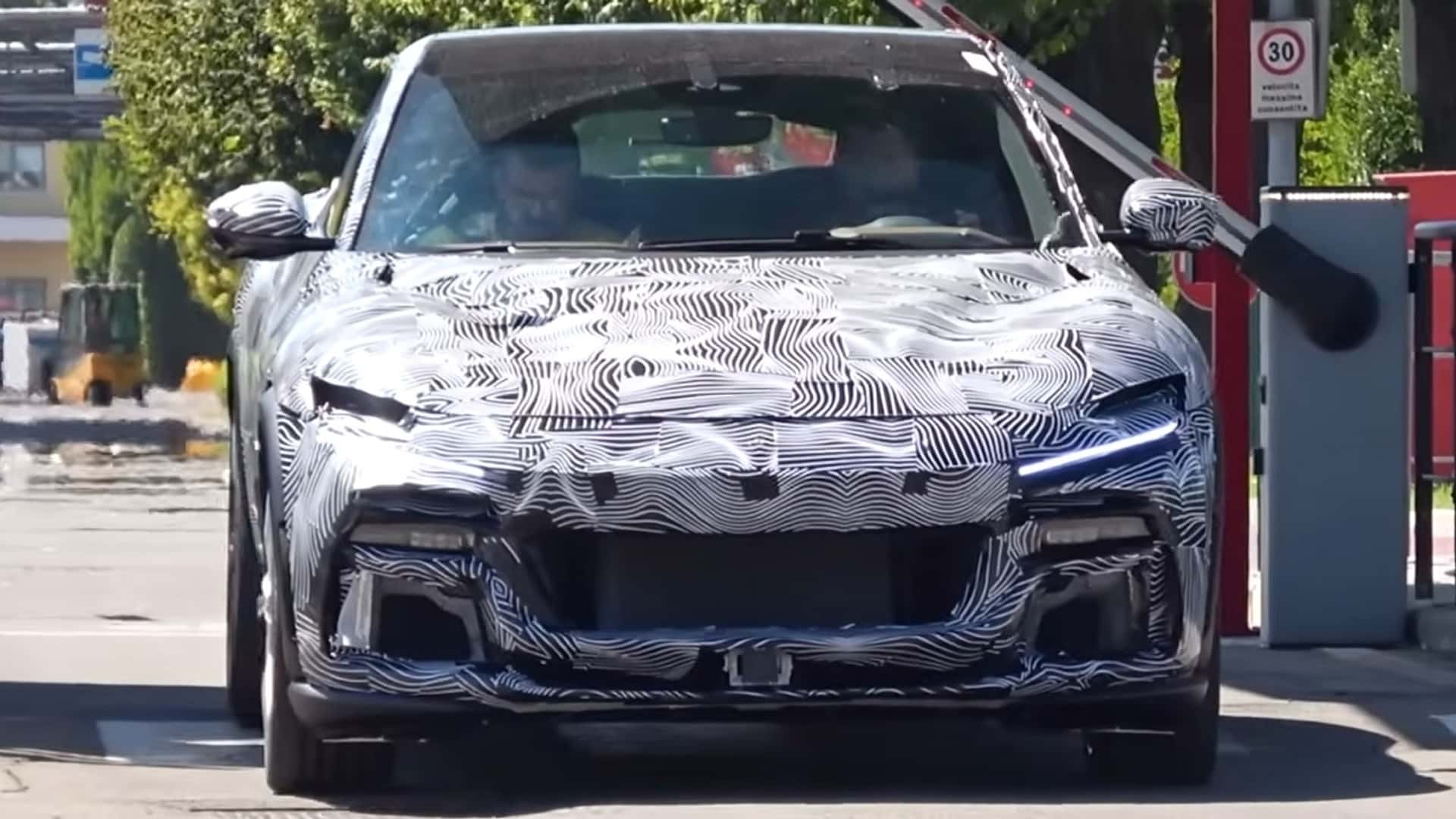
The prototype’s camouflage was extensive but revealed the SUV’s aggressive air intakes, a reminder that this is still a Ferrari wearing a tall-riding body. Styling changes look evolutionary at best. The real story sits underneath.
Emissions regulations across Europe are tightening year by year, and even Maranello can’t dodge physics. A plug-in hybrid Purosangue with enough battery for meaningful electric-only range around Milan or Monaco would be the most logical electrified Ferrari in the lineup. No other car in the stable logs as many mundane urban miles.
CEO Benedetto Vigna confirmed that two new models will debut before the end of 2026 without naming them. The Purosangue derivative is one obvious candidate. A hotter 12Cilindri wearing a possible GTO badge has also been spotted testing.
The broader context matters. Ferrari just weathered a storm of online criticism over the Luce, its first electric car, and emerged with full order books stretching into 2027. The company has learned that internet outrage and purchase orders are two entirely separate currencies.
The original Purosangue proved that lesson first. When Ferrari announced an SUV, the faithful howled. When Ferrari priced it north of $400,000 with a V12 and rear-hinged back doors, buyers lined up anyway. Offering a second variant with a smaller engine and a lower price point is the kind of ruthlessly pragmatic move that Maranello has gotten very comfortable making.
What remains unclear is whether a V6 or V8 Purosangue would carry the same production cap. If Ferrari loosens that 20-percent ceiling for a hybrid variant, volume could jump substantially. That would change the revenue picture in ways that make Wall Street very happy and driving enthusiasts slightly queasy.
The V12 Purosangue stays as the halo. A plug-in hybrid sits below it, soaks up emissions penalties, and prints money. The only question left is how small Ferrari is willing to go under that hood, and whether buyers will care once the prancing horse badge is on the steering wheel.
Testing has clearly moved beyond the early stages if prototypes are already exiting factory gates in daylight. Expect Maranello to control the narrative carefully from here, likely timing the reveal to coincide with one of Vigna’s two promised 2026 debuts.

Share this Story