
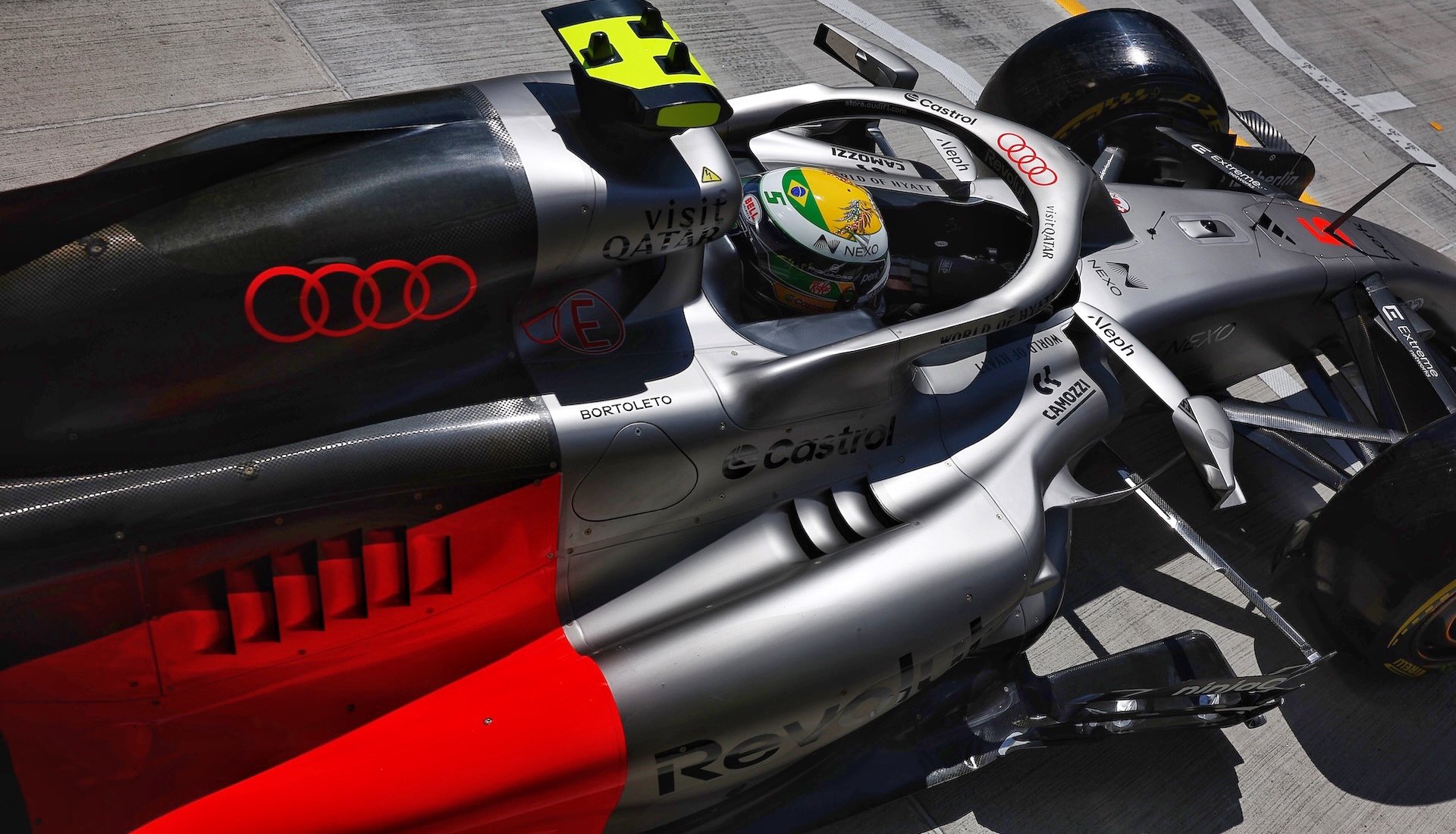


His older brother quit racing so he could keep going. His father’s company bankrolled the whole operation. His mother restructured her life around a child’s dream. The entire Bortoleto family went all in on Gabriel, and now the 21-year-old Audi F1 driver carries that weight every time he straps into the car.
In a wide-ranging interview with The Drive, Bortoleto laid bare the family dynamics and personal psychology behind his rapid ascent through the junior ranks to a factory Formula 1 seat. The portrait that emerges is of a young man who understands exactly what was traded so he could be here, and who has decided that anything less than total commitment would be a betrayal.
Enzo Bortoleto, Gabriel’s older brother, had real talent. He raced karts through F4 and into British Formula 3. But even the well-resourced Bortoleto family, headed by Stock Car Pro Series CEO Lincoln Bortoleto, couldn’t fund two sons climbing the open-wheel ladder at the same time.
Enzo walked away so Gabriel could continue. That kind of sacrifice leaves a mark.
They have supported me through every single second of my career and never let me down,” Bortoleto said. “They made sure that I kept my ambitions, goals, and dreams alive.”
When asked how a 21-year-old develops the mental fortitude required in F1, Bortoleto didn’t offer platitudes about sports psychologists or breathing exercises. He went straight to the bone: “If you are willing to sacrifice everything in life to be a world champion one day, nothing is going to stop you. If you are not very passionate about it, or you are passionate but not enough to get through the bad moments, then maybe you don’t deserve to achieve greatness at all.”
That is not the language of a rookie still finding his footing. One veteran paddock insider compared his raw ability to Max Verstappen and Kimi Raikkonen, then added that Bortoleto might work harder than both. Whether that proves true over a career remains to be seen, but the conviction is already there.
His father Lincoln took a specific approach to parenting a racing prodigy. No screaming, no Jos Verstappen-style intensity, but no coddling either. When young Gabriel avoided the simulator because he wasn’t good at it, Lincoln called him lazy to his face.
“You say you don’t like it because you’re not good at it,” his father told him. “But if you practice, get good at it, and get strong at it, I’m sure you will like it.” Bortoleto now spends serious time in the sim and considers it a core strength.
The Audi seat itself represents a particular kind of gamble. Bortoleto is building with what is essentially a new factory team, one that has yet to prove it can compete at the sharp end. He frames it as opportunity rather than risk.
There are a lot of people working hard to put us at the top in F1,” he said. “I will sacrifice everything to bring this team to the top and win with them.”
There was one moment, he admitted, when the path forward went dark. After leading the F3 championship, he had no confirmed seat for F2 and no clear route to F1. He considered walking away from racing entirely if the top tier didn’t materialize.
It was the first time that happened in my life,” he said. The F1 call came. He took it.
What separates Bortoleto from so many young drivers who arrive in F1 with talent and fade is the clarity of his self-awareness. He knows the cost. He knows who paid it. And he has decided, at an age when most people are still figuring out what they want, that the only acceptable outcome is the one his family sacrificed for.
Whether Audi can give him the car to match that ambition is another question entirely.


Share this Story