
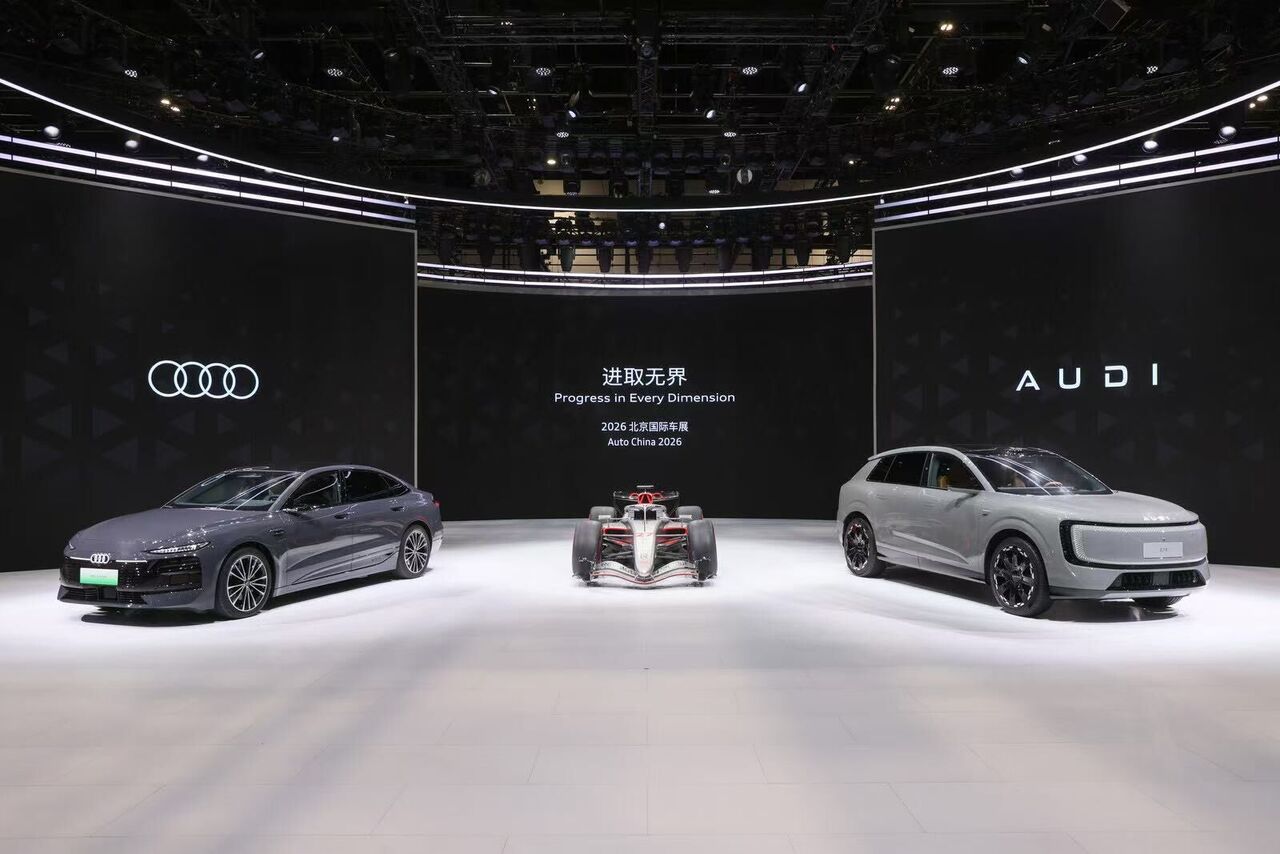


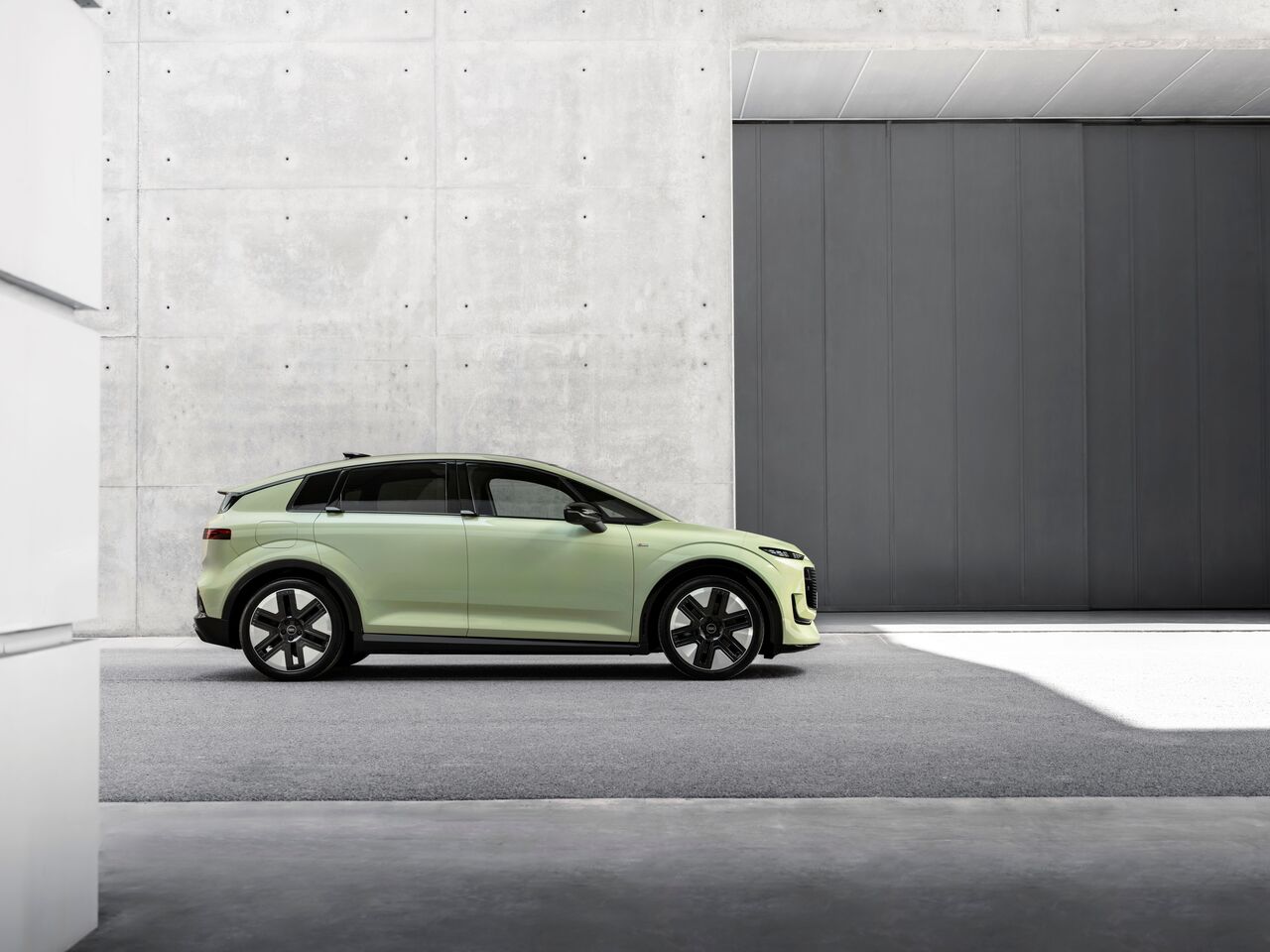
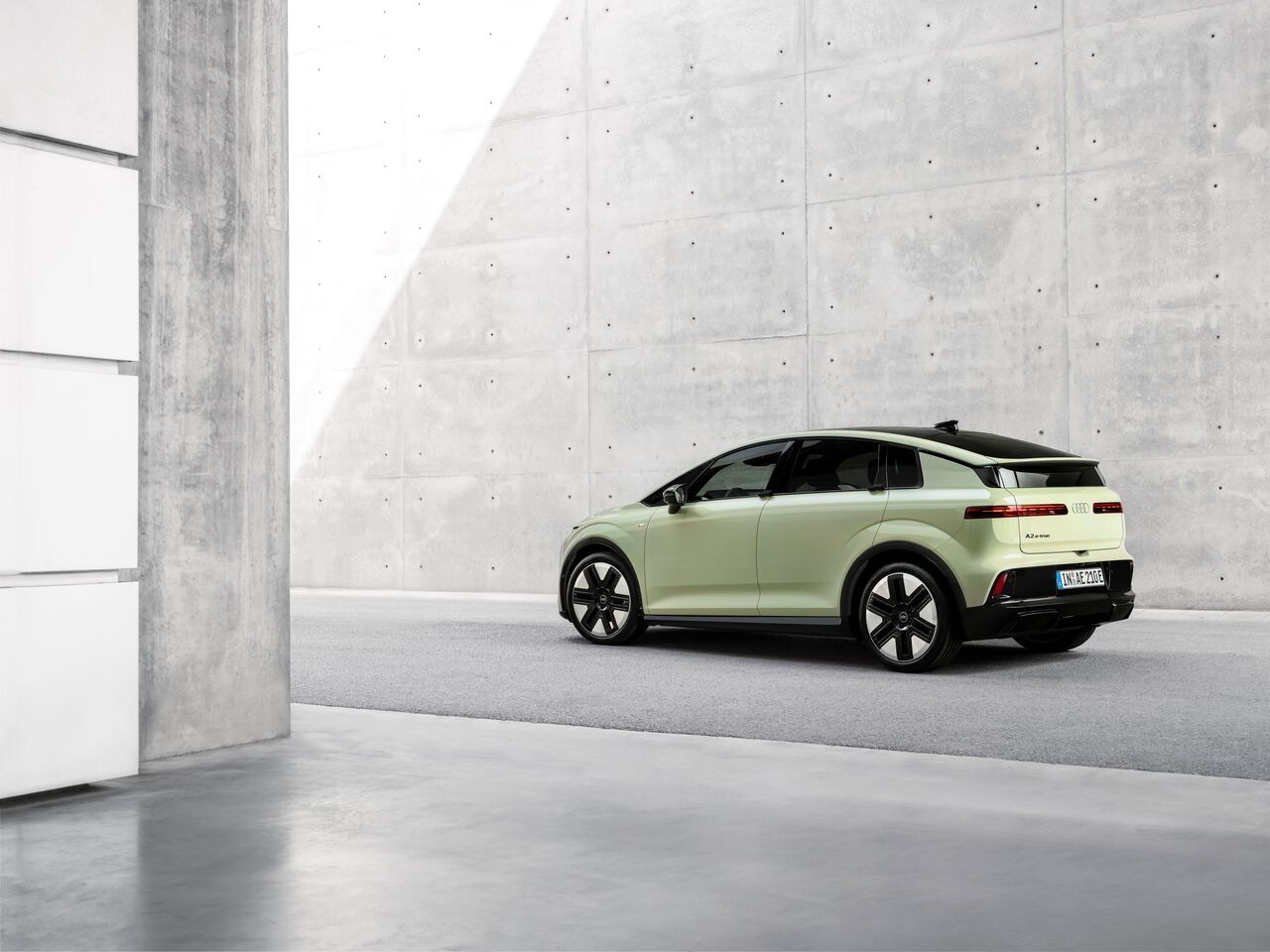
The AUDI E7X rolled into Beijing this week as a 5-meter, 500-kW electric SUV with zero-gravity seats, a 21.4-inch drop-down screen for rear passengers, and an AI-powered digital assistant. It is also, notably, not really an Audi — at least not in the way the rest of the world understands the brand.
Welcome to Audi’s identity split. At Auto China 2026, the German automaker is running two distinct brands under one roof in the world’s largest car market. The uppercase AUDI — a joint venture with SAIC — builds connected EVs exclusively for Chinese buyers on a platform co-developed with its local partner.
The traditional four-rings Audi, partnered with FAW, still sells combustion-engine sedans and PPE-based electrics. Two partners, two brands, two platforms, one logo. If that sounds like a company twisting itself into knots to stay relevant, that’s because it is.
The E7X is AUDI’s second production car after the E5 Sportback, which launched last September and promptly won China Car of the Year. A third model is confirmed for 2027, and the strategic agreement signed this week with SAIC commits both sides to four more vehicles on a next-generation platform.
The specs are competitive but no longer shocking by Chinese standards. The E7X offers up to 750 kilometers of CLTC range from a 109-kWh battery, quattro all-wheel drive, and a Level 2++ assisted driving system tuned specifically for Chinese roads. Four-seat and five-seat configurations, premium materials, digital matrix LED headlights — it reads like a direct response to NIO’s ES8 and Xpeng’s G9.
On the FAW side, Audi brought the new A6L e-tron, its first fully electric sedan in the upper mid-size class. The wheelbase stretches 132 millimeters beyond the global car, the battery grows to 107 kWh, and the claimed CLTC range hits 815 kilometers. All PPE models for China now feature localized cockpit software and advanced driver assistance developed for Chinese traffic patterns.
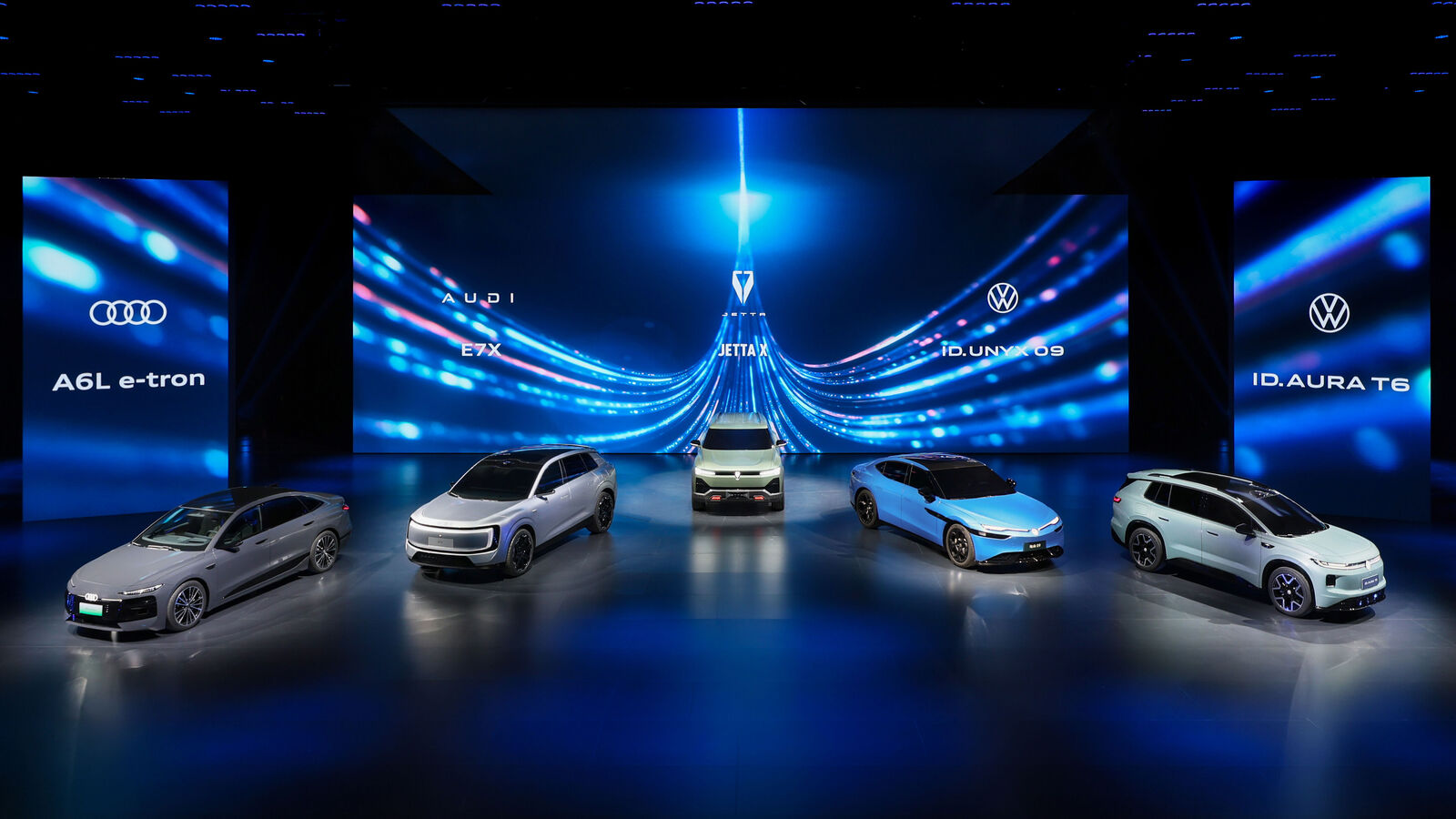
But the combustion engine is far from dead here. The new A6L with ICE power went on sale in late March and was already the best-selling premium sedan in its class last year. The Q5L is being positioned as the world’s first luxury ICE SUV with Huawei’s Qiankun intelligent driving system — a pairing that would be unthinkable in Ingolstadt but makes perfect strategic sense in a market where Huawei’s tech cachet rivals Apple’s.
The high-performance SQ8 with its 4.0-liter twin-turbo V8 also showed up, a reminder that Audi hasn’t completely abandoned the old religion. The Formula 1 angle got prominent stage time too. The Audi R26 show car sat on the stand weeks after the Shanghai Grand Prix, a clear bet that motorsport visibility will do heavy brand-awareness lifting in a country where BYD, NIO, and Xiaomi dominate social media feeds.
What’s striking about Audi’s China play is the sheer volume of product thrown at the problem. Between the two partnerships, the Beijing stand held combustion sedans, electric sedans, electric SUVs, performance SUVs, a wagon, and a Formula 1 car. CEO Gernot Döllner called it the largest product initiative in Audi’s history in China, and there’s no reason to doubt him.
The question is whether breadth equals strength. Audi recently passed 10 million cumulative customers in China — a real achievement built over 38 years. But the competitive landscape has shifted in ways that raw heritage can’t fix. Local players move faster, iterate cheaper, and own the software narrative.
Audi’s response is to localize everything it can, partner where it must, and field two separate brands to cover the spread. The E7X and the A6L e-tron are strong entries. The Huawei integration on the Q5L is genuinely bold.
But running parallel brand architectures with different partners, platforms, and target customers in a single market demands flawless execution. No legacy automaker has yet pulled that off in China at this scale. Audi is betting the house that it can be the first.
Share this Story