
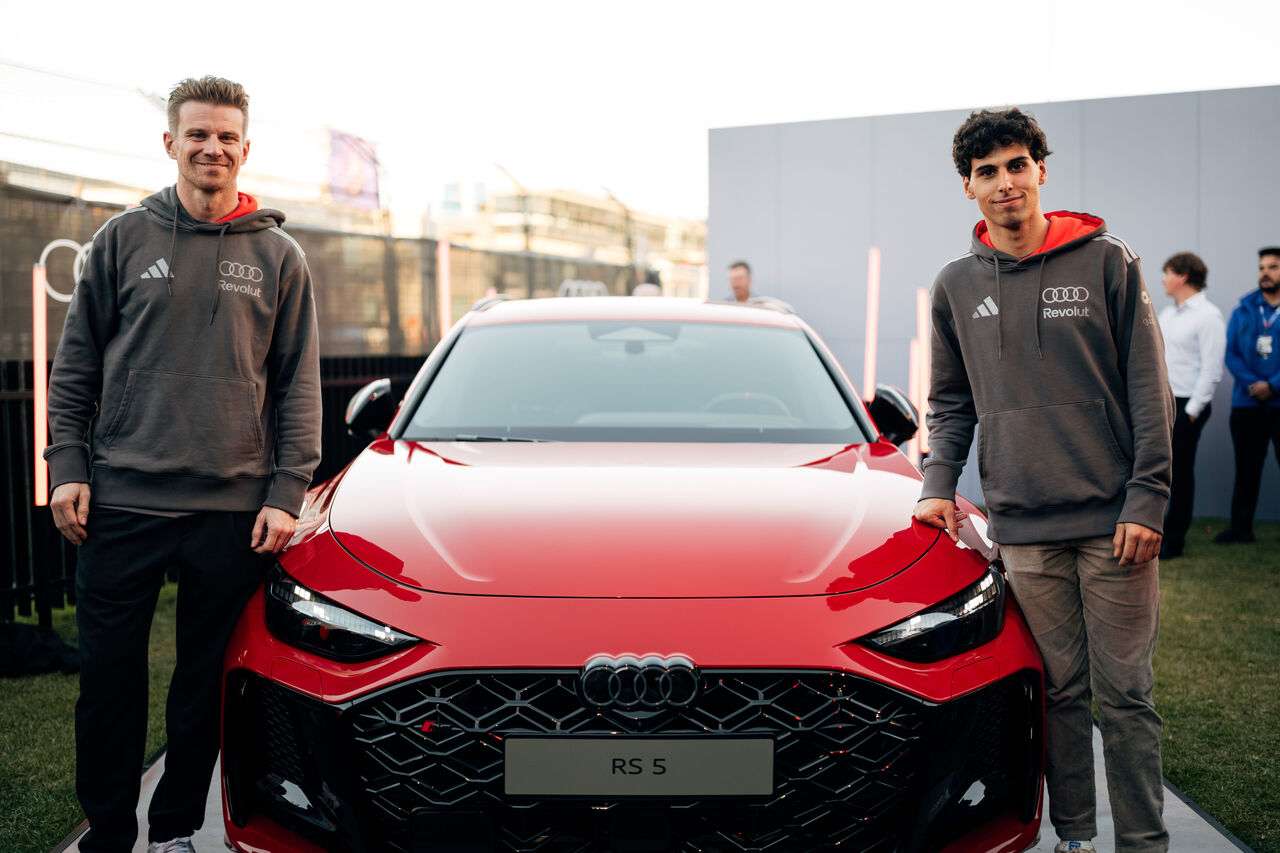


March 8, 2026, will be remembered as the day Audi returned to Grand Prix racing for the first time since the Auto Union Silver Arrows tore up prewar circuits in the 1930s. Nearly a century between starts. That’s not a gap — that’s a geological era.
The Australian Grand Prix in Melbourne serves as the stage, and Audi is treating it less like a quiet debut and more like a full-scale brand invasion. From airport signage to a floating hospitality barge on the Yarra River to the unveiling of the new RS 5 hybrid at Albert Park, the four rings are everywhere. The message is unmistakable: we’re here, and we intend to stay.
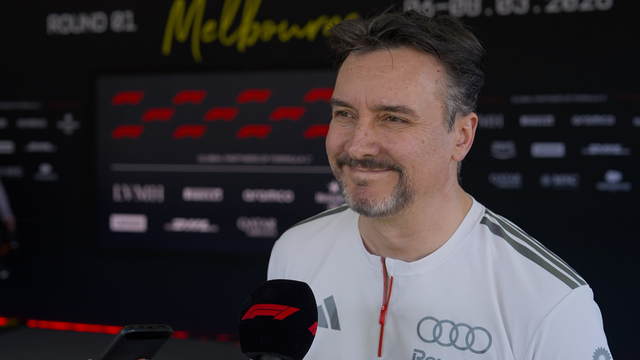
Technical Director James Key described Friday’s opening practice sessions as “smooth,” which in F1 parlance means nothing broke and nobody crashed. That’s a low bar, but for a brand-new works operation running its own power unit for the first time, it’s the right one to clear first.
The scale of what Audi has attempted deserves a hard look. This isn’t a badge-engineering exercise or a title sponsorship dressed up as a factory effort. The company built its own hybrid power unit from scratch at a new facility in Neuburg, Germany, while the chassis operation continues in Hinwil, Switzerland — the old Sauber base — and a freshly established Technical Centre in Bicester, England, handles advanced development. Three countries, three facilities, one team that has never turned a competitive lap together.
Gabriel Bortoleto, the 21-year-old Brazilian entering his second F1 season, put it plainly. “We are building everything from zero. We’re a new team basically,” he said. “They deserve a lot of credit for a lot of the things we have been putting on track.” He also offered the kind of measured realism that suggests the team isn’t selling fantasies internally: “They are also conscious that there is still so much to be done.”
Audi’s own CEO, Gernot Döllner, set the target publicly. The goal is to compete for world championships from 2030 onward. That’s a four-year runway to respectability, which is both honest and revealing. No one in Ingolstadt is pretending they’ll challenge the front-runners this season.
The company leaned heavily into its motorsport heritage throughout the Melbourne weekend, wheeling out the legendary crocodile-liveried Audi R8 that won the “Race of a Thousand Years” in Adelaide on New Year’s Eve 2000. Allan McNish, one of that car’s winning drivers and now head of Audi’s Driver Development Programme, drove it again. The symbolism was thick — Audi wants you to remember they’ve won at the highest levels before.
But Le Mans prototypes and Formula 1 are different animals entirely. Audi dominated endurance racing because it outspent and out-engineered the competition on diesel and hybrid technology. F1 is a knife fight with ten teams, relentless development cycles, and a cost cap that limits how much money can solve. The 2026 regulations — with power units now delivering nearly 50 percent of their output electrically — play to Audi’s hybrid expertise, at least in theory.
Nico Hulkenberg and Bortoleto make for an intriguing driver pairing: a grizzled veteran who has never stood on an F1 podium alongside a sophomore who was nervous at his first media day just 12 months ago. Neither will be expected to deliver miracles, which is probably the healthiest expectation Audi could set.
The real test won’t come Sunday afternoon at Albert Park. It will come in the grind of 24 races, in the reliability of a power unit that has never raced, in the coordination of engineering teams spread across three time zones. Audi has bet enormous resources and institutional prestige on a sport that punishes half-measures ruthlessly. The floating bar on the Yarra is lovely. The results sheet is what matters.
Share this Story