
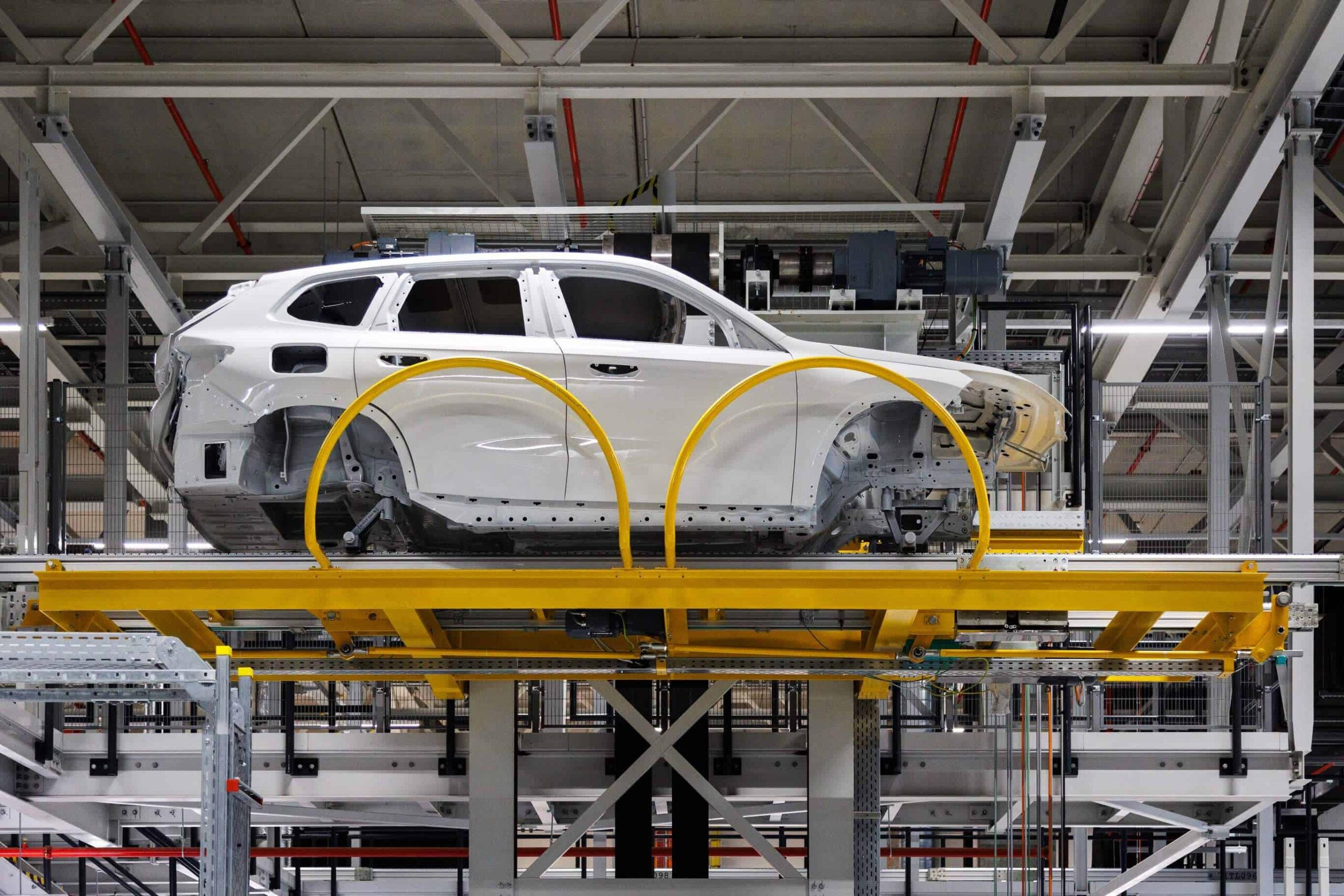


Eight months. That’s all it took for BMW’s brand-new Debrecen factory to move from the start of series production to round-the-clock, three-shift operation. No BMW plant has ever ramped up that fast.
The third shift is already running at the Hungarian facility, which has built more than 50,000 iX3 electric SUVs since production began earlier this year. BMW added a second shift back in March, well ahead of schedule. Now the factory floor never goes dark.
The catalyst is raw demand. BMW says 100,000 European customers have ordered the iX3 in the twelve months since its world premiere. That’s a number that forced the company’s hand, accelerating a production timeline that was originally more conservative.
What makes this ramp-up unusual is the complexity underneath it. The iX3 is not a mild refresh or a platform variant. It is the first series-production Neue Klasse vehicle, carrying a completely new electrical architecture, sixth-generation battery and motor technology, the iDrive X infotainment system, and BMW’s Panoramic Vision windshield projection.
Every major system in the car is new. Launching one clean-sheet technology is hard. Launching all of them simultaneously, then scaling production to 24/7 in under a year, is something else entirely.
More than 5,000 employees have been hired and trained during the ramp-up. The Debrecen plant spans over 400 hectares and represents a €2 billion investment purpose-built around Neue Klasse production. BMW clearly bet big on Hungary, and the early returns suggest the bet is landing.
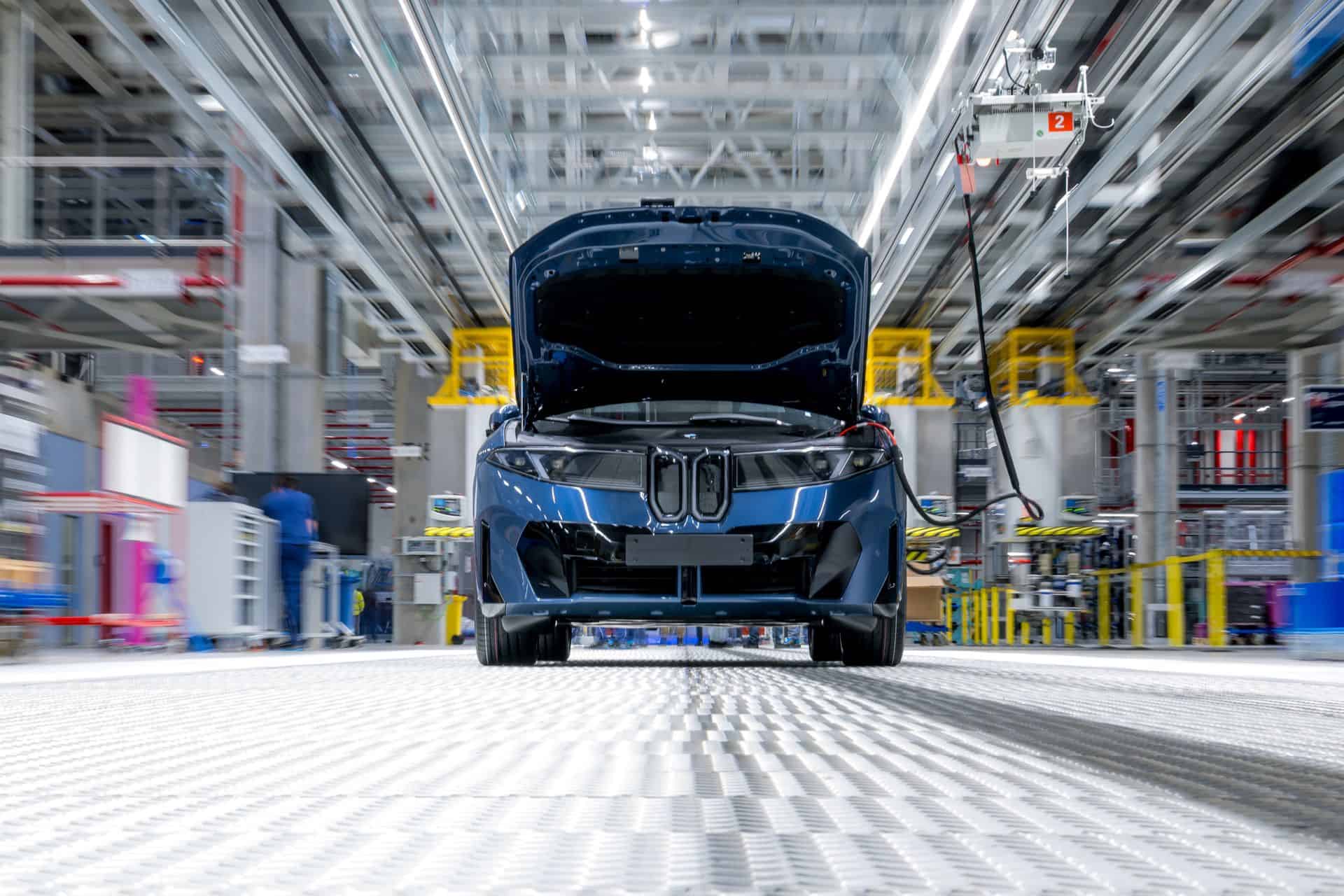
The standard-wheelbase iX3, internally coded NA5, rolls out of Debrecen for global markets. A long-wheelbase version, the NA6, is built in China and shipped to select Asian markets including India, Thailand, Indonesia, and Malaysia. Neither Europe nor the United States will get the stretched model.
Debrecen won’t carry the iX3 production burden alone for long. BMW’s San Luis Potosí plant in Mexico is slated to begin building the electric SUV sometime in 2027, adding capacity closer to the North American market.
And the Hungarian factory itself is about to get busier. This fall, a second Neue Klasse model joins the Debrecen assembly line. All indications point to the iX4, a coupe-styled derivative with a dramatically sloped roofline that shares the iX3’s underpinnings but targets a different buyer.
Both the iX3 and iX4 will eventually get performance variants. M60 and full M versions are in the pipeline, with the top-tier models expected to use a quad-motor setup producing north of 800 horsepower. That powertrain will first appear in the electric M3 sedan, codenamed ZA0, which BMW plans to reveal next year.
For now, the focus in Debrecen is volume, not velocity. The factory exists to prove that BMW can mass-produce Neue Klasse vehicles at scale, reliably, and profitably. Hitting 50,000 units in eight months and moving to three shifts suggests the manufacturing side of the equation is holding up.
The harder question is whether 100,000 orders represent the front edge of sustained demand or the sugar rush of early adopters. BMW is building capacity as if it believes the former. Mexico is next, the iX4 is next, and M variants are next. The entire Neue Klasse production ecosystem is being stood up at a pace that leaves very little room for a demand slowdown.
Share this Story