
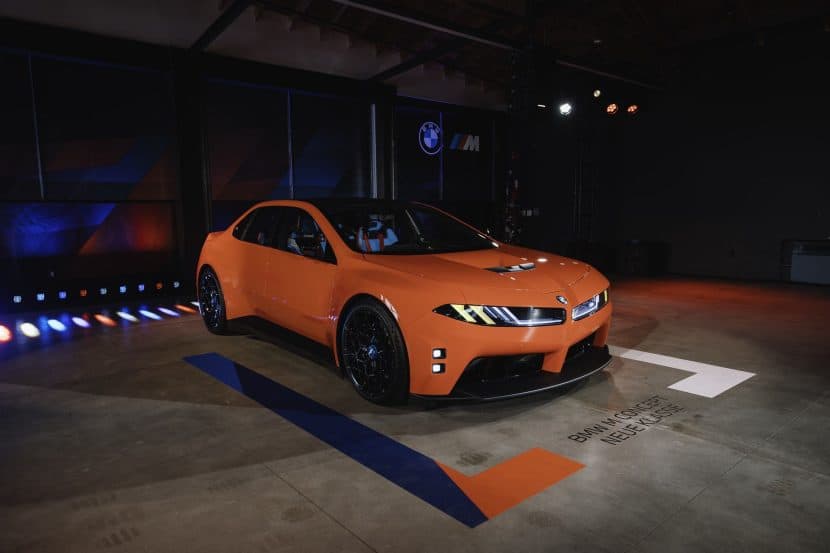


Frank van Meel wants you to know nobody forced his hand. The BMW M boss told Motor1 Deutschland that the decision to build an all-electric M3, internally coded ZA0, wasn’t driven by emissions compliance or regulatory pressure. BMW’s Neue Klasse rollout already handles the fleet CO2 math.
This was a choice, he says, born from conviction that electricity could build a faster, better M3 than combustion ever did. We’re not doing this because we have to, but because we’re convinced that it allows us to build a fast and even better car,” van Meel said. “The timing, however, has to be right. It will only work if we can do it 100 percent the way we want to.”
That’s a strong claim from a company whose M3 lineage stretches back four decades and six generations of inline-six worship. And the spec sheet suggests BMW is not bluffing. The ZA0 gets four electric motors, one per wheel, fed by a dedicated M battery pack exceeding 100 kWh of usable capacity.
The front axle decouples entirely, giving drivers a pure rear-wheel-drive mode that mirrors the current M3 Competition xDrive’s 2WD setting.
No fake engine sounds. BMW recorded its classic inline-six, V8, and V10 exhaust notes but scrapped the idea of piping synthetic nostalgia through the cabin. Simulated gear changes, though, survived the cull.
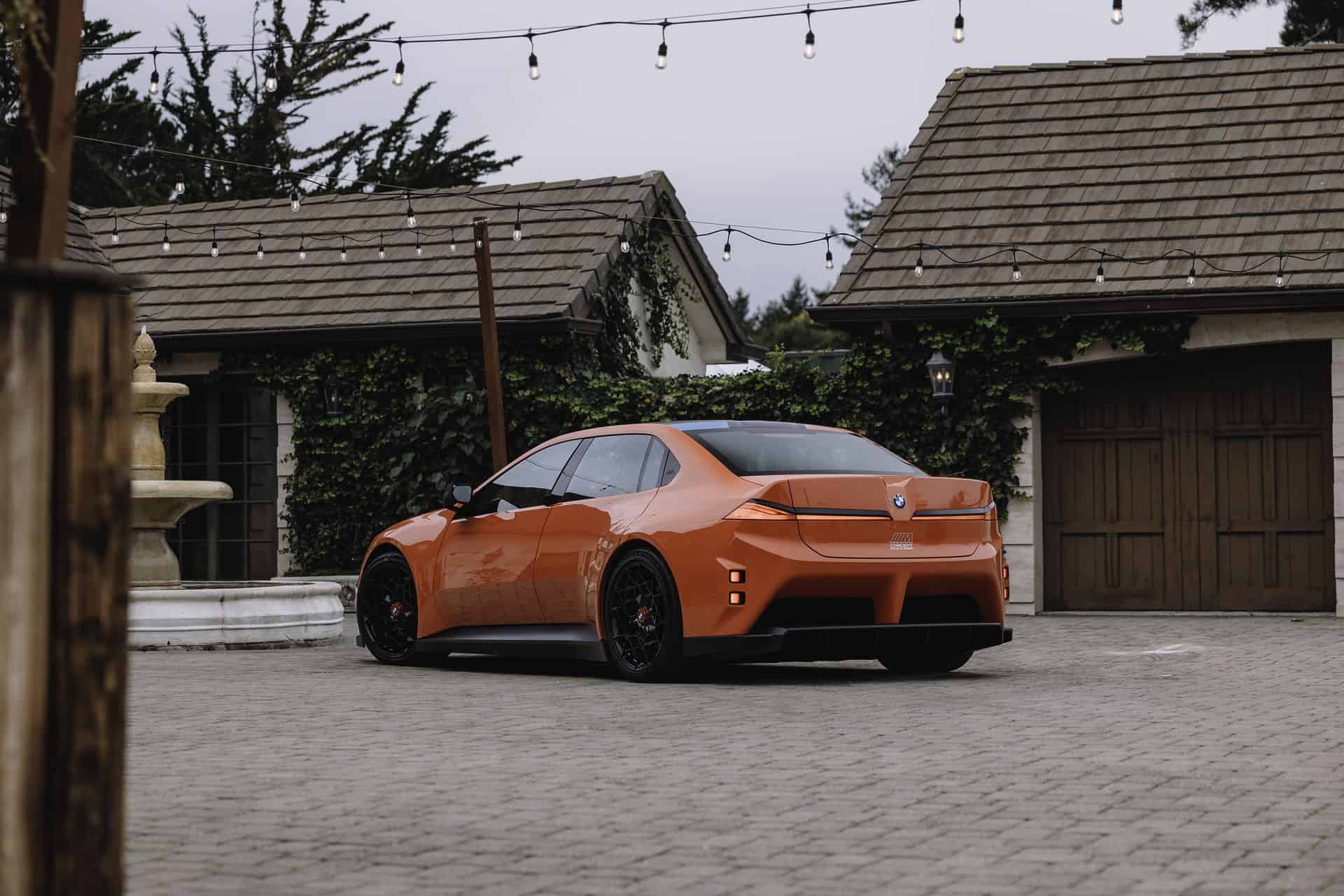
M engineers consider those necessary for driver engagement rather than a parlor trick. Whether purists agree will be tested soon enough.
The electric M3 arrives next year, but here’s the wrinkle that makes the whole strategy unusual. It isn’t replacing the gas M3. It’s running alongside it.
The current G80 bows out in 2027 when the ZA0 launches, but a new combustion M3, internally designated G84, follows in 2028 with a twin-turbo 3.0-liter S58 inline-six and a mild-hybrid system. That car will be automatic-only, all-wheel-drive only.
So BMW is telling customers: pick your poison. Van Meel framed it as philosophy rather than hedging. “We don’t decide for our customers what they should drive,” he said. “Customers can choose whichever they prefer.”
The M3 isn’t the only model getting this dual treatment. The X3 M returns next year with the same quad-motor EV architecture as the sedan. An electric X5 M has already been spotted testing and should arrive in 2028 alongside a V8-powered variant.
The upcoming i3 Touring and iX4 are logical candidates for full M versions, though BMW hasn’t confirmed either.
Under the surface, two platforms are doing the heavy lifting. Neue Klasse underpins the newer models, while BMW’s long-running CLAR architecture is being reworked to support electric M powertrains for existing body styles. Running two platforms simultaneously for high-performance variants is expensive, complicated, and exactly the kind of thing a company does when it refuses to commit fully in one direction.
Five years of i4 M50s and iX M60s gave BMW M an electric toe in the water without actually diving in. Those cars wore M badges but weren’t true M products, a distinction the company itself has drawn. The ZA0 is supposed to be different: full M engineering, full M pricing, full M expectations.
Van Meel’s confidence is easy to state and hard to deliver. The M3 carries a weight that no amount of kilowatt-hours can offset on its own. Enthusiasts who define the car by its straight-six heartbeat aren’t going to be swayed by decoupled front axles and simulated shifts unless the thing is transcendently fast and communicative.
BMW is betting it will be. The verdict arrives in 2027, and the combustion backup plan lands one year later.

Share this Story