
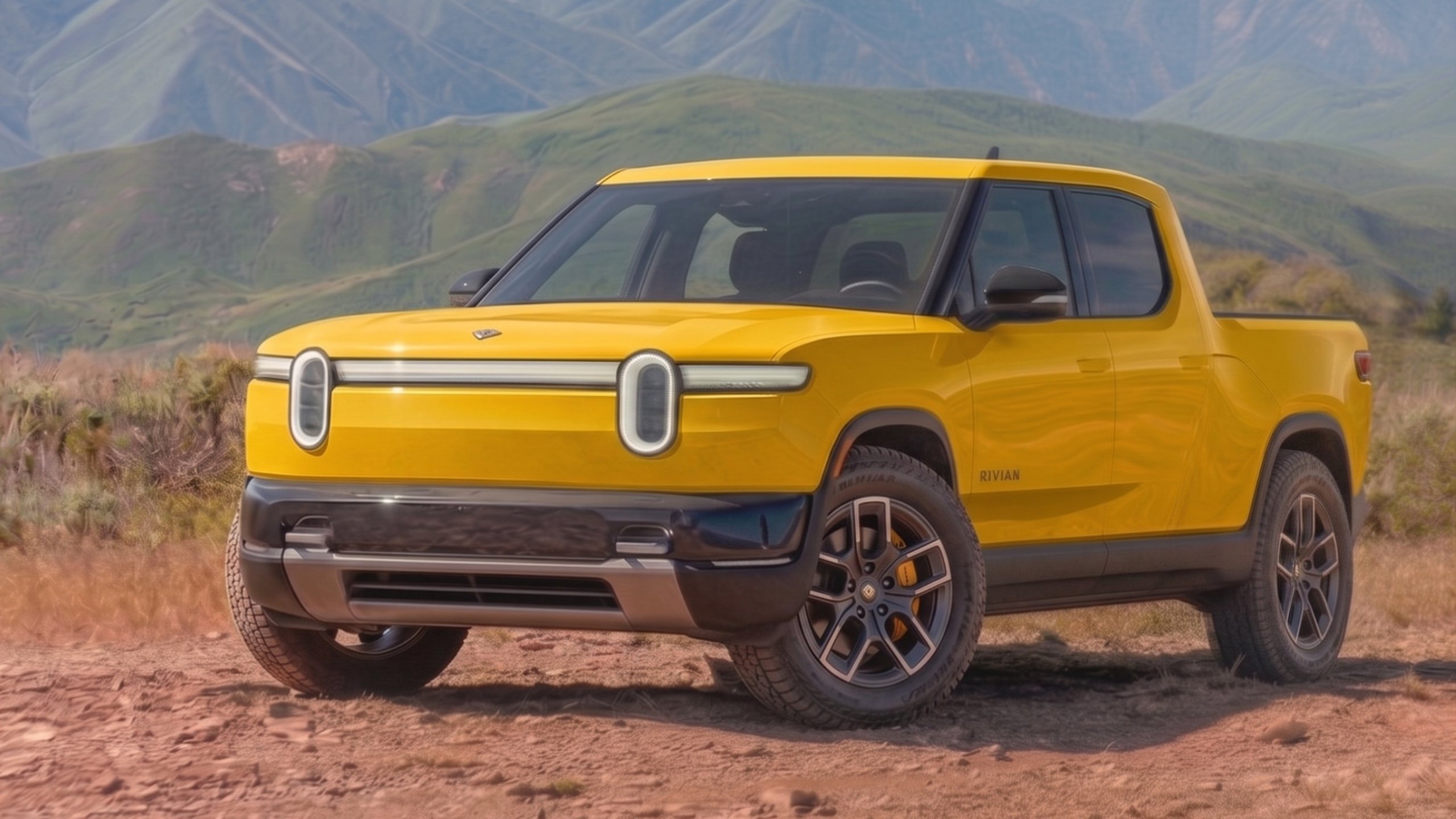


RJ Scaringe didn’t even let the question land before answering. Asked during a one-on-one interview in Park City, Utah, whether he saw a viable market for a smaller-than-R1T electric pickup, the Rivian founder and CEO cut in with an emphatic “Yeah.”
That single syllable carries more weight than it might seem. The electric truck market has been a land of giants — the R1T, the Ford F-150 Lightning, the Chevrolet Silverado EV, the GMC Hummer EV, the Ram 1500 REV. Every one of them is enormous, and many won’t fit in a standard American garage. Yet nobody with serious production capability has gone after the segment below them.
Scaringe knows the gap exists. “The smaller trucks space, I think there’s a big opportunity,” he told The Drivecast. He lumped it in with other unaddressed segments: a true midsize SUV, adventure-oriented crossovers. The R2, R3, and the teased R4 are all part of Rivian’s plan to fill those white spaces.
But knowing where the opportunity is and actually chasing it are two different things. Scaringe was careful to temper expectations. He acknowledged Rivian has explored “R2Ts and even things beyond that,” confirming the company’s smaller MSP platform could physically support a truck body.
The architecture is capable. The constraint isn’t engineering — it’s bandwidth.
“The real challenge we have is deciding what to do,” Scaringe said. There’s so many different cool things we can create.” For a company still fighting to reach sustained profitability and ramping its first mass-market vehicle in the R2, picking the wrong next product could be fatal. Picking the right one could open an entirely new customer base.
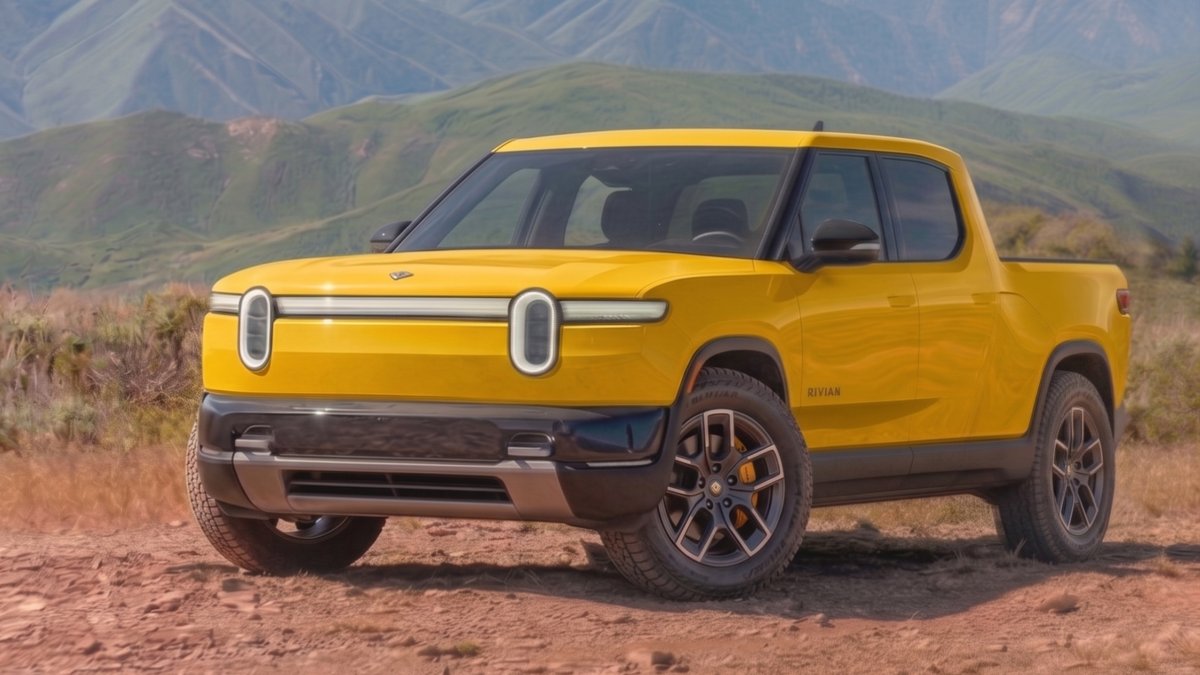
Rivian’s R3X concept, Scaringe explained, was deliberately designed as a signal — a way to show the market that wild variants could sprout from its platforms without committing to building them tomorrow. It’s the automaker equivalent of planting a flag without marching the army.
The mysterious R4 remains firmly under wraps. When pressed on whether it could be a pickup, Scaringe offered only a grin’s worth of ambiguity: “It could be a lot of things.” He’d confirm only that “it’s very cool” and that it’s not ready for public discussion.
What Scaringe conspicuously did not do is close the door. He never said a small electric truck wasn’t coming. He never dismissed the idea as impractical or unprofitable.
He validated the market opportunity, confirmed the platform can handle it, and then said Rivian needs to stay focused on R2 in the immediate term. That calculus makes sense.
The compact truck segment in the U.S. has been quietly resurgent — the Ford Maverick, Hyundai Santa Cruz, and Toyota Tacoma have all found eager buyers who don’t want or need a 6,000-pound behemoth. An electrified entry in that space, from a brand already synonymous with outdoor adventure credibility, would be a natural fit.
The question is timing. Rivian has to get R2 production humming at its Normal, Illinois, plant and its new facility in Georgia before it can afford to chase new body styles. The company burned through years of cash learning how to build the R1 at scale. It won’t make that mistake twice.
Still, Scaringe’s enthusiasm was unmistakable. He didn’t hedge on the market. He hedged on the calendar. For anyone hoping to see a right-sized electric pickup from Rivian — something that actually fits in your driveway — the message was clear: not yet, but don’t stop hoping.
Share this Story