
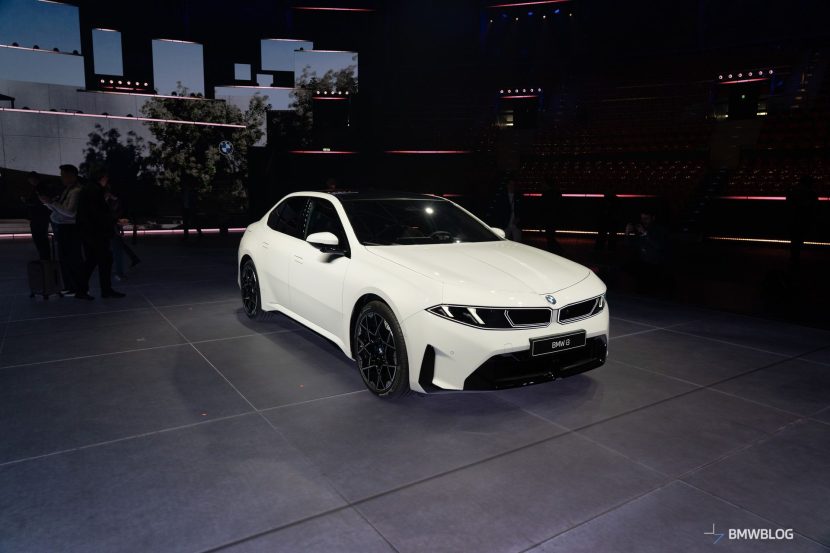


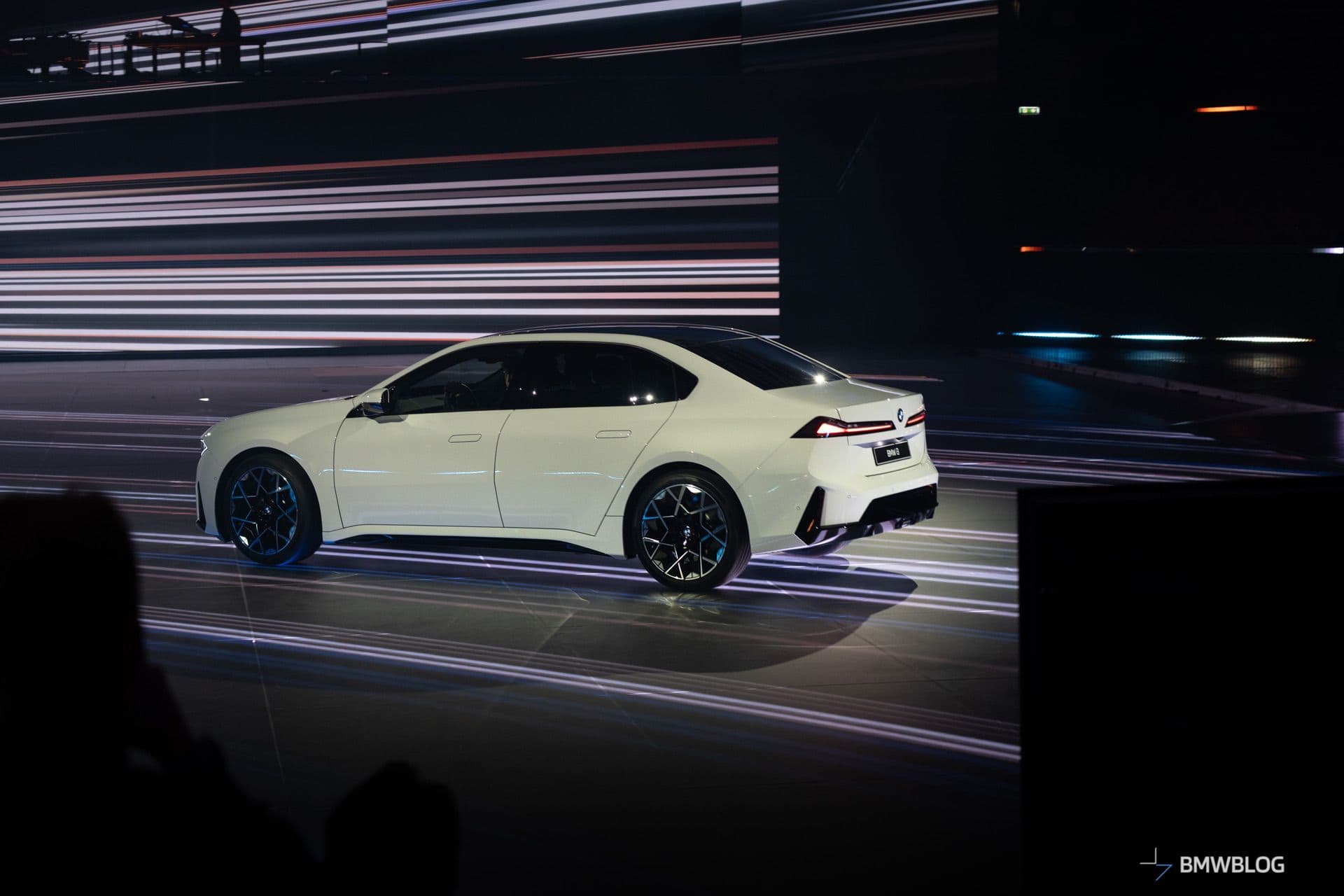
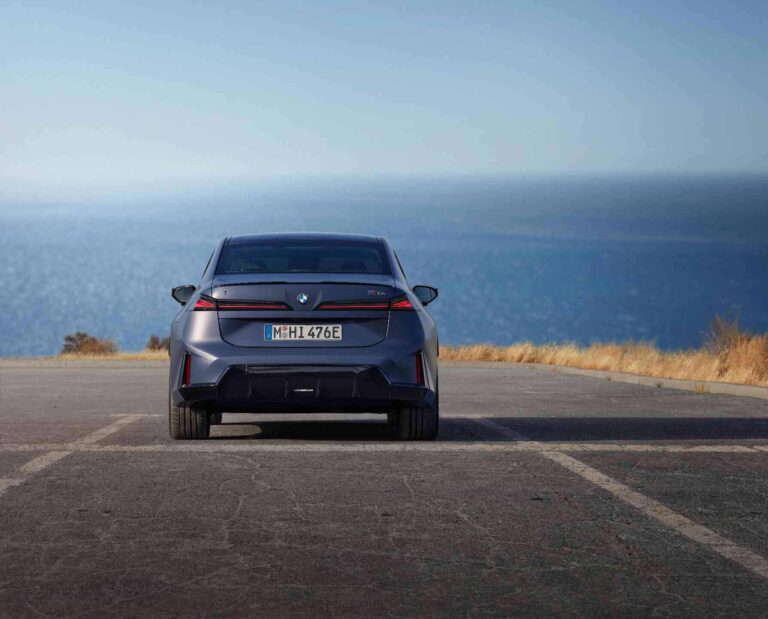
The numbers don’t lie, and they don’t flatter. BMW’s Neue Klasse i3 sedan stretches 4,760 millimeters long, 47 mm more than the outgoing G20 3 Series. It’s 38 mm wider, 40 mm taller, and rides on a wheelbase that grew 46 mm to 2,897 mm.
Every single dimension expanded, continuing a trend BMW shows zero interest in reversing. This is the electric sedan BMW is building in Munich, the one carrying the 3 Series badge into the battery-powered era. It arrives with a 0.21 drag coefficient, the slipperiest 3 Series ever made, which is the lone dimension where smaller actually won.
The i3 50 xDrive First Edition tips the scales at 2,205 kilograms, heavy but expected given the 108.7 kWh battery slung underneath. That pack delivers a claimed 906 km of WLTP range on 19-inch wheels. Charging from 10 to 80 percent takes 21 minutes on a 400 kW station.
Ten minutes plugged in gets you somewhere between 320 and 423 km of range. Those are serious numbers, and they explain why BMW felt comfortable letting the car gain weight.
For context, the old China-only long-wheelbase i3 weighed 2,087 kg with a smaller 78.92 kWh battery and rear-wheel drive. The new car is 118 kg heavier, but it’s also packing all-wheel drive and nearly 30 kWh more energy. Not exactly apples to apples, though the direction of travel is unmistakable.
The powertrain delivers 463 horsepower and 645 Nm of torque, good for a 4.7-second sprint to 100 km/h and a 200 km/h top speed. Adequate, not alarming. BMW is clearly positioning this as a mainstream electric sedan, not a performance statement.
Here’s where it gets interesting. BMW still hasn’t shown the next-generation combustion 3 Series, internally called the G50, but spy photos suggest it will be even larger than the i3. The front section appears stretched to accommodate inline-six engines for the M350 and M3 variants, so the gas-powered car may actually out-bloat the electric one.
And then there’s China. BMW already sells a long-wheelbase electric i3 there, and a stretched combustion G58 appears likely. The current long-wheelbase G28 already measures 4,829 mm, nearly identical to a mid-2000s E60 5 Series or a first-generation E23 7 Series from 1977.
A 3 Series the size of a classic 7 Series. Let that settle for a moment.
Production geography is shifting too. The G50 will be the first standard-wheelbase 3 Series not built in Munich, with that honor moving to Dingolfing. Munich keeps the i3, which BMW officially classifies as a 3 Series anyway, so the marketing team can argue the point either way.
An i3 Touring is confirmed for Munich assembly later this decade. BMW hasn’t ruled out a combustion-powered 3 Series wagon from Dingolfing either.
The 3 Series has been BMW’s backbone for half a century. It was once a compact, agile sports sedan that fit neatly into tight European parking garages. Each generation since the E36 has pushed outward, but the Neue Klasse i3 marks the moment where the 3 Series definitively occupies the footprint that used to belong to the car above it.
The 5 Series, naturally, has moved into old 7 Series territory. And the 7 Series now competes with the S-Class in both length and ambition.
Nobody at BMW is going to call this bloat. They’ll call it customer demand, battery packaging requirements, and improved interior space. The cargo hold measures 420 liters in the rear plus 31 liters in the frunk, functional if unremarkable.
The real question isn’t whether the new i3 is a better car than the G20. It almost certainly is. The question is whether anyone at BMW remembers what made the 3 Series special in the first place, and whether size was ever part of that equation.
Share this Story