


Governor Gavin Newsom signed SB 168 into law on Monday, creating a $270 million point-of-sale EV rebate program called MyFirstEV that launches this summer. The timing is no coincidence. The $7,500 federal EV tax credit is gone, and California, responsible for roughly a third of all EVs sold in America, decided to write its own check.
The structure is simple. First-time buyers get $3,500 off a new battery-electric vehicle priced at or below $50,000. Used EVs under $25,000 net a $1,750 discount.
The money comes off at the register, not months later at tax time, which eliminates the single biggest complaint consumers had about the old federal credit.
Funding is split evenly between the state budget and participating automakers, $135.5 million from each side. That cost-sharing model forces manufacturers to pay for their own incentive program, a detail that will quietly shape which brands participate and how aggressively they price into the cap.
For Tesla, the math is straightforward but uneven. The Model 3 RWD at $42,490, Model 3 Long Range at $47,490, and Model Y starting at $44,990 all clear the $50,000 threshold. Those are Tesla’s volume sellers, and the rebate will sharpen their competitive edge against the Chevrolet Equinox EV, Hyundai Ioniq 5, Kia EV6, and Volkswagen ID.4, all of which also qualify.
The Model S, Model X, and Cybertruck are out. Too expensive. No rebate.
But buried in SB 168 is a provision that matters more than the dollar figure on the check. The bill exempts California-headquartered automakers from the $50,000 price cap entirely. Rivian, based in Irvine, and Lucid, headquartered in Newark, California, can qualify their full lineups regardless of sticker price.
That means a $70,000-plus Rivian R1S gets the rebate. A $90,000 Lucid Air gets the rebate. Tesla, which moved its corporate headquarters to Austin, Texas, in 2021, gets no such exemption.
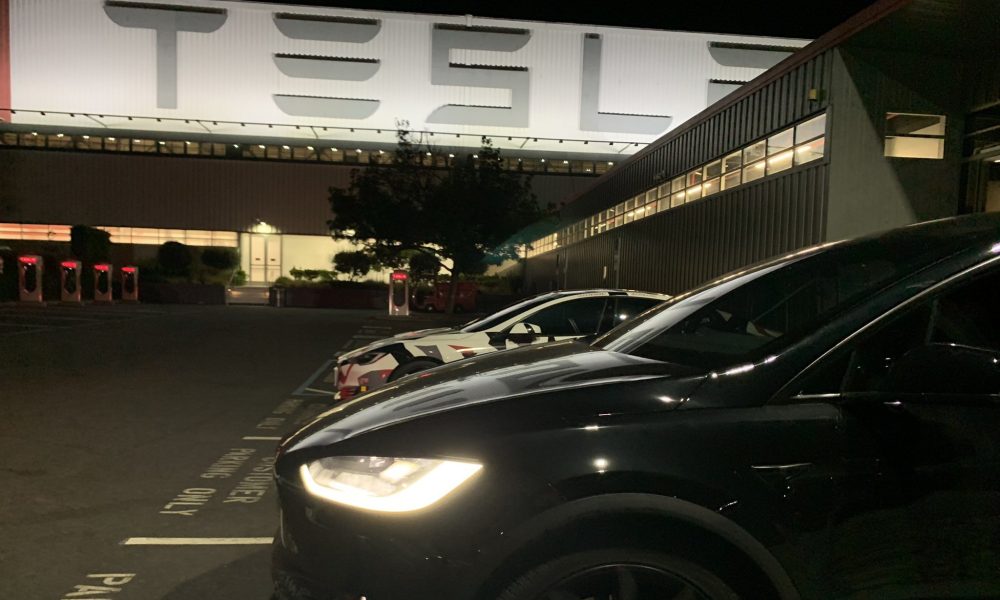
It is a remarkable outcome. Tesla built its brand in California. It manufactured vehicles at the Fremont factory for over a decade and still employs thousands in the state.
But because the legal address on its corporate filings reads Texas, its most expensive models are locked out of a program designed to accelerate exactly the kind of vehicles Tesla pioneered.
Whether the carve-out was crafted with Tesla specifically in mind or simply reflects California’s instinct to reward companies that stay, the practical effect is the same. Rivian and Lucid get a structural advantage on their higher-margin vehicles. Tesla competes on its cheapest ones.
The California Air Resources Board is expected to release full participation details next month. The program’s $270 million war chest is substantial but finite, and if demand follows the pattern set by previous state and federal rebate programs, the money will move fast. First-time buyers who have been waiting for the right incentive to pull the trigger on an EV now have one, and it works the moment they sign.
The real question is whether $3,500 at the point of sale moves the needle the way $7,500 on a tax return used to. California is betting it does, because instant gratification beats a refund check every time.
For Tesla, the program is a net positive on volume but a political sting on principle. The company that did more than any other to create California’s EV market is now playing by a different set of rules than competitors half its size, all because it changed its mailing address.
Share this Story