
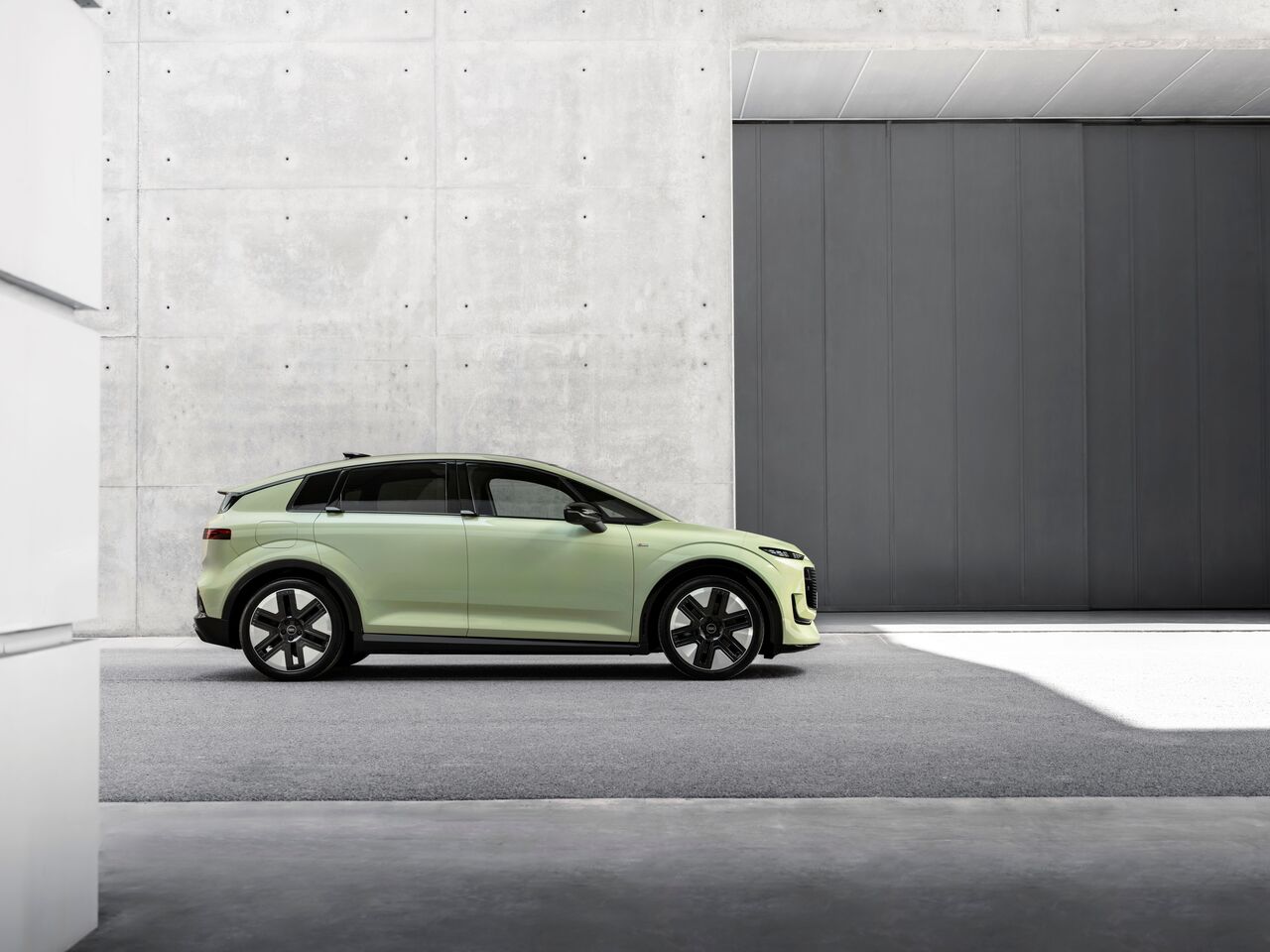


The original Audi A2 was a commercial flop and an engineering marvel. Launched in 1999, killed by 2005, it was an aluminum-bodied efficiency experiment that arrived before the market was ready for it. Now Audi is betting the name still means something, attaching it to a compact electric car built at its home plant in Ingolstadt with energy consumption of just 12.8 kWh per 100 kilometers.
That number is the headline Audi wants you to focus on. It makes the A2 e-tron the most efficient series-production model the brand has ever built. Paired with the largest of three available battery packs at 84 kWh gross, the car claims a WLTP range of 646 kilometers.
A drag coefficient of 0.24 ties it all together, the lowest in Audi’s compact lineup. That figure comes from an enclosed underbody, active cooling shutters, gap-reducing wheel arch inserts, and flush electric door handles. Orders open September 10, 2026, with first deliveries in December.
Four power levels span from 125 kW to 240 kW, all rear-wheel drive, all using permanently excited synchronous motors. Battery choices run 52, 61, or 84 kWh gross. Bidirectional charging is on the options list, covering both Vehicle-to-Load for powering devices from the trunk and Vehicle-to-Home capability in Germany, Austria, and Switzerland, turning the car into a household battery.
The price starts at 38,200 euros in Germany. That slots the A2 e-tron into territory currently occupied by the Volkswagen ID.3, Cupra Born, and a growing number of Chinese competitors. Audi is counting on premium cachet and German production to justify the badge.
Ingolstadt production is a deliberate talking point. Audi says the A2 e-tron reuses more than 1,200 existing production components and roughly 250 robots already on site. The car reached production readiness 21 months faster than comparable predecessor programs.
A fixed-sequence manufacturing system borrowed from the Neckarsulm plant is designed to cut complexity and warehouse costs. The message is clear: Audi can still build affordable EVs in Germany if it stops overengineering the process.
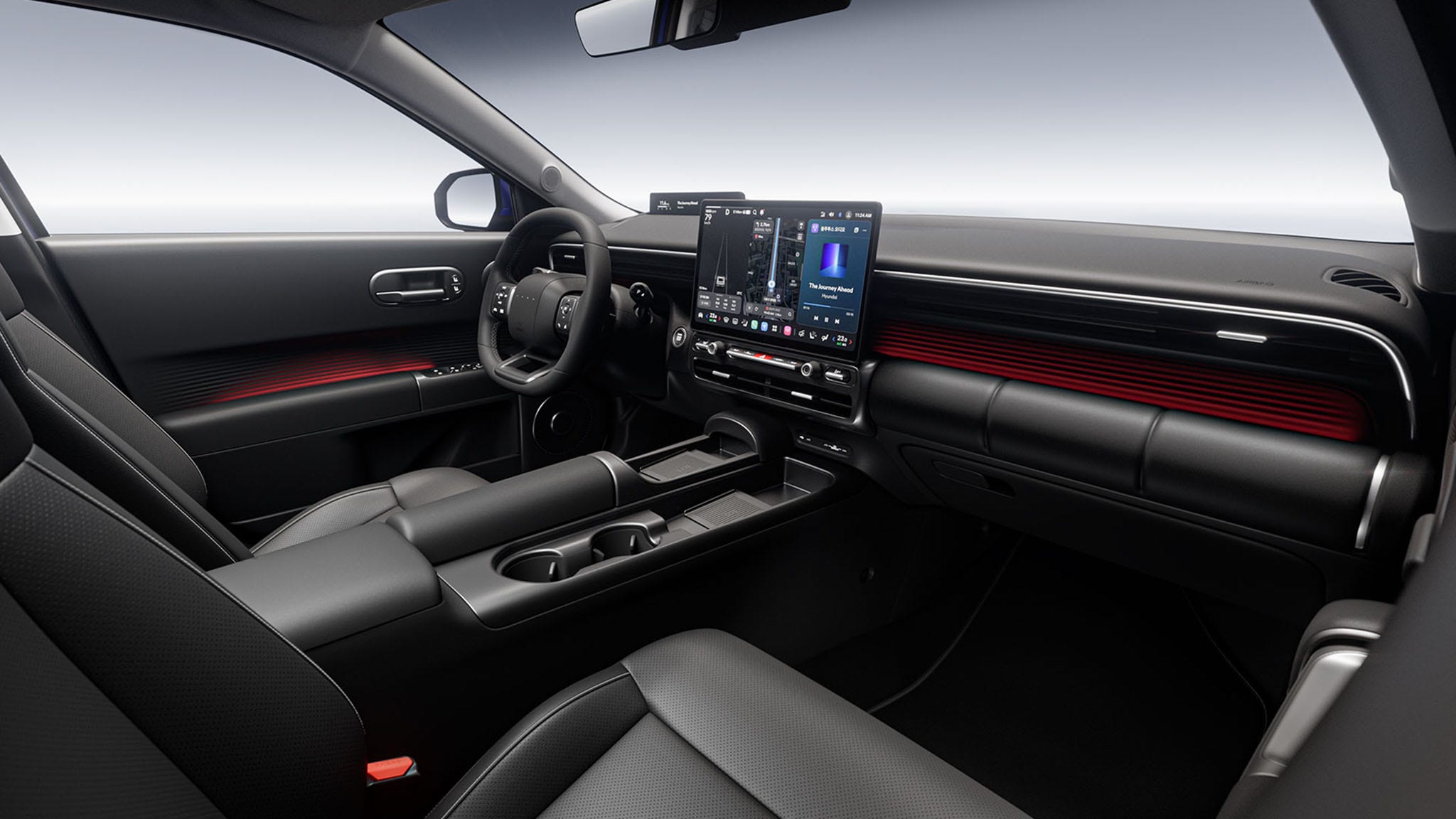
Inside, the car punches above its segment with a curved dual-display setup, an 11.9-inch virtual cockpit and 12.8-inch MMI touchscreen as standard. A Fidlock magnetic fastening system, a first for a premium brand, handles modular storage. Microsoft Teams and Outlook integration come baked in, along with an AI-based assistant for on-the-go productivity, though whether anyone actually wants to take a Teams call from their steering wheel is another question entirely.
Audi CEO Gernot Döllner frames the A2 e-tron as nothing less than the company’s renewal, a demonstration of “rethinking premium for Europe.” That is a lot of weight for a compact hatchback to carry. But the subtext is unmistakable: Audi’s recent years have been defined by expensive, heavy electric SUVs that struggled to find buyers in sufficient volume, and the A2 e-tron is the course correction.
More than 300 components use recycled materials. The panoramic glass roof spans 1.6 square meters. The wheelbase stretches to 2.77 meters despite a compact footprint, a packaging trick enabled by the flat battery floor.
The original A2 was ahead of its time and paid the price. This one arrives into a European market that is finally, grudgingly, shifting toward exactly the kind of efficient, right-sized EV it represents. Whether 38,200 euros is low enough to fend off MG, BYD, and the rest of the pack flooding Europe with cheaper alternatives is the question Audi has not yet answered. December will start providing data points.
Share this Story