
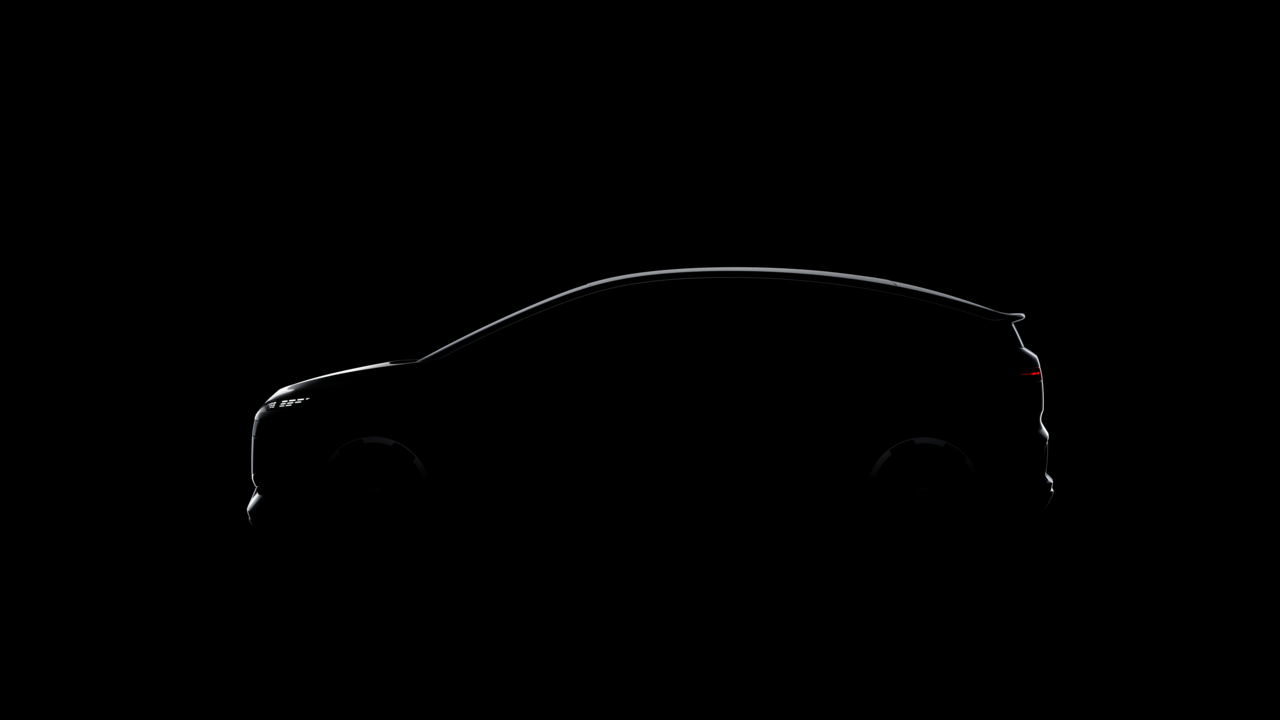


Audi just reached back 25 years for a nameplate most people forgot existed. The A2 e-tron, announced at the brand’s annual media conference in Ingolstadt, will debut this fall as the company’s new entry-level electric model family. CEO Gernot Döllner called it a response to what customers have been asking for: compact, efficient, everyday electric mobility without the premium price tag that has defined the brand’s EV push so far.
The original A2, launched in 1999, was an aluminum-bodied city car that was ahead of its time and behind on sales. Audi killed it in 2005. Now the name returns carrying a very different mandate: anchor the bottom of an electric lineup that has, until now, started at price points that lock out a huge swath of European urban buyers.
No pricing was disclosed. No specs were shared. Audi offered a single design sketch showing a silhouette and a handful of corporate quotes. That’s thin gruel for a vehicle being positioned as strategically critical.
But the strategic logic is easy to read. Compact EVs are the growth segment in European cities, and Audi has been conspicuously absent from the fight. Competitors aren’t waiting.
Volkswagen just showed the ID. Cross starting at €28,000. BMW is pushing lifecycle sustainability messaging with its Neue Klasse i3. The affordable end of the European EV market is getting crowded fast, and Audi’s cheapest electric option — the Q4 e-tron — still asks for north of €40,000 in most configurations.
The A2 e-tron is Ingolstadt’s answer, and building it there is no accident. Döllner made a point of framing the car as a jobs story as much as a product story. “We are securing jobs and delivering electric mobility ‘made in Germany,'” he said. That’s a message aimed squarely at workers, unions, and politicians who have watched German automakers ship EV production to China and Eastern Europe.
Audi claims it now has the youngest portfolio among its premium competitors after launching more than 20 new models across 2024 and 2025. The 2026 strategy is built around two bookends: the full-size Q9 at the top, the A2 e-tron at the bottom. One chases margin, the other chases volume. Both chase relevance.
The volume play is the harder one. Building a compact car at a German factory and pricing it competitively against vehicles assembled in lower-cost countries requires either razor-thin margins or genuine platform efficiency. Audi hasn’t said which platform underpins the A2 e-tron, whether it rides on a version of VW Group’s MEB architecture or something new entirely. That detail matters enormously, and its absence is conspicuous.
There’s also the question of whether the Audi badge helps or hurts at this price point. Premium branding commands a premium, which is exactly what compact EV buyers in European cities are trying to avoid. The original A2 struggled with this same tension — too expensive for economy buyers, too small for luxury buyers. Audi is betting the electric transition reshuffles those expectations.
The fall premiere will need to deliver substance behind the sketch. Range, pricing, charging speed, interior packaging — the basics that compact EV shoppers actually comparison-shop on. Döllner’s promise that Audi “listened” only holds if the car reflects what buyers have been saying, which is that they want competitive range at a price that doesn’t require a second mortgage.
Twenty-five years ago, the A2 proved Audi could think small. It also proved the market wasn’t ready to reward it for doing so. The compact EV landscape in 2026 is a fundamentally different arena, but the core challenge hasn’t changed: building a small, efficient car that enough people actually want to buy at the price you need to charge. The name is back. The hard part is still ahead.

Share this Story