
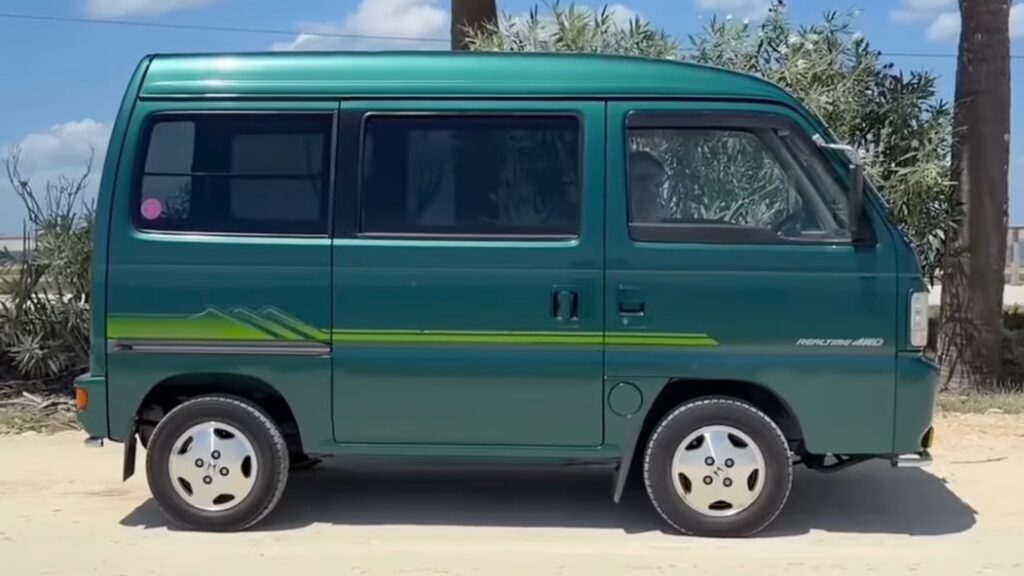


Thirty-five seconds. That’s how long it takes a Honda Acty kei van to reach 60 mph, according to a video posted by US-based owner JDM_toaster. Every one of the van’s five gears gets used, every one of its 43 horsepower gets summoned, and at the end of the ordeal, the little three-cylinder engine is screaming at 6,000 rpm just to maintain American highway speed.
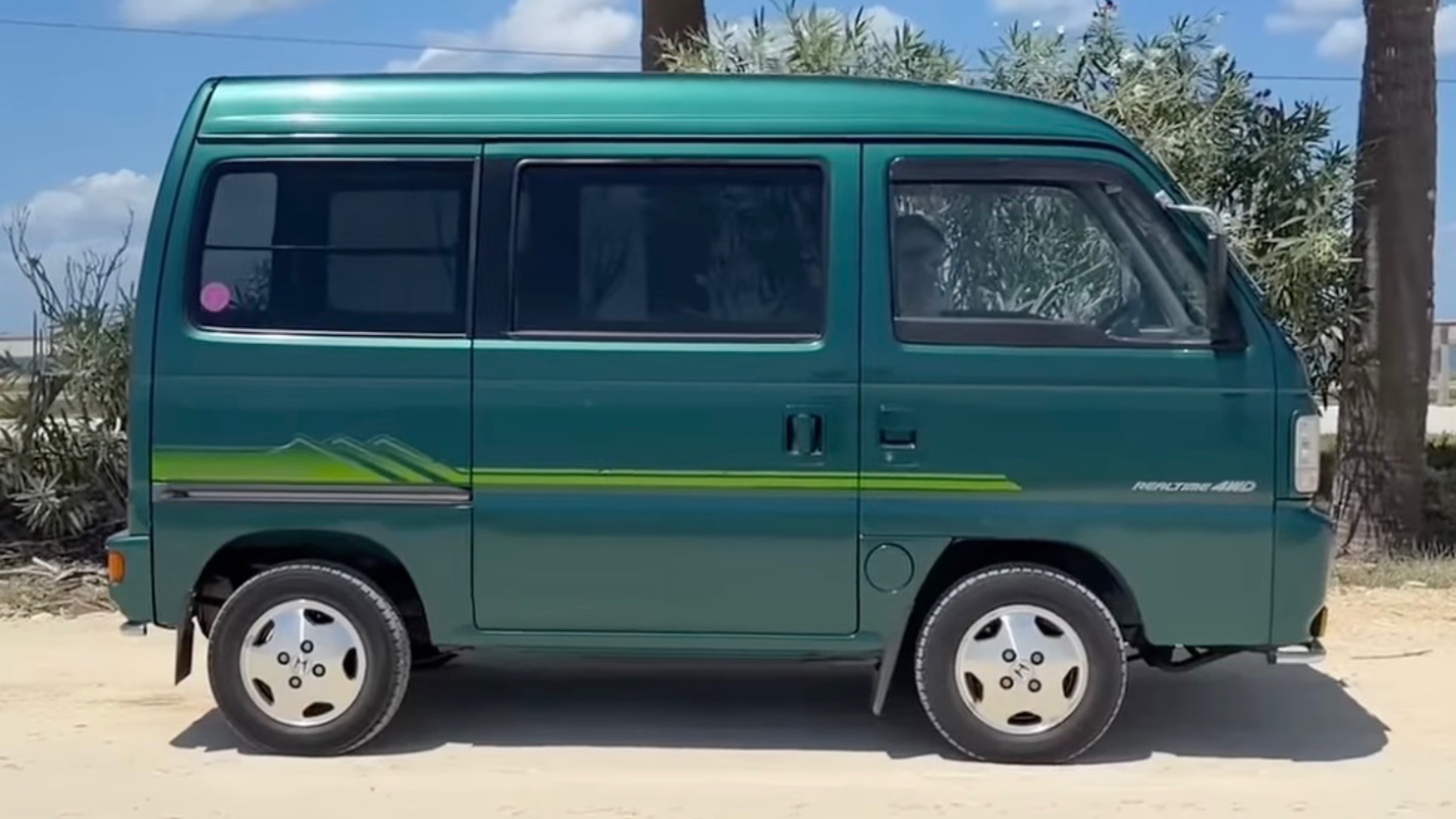
The Acty in question appears to be a late 1990s all-wheel drive model, built during a period when Honda equipped its smallest commercial van with an engine producing well below the 63-hp ceiling that Japanese kei regulations allowed. Why Honda left roughly 20 horsepower on the table in a vehicle that desperately needed every pony is a question for the ages.
What makes the video so entertaining is the contrast. The Acty is clearly being driven flat out, pedal buried, gears clicking through as fast as the driver’s left hand can move. Yet it barely keeps pace with the trucks and SUVs sharing the road.
There’s no lurch of acceleration between shifts, no drama. Just a slow, steady, noisy accumulation of speed while the tachometer climbs relentlessly.
Most modern manual cars can hit 60 in second gear. The Acty needs all five ratios before the speedometer touches that number. In top gear at an indicated 100 km/h, the engine turns roughly 6,000 rpm, which works out to about 10 mph per thousand revs.
Could the run have been quicker? Marginally. The shifts don’t chase the 7,500-rpm redline, though wringing out a few hundred more revolutions from each gear probably wouldn’t have changed the story. The engine likely runs out of breath well before the tach needle hits the limiter.
Kei vans were engineered for dense Japanese cities where narrow streets, tight parking, and low speed limits reward exactly the kind of vehicle the Acty is. Small, light, fuel-efficient, and able to thread through gaps that would stop a Toyota Camry cold. Nobody at Honda designed the Acty to merge onto I-95 alongside Dodge Rams making nine times its power.
And yet here it is, living in America, because the kei car craze refuses to die. The 25-year import rule has opened the floodgates to these tiny Japanese machines, and buyers keep snapping them up. JDM_toaster is apparently so taken with his Acty that it shared garage space with a Porsche 911 GT3 RS at one point.
That pairing alone tells you everything about the kind of owner these vans attract: someone who has driven fast cars and decided that character matters more than pace.
Kei vehicles are cheap, distinctive, mechanically simple, and fun in ways that a modern crossover will never be. They turn heads at cars and coffee meets. They spark conversations at gas stations.
But the 0-60 video captures the other side of ownership, the part that doesn’t make Instagram reels. At 80 mph, which is the actual flow of traffic on many American highways, the Acty either can’t get there or arrives with its engine on the verge of a nervous breakdown. There’s no passing gear, no reserve.
The kei car community in America keeps growing. Prices for clean Actys, Suzuki Everys, and Daihatsu Hijets continue to climb on auction sites. Enthusiasm is high and supply from Japan remains steady.
Whether that enthusiasm survives the daily reality of a 35-second 0-60 sprint and a 6,000-rpm cruise is a different question entirely.


Share this Story